forbes.com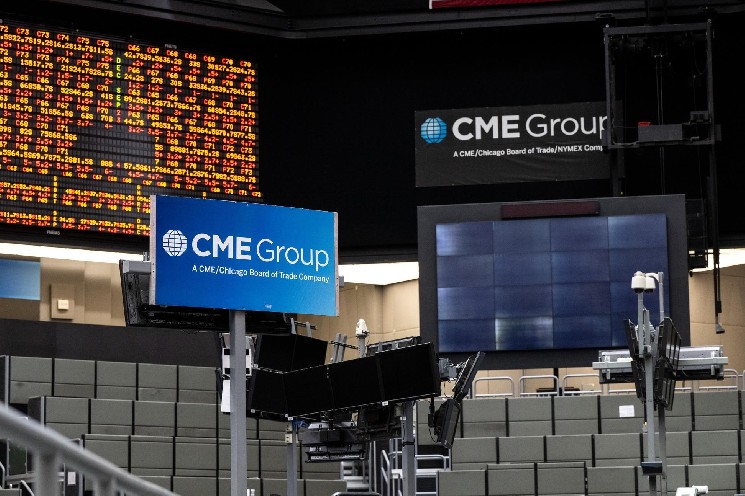
Crypto has always traded on a different clock. Bitcoin does not close for weekends, liquidity does not pause for holidays, and leverage does not wait for clearing desks to reopen on Monday morning. For years, that difference helped separate crypto-native venues from regulated financial infrastructure.
That separation is narrowing. CME Group said its regulated cryptocurrency futures and options will be available for 24-hour, seven-day trading beginning May 29, pending regulatory review, with trading continuing on CME Globex except for a weekly maintenance window. The move is more than an operational extension. It is a sign that traditional finance is being pulled toward the market structure crypto normalized first.
The harder question is not whether institutions can trade crypto around the clock. They already can, through offshore venues, prime brokers, market makers, and liquidity providers. The harder question is whether regulated finance’s clearing, custody, surveillance, privacy, and risk systems can operate in markets where leverage, information, and volatility never really switch off.
Crypto’s 24/7 derivatives era is not simply making digital assets look more institutional. It is forcing traditional finance to become more continuous.
Derivatives are becoming crypto’s institutional layer
The center of gravity in crypto markets has been moving away from simple spot trading for years. Spot markets still matter, especially for retail flows, exchange liquidity, and ETF-related demand. But derivatives are where much of the institutional market now expresses risk, hedges exposure, prices volatility, and manages leverage.
That shift is visible in the data. CCData’s January 2026 Exchange Review reported combined centralized exchange volumes of $5.26 trillion, while spot trading accounted for $1.27 trillion. The implication is clear: derivatives represented the majority of centralized exchange activity that month.
This matters because derivatives do not just reflect price discovery. In crypto, they increasingly shape it. Futures, perpetual swaps, and options influence liquidity, funding rates, volatility expectations, and institutional positioning. When derivatives become the dominant venue for market expression, trading hours become less a convenience issue and more a structural one.
That is why CME’s move is significant. Regulated access is no longer just about listing a bitcoin or ether contract. It is about matching the operating rhythm of the asset itself.
CME also said client demand for digital asset risk management helped drive a record $3 trillion in notional cryptocurrency futures and options volume in 2025. That is not a fringe market asking for extended access. It is a regulated derivatives marketplace responding to institutional demand for more continuous risk management.
Continuous trading still runs into legacy settlement
The tension is that continuous execution does not automatically mean continuous settlement. CME’s model extends trading access, but it still preserves familiar institutional mechanics. Weekend and holiday trades are assigned the next business day’s trade date, and clearing, settlement and regulatory reporting continue to flow through the next business day framework.
That is the bridge traditional finance is trying to build: crypto-speed execution on top of regulated market infrastructure. It is a practical compromise, but also a revealing one. Crypto markets solved for continuous trading first and institutional controls second. Traditional finance is trying to do the reverse.
There are good reasons for that. Regulated derivatives markets cannot simply discard reporting obligations, margin discipline, risk controls, and clearing protocols. Their value proposition is precisely that institutions can trade within a transparent, supervised framework.
But always-on markets compress the time available to react. A move that happens on a Sunday morning can affect collateral needs, counterparty exposures, hedge ratios, and liquidity conditions before traditional workflows fully resume. In that environment, operational readiness becomes part of market structure.
The next competitive edge may not be who lists the product first. It may be who can monitor risk, margin exposure, custody flows, and compliance exceptions in real time without weakening the controls institutions rely on.
Transparency becomes a risk surface
Crypto’s always-on design also introduces a second challenge: information moves continuously too. Public blockchains make settlement visible, auditable, and difficult to falsify. That can reduce certain intermediary risks. But the same transparency can expose flows that businesses would normally treat as confidential.
“It does both simultaneously,” said Natalie Newson, Senior Blockchain Investigator at CertiK, when asked whether public blockchain transparency reduces systemic risk or creates new attack surfaces. “Settlement finality is also publicly auditable,” she said, but “front-running and MEV are persistent issues in blockchain.”
That duality is central to the institutional adoption question. Public auditability is useful when markets need trust in settlement. It is less straightforward when market participants reveal treasury movements, collateral positioning, payroll flows, or supplier payments in real time.
Newson framed the business risk directly. “If your treasury wallet is known, and on-chain, it eventually becomes known, counterparties, suppliers, and competitors can watch your liquidity position in real time,” she said.
For trading firms, that visibility can affect execution. For corporations, it can expose working capital strategy. For institutions, it can turn settlement infrastructure into a source of market intelligence for competitors. In a 24/7 derivatives environment, information leakage does not wait for office hours either.
This is where the conversation moves beyond cybersecurity. The issue is not just hacks, exploits, or smart contract vulnerabilities. It is whether an always-on financial system can protect commercially sensitive behavior while preserving the auditability that makes blockchain infrastructure useful in the first place.
Privacy is becoming part of market infrastructure
The early crypto argument treated transparency as a feature. That was true for open monetary networks and early DeFi systems, where public verification helped establish trust. But what works for a speculative or experimental market does not automatically work for enterprise finance.
“Transparency becomes a structural constraint the moment a business tries to use blockchain for real operations,” said Varun Kabra, Chief Growth Officer of Concordium. “Payroll, supplier contracts, treasury flows, pricing structures, these are not marketing data points.”
That is the institutional bottleneck hiding inside the 24/7 trading conversation. It is not enough for markets to stay open. The systems around those markets need ways to prove identity, authorization, eligibility, and compliance without exposing more information than necessary.
Kabra’s broader point is that the next phase of adoption depends on combining privacy with accountability. “The next phase of adoption won’t come from arguing with regulators,” he said. “It will come from building systems where privacy and accountability coexist by design.”
That logic is already moving beyond financial markets. Concordium’s partnership with the Danish Ice Hockey Union includes a Verified Fan Programme using zero-knowledge proofs and an Agentic Commerce initiative around verified AI agents, showing how users or automated agents could prove access rights or authorization without disclosing unnecessary personal data.
The sports example is not the point. The infrastructure pattern is. As markets become more automated and more continuous, identity and selective disclosure become part of the same control stack as margining, custody, and surveillance.
Traditional finance is learning to operate on crypto’s clock
The obvious reading of CME’s 24/7 move is that crypto is becoming more institutional. That is true, but incomplete. The more interesting reading is that traditional finance is beginning to adopt pieces of crypto-native market structure because client demand, volatility, and liquidity have already moved in that direction.
This does not mean regulated finance will become decentralized. It will not. Institutions still need clearinghouses, custodians, reporting systems, market surveillance, and legal accountability. What changes is the cadence. Risk systems that were designed around market closes and business-day workflows will need to function in a market where exposure changes continuously.
That transition will not happen all at once. Execution hours can expand faster than settlement systems. Trading access can move faster than compliance architecture. Liquidity can move faster than privacy standards. The result is a hybrid market structure: crypto assets trading on a crypto clock, through increasingly regulated venues, with traditional finance rebuilding its control layer around a more continuous environment.
For investors, this means crypto derivatives are becoming more than a trading product. They are becoming the test case for how legacy market infrastructure adapts to always-on finance.
The next phase of institutional crypto adoption will not be defined only by which assets get listed or which venues gain market share. It will be defined by whether the financial system can manage risk, identity, privacy, and settlement at the speed crypto markets already demand.