
News
Stay up to date on the latest crypto trends with our expert, in-depth coverage.

1Bitget UEX Daily | Trump Says War Will End Soon; 30-Year US Treasury Yield Hits New High Since 2007; Google I/O Launches New AI Products, Nvidia Earnings Tonight (May 20, 2026)2NVIDIA Q1 FY2027 Earnings Preview — Key Investment Highlights3Google I/O 2026 Heavyweight: Gemini Intelligence Goes System-Level Explosive! 5 Google Ecosystem Beneficiary Stocks Attached 【Weekly 0 Fee Draw + Free Stocks】
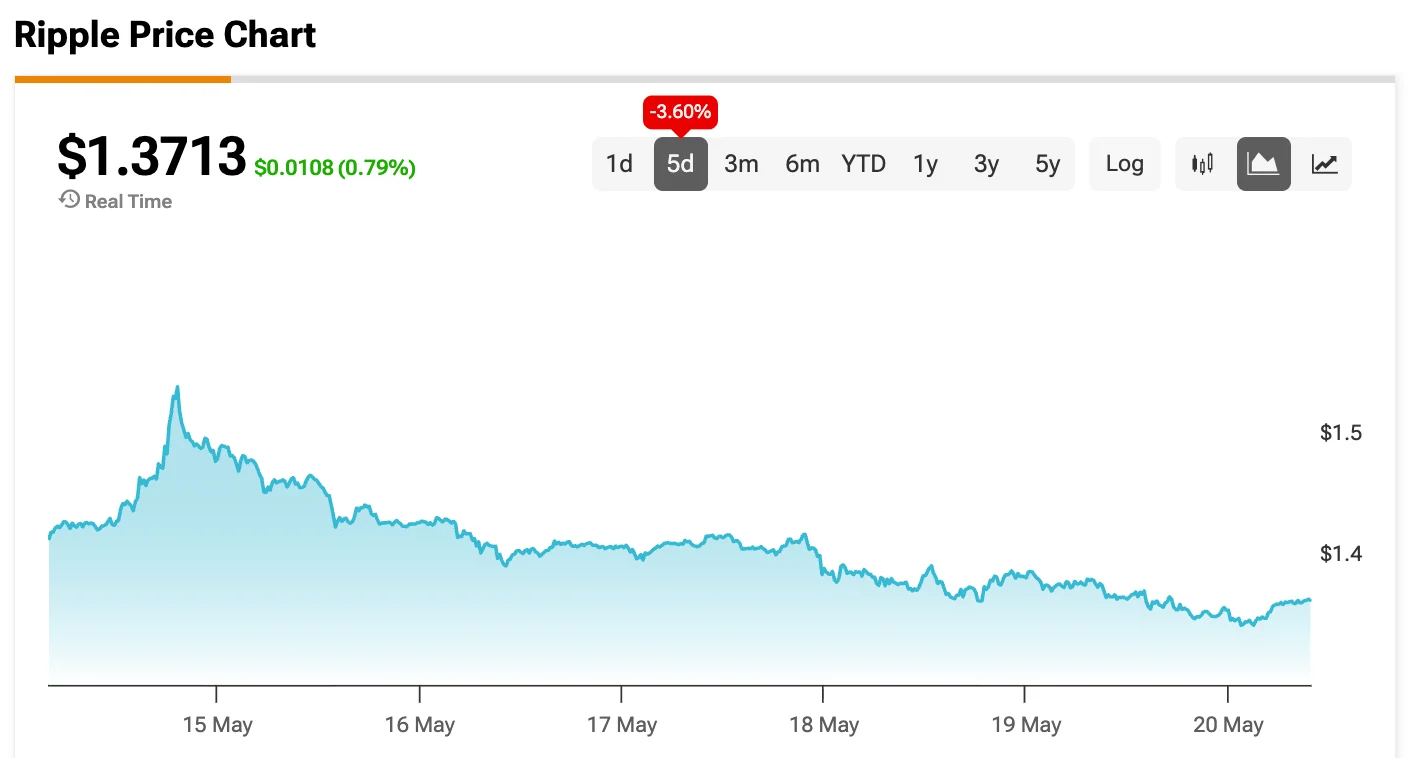
Is a $27 XRP Price Mathematically Possible? 2 Analysts Say Yes It Is!
Tipranks·2026/05/20 09:57

Marchés nerveux, Bitcoin sous pression, mais LiquidChain continue
Newsbtc·2026/05/20 09:54
United Kingdom: Softer inflation but policy risks – Rabobank
FXStreet·2026/05/20 09:51
EUR/USD continues its run lower amid increasing Fed hike bets, surging Treasury yields
Investinglive·2026/05/20 09:45
Iran Launches Digital Marine Cargo Insurance in Strait of Hormuz With Bitcoin Payments
Coinspaidmedia·2026/05/20 09:39
ESPORTS fluctuated 40.1% within 24 hours: token unlock approaching triggers sharp price volatility
Bitget Pulse·2026/05/20 09:17
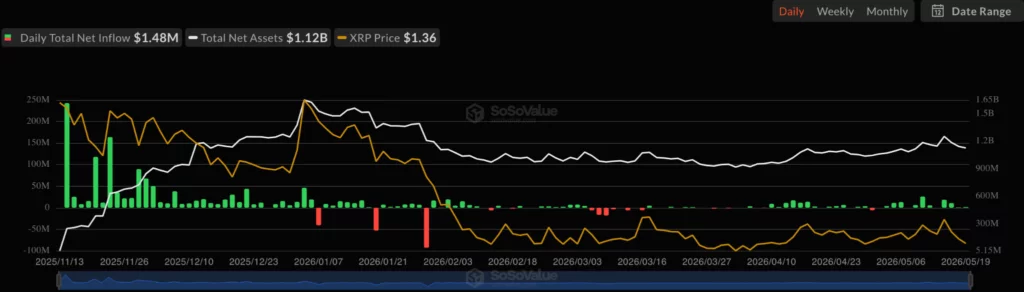
XRP selling pressure fades, but $1.50 still blocks bulls
Crypto.News·2026/05/20 09:15
Brent: Oil holds above 110 as Strait risk persists – Deutsche Bank
FXStreet·2026/05/20 09:13
Australian Dollar recovers slightly; firm USD to cap the upside ahead of FOMC Minutes
FXStreet·2026/05/20 09:09
Flash
09:56
Analyst: On-chain data indicates an extremely abnormal "whale trap" characteristic in this cycle, with whale costs concentrated in the $80,000 to $85,000 rangeBlockBeats News, on May 20, analyst Murphy (@Murphychen888) posted on social media that, according to URPD data by wallet size after physical adjustment, there is a significant divergence in cost distribution between whales and retail investors in the current market. This cycle has shown a markedly different token structure compared to previous cycles. Data shows that super whales holding over 100,000 Bitcoin have their costs mainly concentrated in the $80,000 to $85,000 range, with smaller concentrations near $70,000 and $40,000. This means that at the current price levels, super whales as a group are generally in a loss position. In the $65,000 to $120,000 range, the main holding groups are wallets with 100 to 1,000 coins and 1,000 to 10,000 coins, with retail investors accounting for a much smaller proportion in this range. In the $20,000 to $60,000 range, retail groups holding 0.1 to 1 coin and 1 to 10 coins dominate. Below $20,000, large-wallet whale groups once again become the main holders. The analysis points out that in past market cycles, it was usually large holders who exited at the top, distributing tokens to retail investors who bought in at higher prices. The significant difference in this cycle is that major holders are locked in at high price ranges. Therefore, whether these trapped large holders will collectively cut losses and exit has become a key variable in determining the depth of this bear market. As for the retail investors who bought in the $60,000 to $20,000 range, those intending to sell have mostly already exited, and the remaining tokens are highly likely to be held for the long term.
09:55
Timothy Massad: The United States may introduce a government-backed digital dollarAccording to a certain news platform, former CFTC chairman Timothy Massad stated that although President Trump has opposed CBDCs and government-backed US dollar stablecoins, the global development of financial tokenization may drive the United States to launch an on-chain digital dollar solution. He mentioned that the White House is studying the relevant infrastructure, and the US has already participated in BIS's Project Agora. Mark Gould, the Federal Reserve's head of payments, said that a digital dollar is currently not within the Fed's scope of duties, but if it were to be launched, the Federal Reserve would be responsible for it.
09:54
Analysis suggests the Federal Reserve may raise interest rates in JulyGoldman Sachs analysts stated that their baseline forecast is for oil transportation in the Gulf region to basically return to normal by the end of June this year. In this scenario, Brent crude oil could fall back to around $90 per barrel by the fourth quarter. However, Goldman Sachs warns that overall risks remain skewed to the upside. Against the backdrop of rising inflation expectations, the market has recently begun adjusting its bets on the Federal Reserve’s interest rate policy, believing the Fed’s next move is more likely to be a rate hike rather than a cut. Among them, the most clear-cut attitude comes from veteran Wall Street figure Edward Yardeni, who wrote in a report this week that he expects the Fed to keep rates unchanged at the June policy meeting and may raise rates by 25 basis points in July. (CCTV)
News