
News
Stay up to date on the latest crypto trends with our expert, in-depth coverage.

1Weight loss effect comparable to surgery! Eli Lilly RETA becomes the strongest "weight loss miracle drug" in history—"Will obesity become a rare disease in a few years?"2Brent Crude Tumbles Below $99 as Trump Signals US-Iran Deal, Bitcoin Holds Near $77K3Australian Bonds: Market Observations Amid Budget Expansion and Supply Reduction
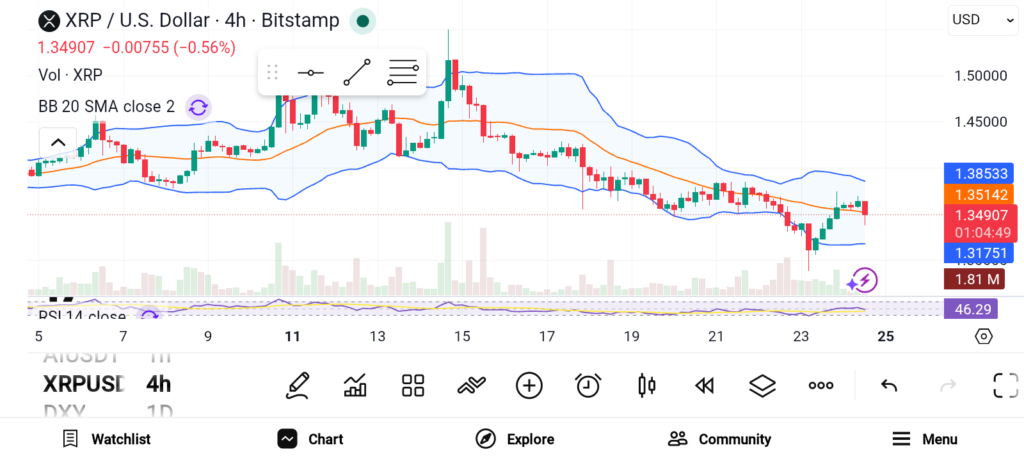
3 Crypto Projects with Growing Momentum — BNB, ADA, and XRP
Cryptonewsland·2026/05/25 13:45
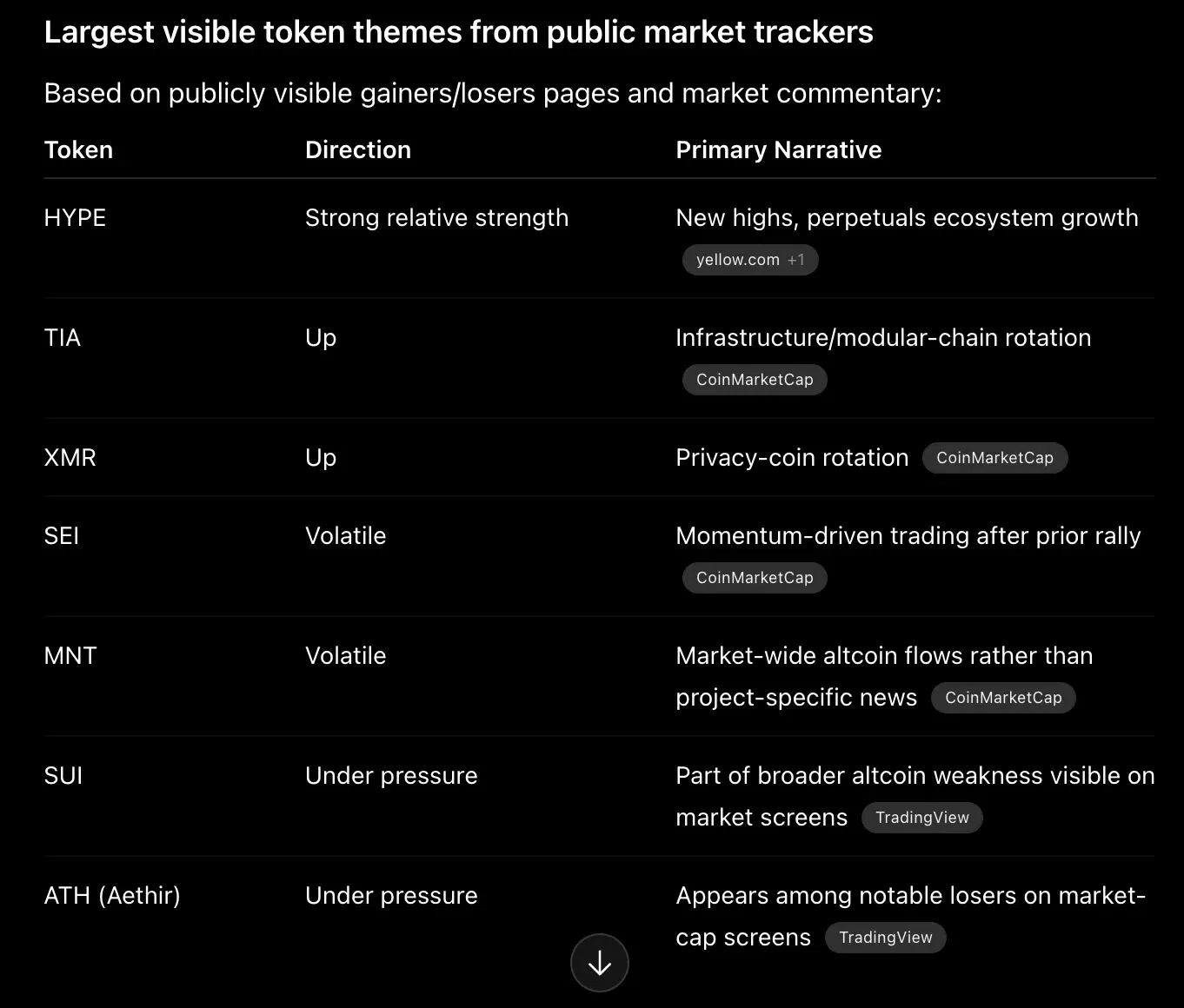
Today’s leading token storylines from top crypto market dashboards (May 25)
Crypto.News·2026/05/25 13:45

SAGA fluctuated by 40.4% in 24 hours: rebounded from a low to $0.0264, lacking a clear public event driver
Bitget Pulse·2026/05/25 13:38
AI Bubble Fears Grow as Big Tech Allegedly Pays Itself in Cloud Loop
BeInCrypto·2026/05/25 13:36
Humanity tops $653.68M in upcoming token unlocks
Cryptopolitan·2026/05/25 13:33
London Gold and Silver Vault Data for April 2026
LBMA·2026/05/25 13:33
Spotlight on Mainland China Gold Market and How It Is Reshaping Global Demand
LBMA·2026/05/25 13:33
Gold and HQLA: Correcting Misleading Online Information
LBMA·2026/05/25 13:33
Bank of Canada: Patient path to neutral – TD Securities
FXStreet·2026/05/25 13:30
Flash
14:17
Analysis: Even if the Strait of Hormuz reopens, it will still take weeks or even months for the 1,500 stranded vessels to fully resume passage.BlockBeats news, on May 25, The New York Times reported that although the United States and Iran are nearing an agreement to reopen the Strait of Hormuz, the resumption of passage for about 1,500 vessels that have been stranded in the Persian Gulf for nearly three months will still face complex coordination. Global energy transportation is unlikely to return to normal in the short term. The report said that even after the actual reopening of the strait, shipping companies will still need to address issues such as vessel priority, transit permits, route arrangements, and potential mine risks. Industry insiders expect that even if the agreement is officially implemented, it might take weeks or even months to restore the pre-war daily passage level of 130 ships. Since the Strait of Hormuz is responsible for about one-fifth of global oil and gas transportation, slow logistical recovery also means that international energy prices are unlikely to fall quickly in the short term. Baltic and International Maritime Council (BIMCO) Head of Safety Jakob Larsen stated that relevant departments may need to implement speed limits and unified scheduling in the future to avoid risks of vessel collisions or groundings.
14:17
Former Goldman Sachs commodities research head: Reopening the Strait of Hormuz is still the only long-term solutionThe continuous shrinkage of global inventories is, in fact, steadily increasing Iran's leverage in the current negotiations.
14:15
Former Goldman Sachs Head of Commodities Research Dismisses Proposals Such as "U.S. Suspension of Federal Gasoline Tax""This doesn't solve any problems. The only way to resolve this crisis is to increase the supply of 'physical molecules', meaning the supply of actual oil," he explained. Although the release of the US Strategic Petroleum Reserve provides some degree of cushioning, Curry stated that the market pricing mechanism indicates the fundamental physical shortage remains exceptionally severe.
News