
News
Stay up to date on the latest crypto trends with our expert, in-depth coverage.

1Walmart Q1 Revenue Beats at $177.8B, E-Commerce & Advertising Hit Record Highs, but Fuel Costs Cut Profit Growth in Half2The market raised interest rates for him! Waller takes office on Friday, rate cuts this year blocked: U.S. Treasury yields soar across the board


Solana Price Structure Suggests Temporary Recovery Before Next Major Decision
Newsbtc·2026/05/23 02:15
$ALT fluctuated 45.8% within 24 hours: High trading volume drives sharp price swings, with no clear single catalyst
Bitget Pulse·2026/05/23 02:14
DODO fluctuates 43.8% in 24 hours: Binance delisting DODO/BTC trading pair triggers intense volatility
Bitget Pulse·2026/05/23 02:08
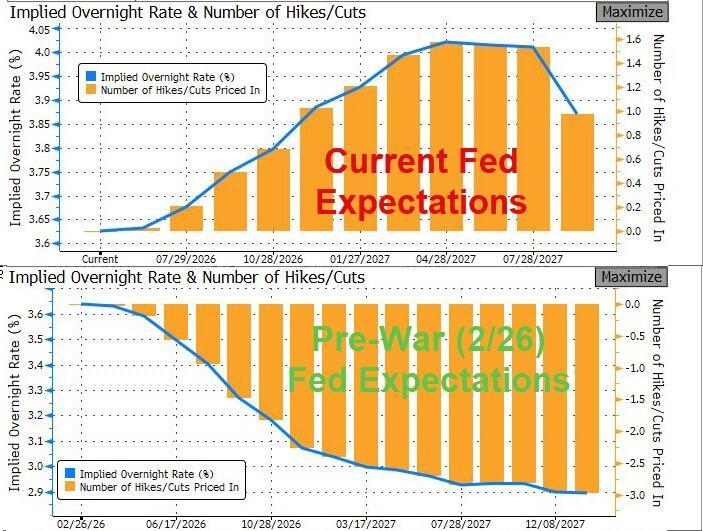
Voloshin’s First Day in Office Faces Market Test: Rate Hike Expected This Year!
华尔街见闻·2026/05/23 01:56
ARG fluctuated by 46.2% in 24 hours: price experienced intense swings between $0.39 and $0.57
Bitget Pulse·2026/05/23 01:40

Everything Is Aligning — Here’s How the Most Anticipated Altcoins Season Could Finally Trigger a 5x Move
Cryptonewsland·2026/05/23 01:39
How is Qualcomm the best-performing chip stock right now, with over 40% gain this week?
Cryptopolitan·2026/05/23 01:36
Flash
02:28
Institution: Canada’s population growth slowdown hits consumer company demandGolden Ten Data reported on May 23 that Thiago Figueiredo, a macro strategist at Desjardins, stated that the sudden tightening of Canada's regulatory policies on temporary residents and foreign students has exposed a weakness in the country’s domestic consumer businesses. For many years, rapid population growth provided an artificial boost to corporate profits, but this advantage has now turned into a macro risk. He pointed out that sales in domestic low-cost essentials have dropped significantly, which is closely related to this structural slowdown in population growth. Figueiredo specifically mentioned the low-cost dining and student-related industries, saying, “This is likely exactly where you’ll see more consumption affected among the student population. But I do think this will still be a negative factor facing us next year.”
02:22
Analyst: ZEC Approaches Key Resistance Zone from Last November, Potential Turning Point AheadAccording to Odaily, crypto analyst Ali posted on the X platform that the privacy-focused crypto project Zcash (ZEC) has seen a cumulative increase of over 40% in the past week, and its current price is approaching a key resistance zone between 700 and 730 USD, which previously triggered a sharp correction in November last year. If ZEC can effectively break through and remain above this range, there could be further upward momentum; on the other hand, if it faces strong selling pressure again, it may repeat the previous pattern of surging and pulling back.
02:11
The Shiller P/E ratio of US stocks rises to extreme levels seen 25 years ago, as AI frenzy triggers concerns of an "internet bubble repeat"Jinse Finance reported that on May 23, data showed the Shiller P/E (CAPE) ratio for the U.S. stock market in 2026 has risen to the range of approximately 39.5 to 41.7, reaching the highest level in the past 25 years, second only to the peak of the 1999 internet bubble at around 44 times. Analysis indicates that this round of valuation surge is primarily driven by the AI concept, including the continuous rise of technology giants related to semiconductors, cloud computing, and AI infrastructure. A small number of large-cap tech stocks now account for most of the S&P 500's gains. There are concerns in the market that the current trend shows similarities to the 1999 internet bubble. However, the report notes that, unlike the large number of unprofitable internet companies back then, today's leading AI companies generally have strong cash flow, mature business models, and high profit margins, providing much stronger fundamental support. The current AI investment boom has extended to data centers, energy, power grids, and enterprise-level AI application fields. Analysts warn that the market is currently highly concentrated in a handful of AI giants, and if interest rates rise in the future, or AI commercialization falls short of expectations, or profit growth slows, U.S. stocks may still face valuation compression and volatility risks. Historical data shows that after the Shiller P/E enters historically high ranges, the real return rate of U.S. stocks over the following ten years tends to be in the low single digits.
News