
PepsiCo Faces Binary Setup: Can North American Volume Stabilization Unlock Deutsche Bank’s $169 Target?

The immediate catalyst is a tactical adjustment. Deutsche BankDB+4.90% analyst Steve Powers has maintained his Buy rating on PepsiCoPEP-0.98% but cut his price target from $176 to $169. This move, reported earlier this month, follows a recent earnings beat and a broader market pullback, creating a potential mispricing between strong fundamentals and negative sentiment.
The new target implies roughly 10% upside from shares trading around $155, positioning it just below the Street consensus. The revision is a direct response to mounting macro headwinds, which Powers cites as creating "legitimate and widespread pressures" across the consumer packaged goods sector. These pressures include cost inflation from Middle East conflict, potential demand destruction from consumer trade-down, and adverse currency moves.
Yet Powers holds firm because the company's recent performance demonstrates resilience. He points to Q4 momentum, where core EPS grew 11% in constant currency and EMEA operating profit surged 72%. This earnings power, combined with management's commitment to a record year of productivity savings, supports the thesis that PepsiCo can navigate the turbulence. The setup is now a classic event-driven play: a major analyst's conviction remains, but the revised target reflects a more cautious near-term view on external pressures.
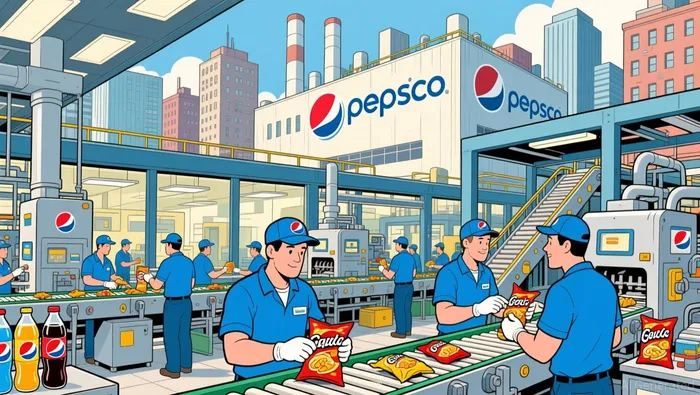
The Mechanics: Can Guidance Deliver the Setup?
The path to the $169 target hinges on executing a precise, modest growth plan while fending off significant headwinds. PepsiCo's recent financials show the company can deliver, but the 2026 outlook provides a clear, and somewhat constrained, roadmap for success.
The foundation is solid. The company just reported a quarterly beat, with adjusted EPS of $2.26 topping expectations. This momentum was driven by improving organic sales, a trend management aims to extend. The formal 2026 guidance sets a tangible target: 2-4% organic revenue growth and 4-6% constant currency EPS growth. For the stock to reach the revised target, the company will likely need to hit the high end of both ranges. This isn't aggressive expansion, but a disciplined execution play.
| Total Trade | 42 |
| Winning Trades | 20 |
| Losing Trades | 21 |
| Win Rate | 47.62% |
| Average Hold Days | 2.86 |
| Max Consecutive Losses | 6 |
| Profit Loss Ratio | 1.63 |
| Avg Win Return | 14.69% |
| Avg Loss Return | 7.65% |
| Max Single Return | 35.29% |
| Max Single Loss Return | 17.35% |
The primary obstacle is a persistent 11-percentage-point headwind in its North American business. This pressure, stemming from cost inflation and consumer trade-down, directly challenges the organic sales growth needed to hit the top of the guidance band. Management's response is a mix of brand reinvestment and affordability initiatives, but volume stabilization remains a work in progress.


The key near-term risks are well-defined and could easily derail the setup. First, consumer sentiment remains fragile, with the University of Michigan index at a pessimistic level, which could accelerate trade-down behavior. Second, tariff-driven commodity costs continue to pressure margins. Third, adverse currency moves, a point Deutsche Bank highlighted as a widespread sector headwind, add another layer of complexity to the constant currency EPS target.
The bottom line is that the $169 target is achievable, but it requires flawless execution against a backdrop of pressure. The company has demonstrated its ability to generate earnings power, as shown by the Q4 beat. Now, the focus shifts to translating that into the guided growth rates while managing the PBNA headwind. For an event-driven strategist, this creates a clear binary: meet the high end of guidance, and the target is in reach; miss it, and the stock faces renewed pressure.
Valuation & The Path to $169
Trading around $155, PepsiCo sits roughly 10% below Deutsche Bank's revised target. The stock's recent path is a study in recent volatility: it has pulled back 6.35% over the past month after a strong start to the year, yet remains up 8.2% year-to-date. It trades well below its 52-week high of $171.48, reflecting a clear negative momentum that the target must overcome.
The valuation itself is not cheap. The forward P/E of 34.3 implies significant growth expectations are already baked in. For the stock to reach $169, the market would need to see either a multiple expansion or, more likely, successful execution that justifies the premium. The setup is therefore binary: the company must hit the high end of its 2026 guidance to validate the current price, or the stock will struggle to close the gap.
The key catalyst for a move is the stabilization of North American volumes. This is the primary source of the 11-percentage-point headwind. Management's playbook hinges on brand relaunches and affordability investments gaining traction. The stock's ability to climb will be directly tied to early evidence of volume stabilization in this critical region. Any positive signal from spring resets or the ongoing brand reinvestments could provide the near-term catalyst needed to break the recent downtrend.
For an event-driven strategist, the watchpoint is clear. The path to $169 requires turning the North American narrative from a drag to a contributor. Until that stabilization is visible, the stock faces a ceiling defined by its recent momentum and elevated valuation. The target remains a tactical goal, not a given.
Catalysts & Risks: The Event-Driven Playbook
The tactical setup now hinges on a few specific, near-term events. The primary catalyst is the Q1 earnings report, expected in late April. For the Deutsche Bank thesis to hold, the company must beat the low end of its 2026 guidance. This means delivering constant currency EPS growth of 4-6% and showing early signs of volume stabilization in North America. Any miss on EPS or a further deterioration in the region's trends would likely force a reassessment of the $169 target.
The key watchpoint is North American volume. Management's entire turnaround plan relies on brand relaunches and affordability initiatives gaining traction. The stock's path will be directly tied to early evidence from spring resets. Positive signals here could provide the near-term catalyst needed to break the recent downtrend and re-rate the stock toward the target.
On the risk side, two clear threats could break the setup. First is persistent consumer trade-down. With the University of Michigan index at a pessimistic level, any acceleration in this behavior would directly pressure PepsiCo's North American business and its 11-percentage-point headwind. Second is a sharper-than-expected surge in commodity costs, particularly from tariff-driven inflation. This would squeeze margins and make hitting the high end of the EPS guidance increasingly difficult, potentially forcing a formal cut.
Institutional ownership shifts are another subtle but important signal. Recent data shows major holders like Vanguard and State Street have been increasing their stakes, which is generally a positive vote of confidence. Any significant selling by these large funds in the coming quarters would be a red flag for the stock's momentum.
Finally, watch the execution of the shareholder return plan. The company has projected $8.9 billion in total shareholder returns for 2026. This includes the recently announced $10 billion buyback authorization. If management begins to scale back this aggressive return of capital, it would signal a shift in capital allocation priorities and could undermine the investment case. For now, the plan remains intact, but it is a key pillar of the current valuation.
Disclaimer: The content of this article solely reflects the author's opinion and does not represent the platform in any capacity. This article is not intended to serve as a reference for making investment decisions.
You may also like
SOL Faces Influx of Exchange Deposits and Security Incident, Market Prospects Remain Unclear

Smart investors increase holdings in Japan ETFs as global tensions challenge ongoing reform efforts

General Motors Sees 9.7% Decline in Q1 Sales Due to Tariff Surge and Severe Winter Weather

uniQure Approaches April 13 Court Deadline Amid Stricter FDA Position on Gene Therapy Study
Trending news
MoreCrypto prices
More





