
Linde Secures $400 Million Blue Point Bet, Cementing Its Position in Clean Ammonia S-Curve Infrastructure

Linde's Strategic Shift: Building the Foundation for Clean Energy
Linde's $400 million commitment to the Blue Point initiative marks a significant transformation for the company. Rather than simply supplying industrial gases, Linde is now taking on the role of constructing the essential infrastructure for a new energy landscape. By being the first to establish these critical systems, Linde positions itself as the backbone for widespread adoption of clean ammonia and hydrogen solutions.
This substantial investment sends a strong message. Linde will design, own, and operate a large-scale air separation unit (ASU) to support the Blue Point project—a partnership aiming to produce 1.4 million tons annually of low-carbon ammonia. This isn't just a transaction; it's a long-term, resource-intensive collaboration where Linde takes on both operational risks and rewards. The ASU is expected to be operational by 2029, aligning with Linde's broader ambition to become the "master architect" of the hydrogen and clean ammonia supply chain. This trusted infrastructure model is vital for large-scale projects that demand reliability and deep technical know-how.
Linde's journey has been building toward this moment. From 2021 to 2024, the company set the stage with key announcements. Now, in 2025, the focus has shifted from planning to decisive action. The Blue Point investment is part of a project pipeline exceeding $10 billion, underscoring Linde's practical commitment to blue hydrogen as an immediate solution. By establishing itself as a crucial enabler, Linde is not merely providing a product—it is facilitating the adoption of clean ammonia on a massive scale.
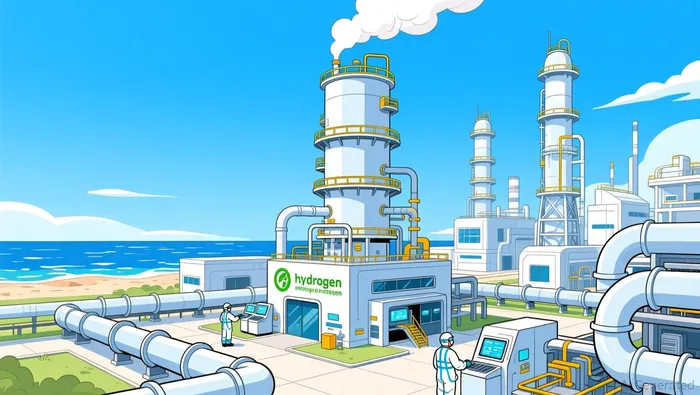
Market Growth: The Exponential Rise of Green Ammonia
The green ammonia sector is poised for remarkable expansion. Forecasts indicate a 66% compound annual growth rate (CAGR) from 2024 to 2030, with market size expected to surge from $0.29 billion to $6.16 billion. This rapid growth follows the classic S-curve pattern, where early momentum accelerates adoption. For Linde, this trajectory validates its multi-year, capital-intensive investment in Blue Point, positioning the company as a dominant infrastructure provider as the market takes off.
Ammonia's unique ability to store and transport renewable energy makes it a key solution for sectors that are difficult to electrify, such as shipping, power generation, and industrial feedstocks. The market's expansion is no longer speculative—recent government support is speeding up adoption. For example, the NSW Government recently allocated $45.2 million to a green hydrogen and ammonia project, providing policy momentum that reduces commercial risk and confirms long-term demand.
Linde's alignment with this growth curve is strategic. By constructing the vital air separation unit for Blue Point, Linde is not just selling equipment—it is supplying the core hydrogen and nitrogen needed for the clean ammonia supply chain to scale. The company is betting that green ammonia's adoption will mirror other transformative energy shifts, where early infrastructure builders reap significant rewards.

Financial Implications and Project Risks
Linde's $400 million investment is a strategic move to secure its place in the evolving clean ammonia market. The financial risk is mitigated by a long-term supply contract, ensuring steady revenue from the new ASU. This shifts the project from a speculative investment to a stable infrastructure venture, directly supporting Blue Point's mission to create a dependable and cost-effective low-carbon ammonia supply chain. The investment also strengthens Linde's presence in a key industrial region, enhancing its operational footprint and reinforcing its role as a core partner.
The main challenge lies in the project's timeline. The ASU is scheduled to be operational by 2029, making timely construction and commissioning crucial. Any delays could disrupt the entire value chain, affecting the joint venture's schedule and economics. The project's scale and complexity add to the risk, as this will be the largest ASU in the Mississippi River corridor. However, Linde's experience in the region offers reassurance that it can handle the engineering and construction demands.
Success will be measured by the facility's ability to deliver affordable, reliable hydrogen and nitrogen. The economics of ammonia production depend heavily on feedstock costs. If Linde achieves its goal of an efficient, world-scale ASU, it will lower production costs for Blue Point and its partners, providing a competitive edge as the clean ammonia market accelerates. The investment is a long-term bet on infrastructure, where the rewards come from being the indispensable provider as adoption grows.
Key Catalysts and What to Monitor
The next pivotal moment will be the 2029 launch of Linde's ASU, marking the first real test of its integrated infrastructure approach. The facility must be completed and operational on schedule to supply the Blue Point ammonia plant. Any setbacks could impact the entire value chain and the joint venture's economic model. Success would confirm Linde's capability to execute its "master architect" vision for clean ammonia.
Keep an eye on updates regarding ammonia production volumes and pricing from Blue Point. Achieving the 1.4 million tons per year target will be an important milestone. If Blue Point reaches this scale and maintains competitive costs, it will serve as strong evidence for the viability of the clean ammonia value chain. Conversely, any production shortfalls or pricing challenges would highlight the risks involved in scaling new energy infrastructure.
The projected 66% CAGR for green ammonia provides a robust long-term growth outlook. Linde's multi-year investment is justified by this exponential adoption curve, but flawless execution is essential to capture market share. The company is banking on its role as the reliable, low-cost supplier of hydrogen and nitrogen to unlock this growth. For now, the focus remains on achieving the 2029 milestone and monitoring the first commercial outcomes.
Disclaimer: The content of this article solely reflects the author's opinion and does not represent the platform in any capacity. This article is not intended to serve as a reference for making investment decisions.
You may also like
SOL Faces Influx of Exchange Deposits and Security Incident, Market Prospects Remain Unclear

Smart investors increase holdings in Japan ETFs as global tensions challenge ongoing reform efforts

General Motors Sees 9.7% Decline in Q1 Sales Due to Tariff Surge and Severe Winter Weather

uniQure Approaches April 13 Court Deadline Amid Stricter FDA Position on Gene Therapy Study
Trending news
MoreCrypto prices
More





