
UnitedHealth's RADV Risk Establishes a Clear Multi-Year Obligation Amid Heightened CMS Oversight

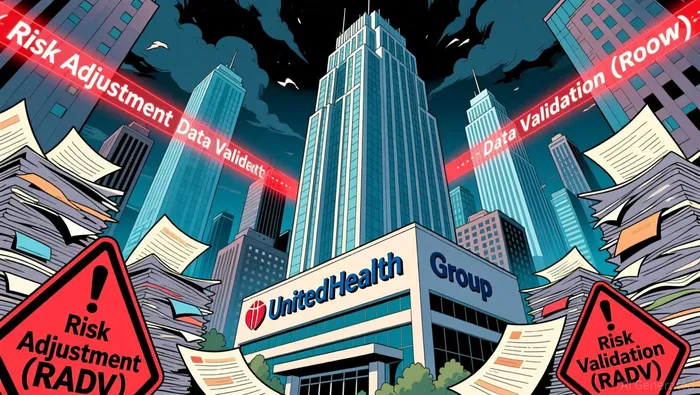
UnitedHealth Group Faces Significant RADV Audit Risks
Institutional analysis highlights a pressing concern for UnitedHealth Group (UNH+3.36%): the company is exposed to substantial and measurable financial threats due to its involvement with the Medicare Advantage Risk Adjustment Data Validation (RADV) program. According to research from Leerink Partners, this is not a remote regulatory risk but an immediate and considerable liability. UnitedHealth's vast scale makes it the primary focus for regulators, especially as oversight has become increasingly stringent.
Leerink Partners points out that UnitedHealth holds the greatest exposure to RADV audits among its competitors—a structural weakness stemming from its dominant position in the Medicare Advantage market. This translates into a large number of contracts subject to audit by the Centers for Medicare & Medicaid Services (CMS). A January 2026 CMS memorandum signals an intent to ramp up and broaden these audits, particularly targeting the largest providers and accelerating the use of RADV reviews. Even a small error rate across UnitedHealth’s extensive contract base could result in major financial liabilities.
Additionally, the 2023 CMS RADV final rule introduced a pivotal change: audit findings are now extrapolated at the contract level, rather than being limited to sampled claims. CMS estimates this change will result in the recovery of almost $5 billion in risk adjustment overpayments from Medicare Advantage organizations over the next nine years. For UnitedHealth, this means a direct, multi-year financial obligation embedded in the regulatory landscape.
The risk is further intensified by a more assertive enforcement environment. Both the Department of Justice and CMS are actively pursuing False Claims Act cases against major Medicare Advantage organizations, including UnitedHealthcare, and CMS is leveraging new technologies such as AI to make audits more efficient. This dual pressure—legal action and enhanced audit processes—transforms RADV risk from a compliance expense into a major financial exposure, threatening future cash flows and limiting the company’s flexibility in capital allocation.
Governance Challenges: Strong Controls, Weak Oversight
While independent assessments have found UnitedHealth’s internal controls and documentation to be robust, these strengths conceal a critical governance shortfall. Audits have identified effective operational controls, but also recurring issues with policy organization, centralization, and governance. This is more than a minor administrative issue—it reflects a systemic problem where oversight is fragmented, responsibilities are ambiguous, and company-wide policy reviews are inconsistent. Such an environment allows aggressive profit-seeking strategies to persist under the appearance of compliance.
Senator Chuck Grassley’s Senate report provides further context, alleging that UnitedHealth transformed risk adjustment into a profit engine by leveraging its scale and data analytics to maximize diagnoses and payments. The core legal risk centers on accusations that the company structured its operations to exploit the system, turning a public health initiative into a private revenue stream. Independent reviews, focused on technical compliance, failed to detect this strategic abuse because they did not assess the intent behind policy decisions.
This gap in governance bridges the divide between strong internal processes and significant external liabilities. UnitedHealth has responded with 23 action plans—65% of which are scheduled for completion by year-end—to address these governance weaknesses. However, these efforts carry execution risk, as they aim to overhaul the very structures that allowed the problem to develop. The company faces a tight deadline, with a March 2026 target for full implementation. Ultimately, while internal audits confirm operational effectiveness, leadership and strategic direction must be realigned with the program’s original intent to truly mitigate risk.
Financial Consequences and Sector Implications
The financial ramifications of UnitedHealth’s RADV exposure are immediate and substantial, with the 2023 CMS rule enabling retroactive recovery of overpayments dating back to payment year 2018. This is not a hypothetical risk but a concrete claim on past revenues. The government’s projection of nearly $5 billion in recoveries across the sector over nine years sets a clear upper limit, but UnitedHealth’s individual liability could be both significant and unpredictable, directly affecting its balance sheet and future cash flows. This liability diverts resources from growth or shareholder returns toward potential settlements and legal costs.
This situation exemplifies a high-conviction risk in the managed care industry, where strong regulatory headwinds are counteracting previous growth drivers. While the sector has benefited from demographic trends and a shift to value-based care, UnitedHealth’s predicament exposes a fundamental vulnerability: the underlying profit model is under scrutiny. The Senate report claims the company turned risk adjustment into a business strategy, maximizing payments through its scale. This approach, though lucrative in the short term, has resulted in significant legal and financial uncertainty. For investors, this means reevaluating sector allocations, potentially favoring peers with more conservative practices or shifting capital to less regulated healthcare segments.
Key near-term factors for risk reduction include monitoring the progress of ongoing False Claims Act cases against UnitedHealthcare and the implementation of the January 2026 CMS RADV memo, which expands audit activity. The outcomes of these developments will clarify the scale of legal liability and the government’s enforcement approach. Until then, uncertainty remains a central risk, making UnitedHealth’s situation a core concern for portfolio management and sector strategy.
Key Catalysts and Strategic Considerations for Investors
For institutional investors, several critical milestones and strategic watchpoints will shape the outlook. The foremost test is the execution of UnitedHealth’s 23 action plans, with a firm deadline of March 31, 2026 and a 65% completion target by year-end. The effectiveness of these initiatives will determine whether the company can resolve the governance issues highlighted by independent reviews. Any significant delays or failures, especially regarding centralized oversight and separation of coding audit functions, would indicate ongoing operational risk and could prompt a reassessment of the company’s risk profile.
Another important consideration is the potential for changes in capital allocation. UnitedHealth’s recent review of its Medicare Advantage diagnosis practices, as announced by its new CEO, suggests a strategic shift in response to regulatory pressure. Investors should watch for any significant changes to dividends or share repurchases. In the face of a multi-year liability, prudent management would likely prioritize strengthening the balance sheet and maintaining liquidity over aggressive shareholder returns. Any move to increase payouts amid ongoing uncertainty could signal either a misjudgment of risk or an attempt to influence short-term market sentiment.
The ultimate financial impact remains uncertain. While the government’s estimate of nearly $5 billion in sector-wide recoveries provides a benchmark, UnitedHealth’s actual liability could be much higher given its size and exposure. Although internal controls are strong, governance failures enabled profit-driven strategies that now carry significant risk. The final recovery amount will depend on the outcomes of DOJ False Claims Act cases and the pace of expanded RADV audits. Until these issues are resolved, the potential liability remains a key variable in valuation models, directly affecting UnitedHealth’s future earnings and cash flow. In summary, the investment case now centers on execution, financial discipline, and the resolution of a large, uncertain liability.
Summary of Backtest Strategy and Results
- Strategy: Go long on UNH when the 252-day rate of change is positive and the closing price is above the 200-day simple moving average (SMA). Exit the position if the price falls below the 200-day SMA, after 20 trading days, or upon reaching an 8% gain or a 4% loss.
- Backtest Results:
- Strategy Return: -21.5%
- Annualized Return: -10.7%
- Maximum Drawdown: 24.25%
- Win Rate: 0%
- Total Trades: 1
- Average Hold Days: 6
- Profit/Loss Ratio: 0
- Average Loss Return: 21.5%
- Maximum Single Loss Return: 21.5%
Disclaimer: The content of this article solely reflects the author's opinion and does not represent the platform in any capacity. This article is not intended to serve as a reference for making investment decisions.
You may also like
Bitget Spot Margin Announcement on Suspension of SUEPR/USDT, DRIFT/USDT Margin Trading Services
Bitget to suspend stock token trading on Good Friday (April 3, 2026)
Mezo (MEZO) to be listed on Bitget Launchpool — lock BGB and MEZO to share 4,000,000 MEZO
Bitget PoolX to list Mezo (MEZO): Lock BTC to share 1,500,000 MEZO
Trending news
MoreCrypto prices
More





