
McDonald’s bold approach to value may spark a price battle—yet its competitive edge stays intact

McDonald's Value Revival: A Strategic Reset
McDonald's recent resurgence serves as a textbook example of a resilient company leveraging its foundational strengths to overcome a challenge to its value proposition. The fast-food giant, renowned for its vast scale, strong brand loyalty, and operational prowess, faced mounting pressure as post-pandemic price hikes began to tarnish its reputation for affordability—especially among budget-conscious consumers. In response, McDonald's implemented a carefully structured, multi-layered strategy designed to reinforce its value offerings while safeguarding profitability.
Early Signs of Success
Fourth-quarter 2025 results highlight the effectiveness of this new approach. U.S. comparable sales climbed 6.8%, marking a third straight quarter of positive momentum after a period of stagnation. This growth was fueled by a shift from short-term deals to a lasting "McValue" framework. The introduction of the McValue menu in January 2025 delivered immediate gains, while the September relaunch of Extra Value Meals further accelerated sales. Looking ahead, McDonald's plans to expand its value platform with a $3-and-under menu debuting in April 2026, signaling a sustained commitment to affordability.
This strategic overhaul is a direct answer to concerns about losing its value edge. CEO Chris Kempczinski has made it clear: "McDonald's is not going to get beat on value and affordability." Analysts agree, noting the brand's renewed appeal among consumers earning $45,000 or less. This repositioning has not only improved McDonald's value perception but also helped it recover traffic, even after setbacks like an E. coli incident earlier in the year. The underlying goal is to protect the company's competitive moat; if McDonald's is seen as too expensive, it risks alienating its broad customer base.
Balancing Growth and Profitability
For long-term investors, questions remain about how this value-driven approach will impact margins and how competitors might react. The effectiveness of McDonald's tiered pricing depends on its ability to balance increased customer visits with healthy profits. The upcoming $3-and-under menu is expected to boost foot traffic, but it could also put downward pressure on average transaction sizes. The challenge lies in encouraging customers to spend more during each visit, rather than simply opting for the cheapest items. As rivals respond, McDonald's must remain nimble to defend its pricing power without sparking a damaging price war. While the company's moat appears reinforced, the next hurdle is to generate sustained value growth within this framework.
Financial Performance: Navigating Growth and Margin Challenges
Recent financials illustrate the delicate balance McDonald's must maintain. Global comparable sales increased by 5.7% in the fourth quarter, with U.S. sales up 6.8%. Both higher guest counts and larger average checks contributed to this growth, indicating that the value strategy is attracting and retaining customers. Revenue rose 10%, and net income grew by 7%. For the full year, diluted earnings per share reached $11.95, a 5% increase. While these results reflect disciplined execution, the current valuation assumes continued flawless performance.
This optimism is evident in the stock's valuation. As of early March, McDonald's traded at a P/E ratio of 27.45. While this premium reflects confidence in the company's growth trajectory, it leaves little room for disappointment. Should aggressive pricing strategies lead to ongoing margin compression, investors may begin to question the sustainability of these earnings.
Adding to the complexity is the growing impact of GLP-1 weight-loss drugs, which are expected to reduce fast-food spending by 5-8% in the coming years. McDonald's aims to counter this shift by positioning itself as the go-to affordable dining option, but must do so while defending margins against this structural headwind. The company's disciplined capital allocation, demonstrated through its multi-tiered menu rollout, is now being put to the test. The ultimate measure of success will be whether McDonald's can continue to grow operating income and maintain strong returns on invested capital in this evolving landscape.
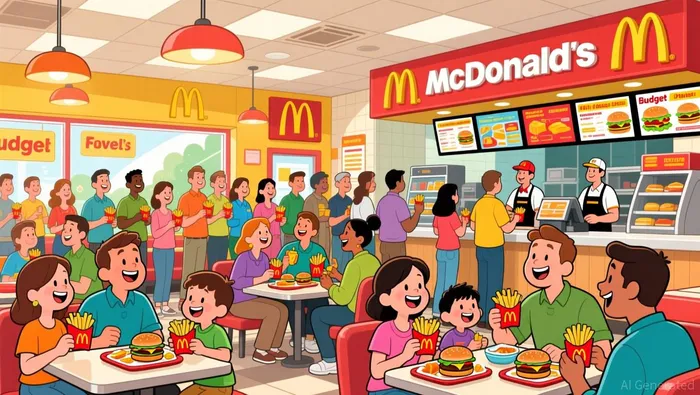
Competitive Edge and Valuation Considerations
For value-focused investors, the key question is whether McDonald's pricing overhaul strengthens its competitive moat or simply opens the door to a costly price battle. Evidence so far points to the former, but the company's lofty valuation means there is little tolerance for mistakes.
McDonald's commanding presence in the U.S. quick-service restaurant market—holding a 15.64% market share—gives it the scale to implement new value initiatives without sacrificing profitability. This scale translates into significant purchasing power and resilience in promotions, allowing McDonald's to absorb the costs of new menu tiers and value offerings more easily than smaller competitors. Investors appear to view this scale as a lasting advantage, not a liability.
Operational discipline is also central to McDonald's strategy. The transition from limited-time deals to a permanent value platform is supported by its robust digital infrastructure and a unified franchise network. This is not a knee-jerk reaction, but a coordinated, system-wide repositioning. As CEO Kempczinski emphasized, the company aims to "stay agile in a rapidly changing competitive environment." The digital platform ensures consistent value messaging and delivery across thousands of locations, turning menu changes into a strategic brand evolution. This operational leverage is what transforms short-term traffic gains into long-term competitive strength.
However, the market's confidence is already reflected in the high valuation. With a P/E ratio near 27, investors are betting on the value strategy driving sustained growth. The margin for error is slim: the company must fend off competitors, adapt to new consumer trends like GLP-1 drugs, and continue to grow operating income. If the value platform merely attracts bargain hunters without increasing overall spending, or if it sparks a damaging price war, the premium valuation could quickly come under pressure.

Outlook: Tools for Success, High Expectations
In summary, McDonald's is leveraging its vast resources and operational expertise to reinforce its competitive moat amid a value perception crisis. The company is winning back customers, but its high valuation now requires it to deliver on profitability as well. For investors willing to be patient, McDonald's has the capabilities to succeed, but the current share price reflects high expectations.
Key Catalysts and Risks Ahead
The thesis behind McDonald's value turnaround is now entering a crucial phase of validation. The strategic shift is underway, but the market's elevated expectations require clear evidence that the new approach is delivering results. Investors should keep an eye on three main factors in the coming quarters:
- Resilience of Q1 2026 Comparable Sales: McDonald's has already cautioned that severe winter weather may slow growth, providing a real-world test for the value platform. If sales remain robust despite these challenges, it will confirm the staying power of the new pricing model. A sharp slowdown, however, would raise doubts about whether the value appeal is truly lasting or just a temporary response to external factors.
- Competitive Reactions: McDonald's aggressive value initiatives have prompted rivals like Panera Bread and Domino's to introduce their own discounts. As competitors follow suit, the risk of a price war increases. While McDonald's scale gives it an edge, if competitors match deals without similar efficiency, margin pressures could intensify, threatening the profitability of the new menu tiers.
- Impact of the $3-and-Under Menu: The upcoming $3-and-under menu is the next step in McDonald's value evolution. Its success will depend on attracting incremental traffic, especially from lower-income consumers, without significantly reducing average check sizes. The company must ensure these low-priced items serve as an entry point to higher-margin purchases, rather than anchoring customers to the lowest price tier. Early indicators are promising, but the true test will be whether this menu can drive value growth without undermining core profitability.
Disclaimer: The content of this article solely reflects the author's opinion and does not represent the platform in any capacity. This article is not intended to serve as a reference for making investment decisions.
You may also like
Veteran Investor: I Have This Strange Feeling That XRP Is About to Do Something Stupid Again
Ethereum nears $2,000 as technical and on-chain analysis highlight accumulation zones
The Timeless Resilience: An In-Depth Chronicle of the Japanese Yen — From 360 to the Era of Carry Trade
Grayscale’s Q1 2026 Report Shows AI Crypto Lost Less Than Every Other Sector While the Market Bled
Trending news
MoreCrypto prices
More





