
Can Visa’s use of artificial intelligence transform disputes into a strategic edge?

Visa's Strategic Shift Toward Dispute Resolution
Visa Inc. (V) is intensifying its efforts to address a frequently neglected aspect of digital payments: resolving disputes. By introducing six innovative tools as part of its expanding suite of value-added services, Visa aims to reduce substantial losses stemming from fraud, inefficiencies, and outdated methods. In 2025, Visa managed 106 million disputes worldwide, highlighting the growing importance of back-office operations as strategic assets rather than mere support functions.
Leveraging AI and Data for Enhanced Payment Solutions
The newly launched tools integrate artificial intelligence with network-wide data to address persistent challenges in the payments sector. For example, the Dispute Resolution Network is designed to resolve issues early, preventing escalation, while the Dispute Recovery Manager utilizes generative AI to optimize the representment process and improve recovery outcomes. Updates to Order Insight, including the introduction of Compelling Evidence 3.0, demonstrate Visa's proactive stance against friendly fraud—a rising concern for merchants in digital commerce.
Intelligent Workflows for Issuers and Acquirers
Visa is embedding advanced intelligence into the workflows of issuers and acquirers. Solutions like Dispute Intelligence and Doc Analyzer employ predictive AI to accelerate decision-making and minimize manual reviews. The forthcoming Case Manager platform aims to unify dispute handling across networks, marking Visa’s transition from fragmented, reactive systems to integrated, data-driven operations.
Building a Competitive Edge
This initiative has the potential to become a significant competitive advantage. Visa’s value-added services have already fueled growth, and expanding into dispute management aligns with its strategy to monetize its extensive data resources. If successful, this AI-driven approach could lower costs and reshape trust, efficiency, and revenue generation in global commerce.
Competitor Strategies in Value-Added Services
Visa faces competition from companies such as Mastercard Incorporated (MA) and American Express Company (AXP).
- Mastercard: Through platforms like Ethoca and Mastercom, Mastercard has established a robust dispute management ecosystem. Its approach emphasizes real-time data sharing, transparency, and collaboration among issuers, acquirers, and merchants to streamline chargeback processes and minimize friction throughout the payments cycle.
- American Express: American Express integrates dispute management into its broader risk, fraud prevention, and customer service offerings. Leveraging its closed-loop network, AXP delivers a cohesive, service-oriented experience, positioning dispute resolution as part of its premium value proposition rather than a standalone feature.
Visa’s Stock Performance and Financial Outlook
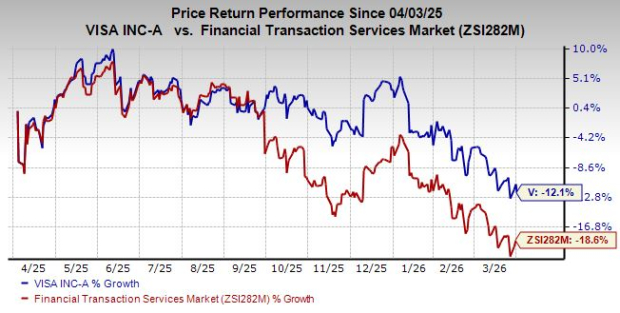
In the past year, Visa’s share price has dropped by 12.1%, which is less than the industry’s overall decline of 18.6%.
Source: Zacks Investment Research
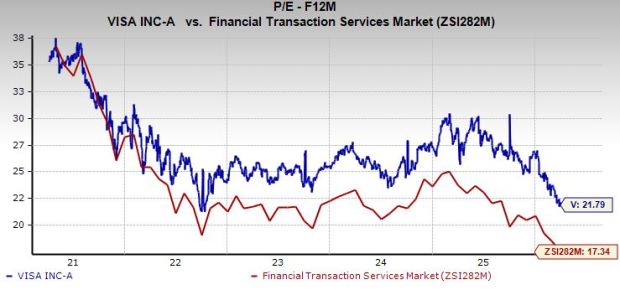
Visa currently trades at a forward price-to-earnings ratio of 21.79, higher than the industry average of 17.34. The company holds a Value Score of D.
Source: Zacks Investment Research
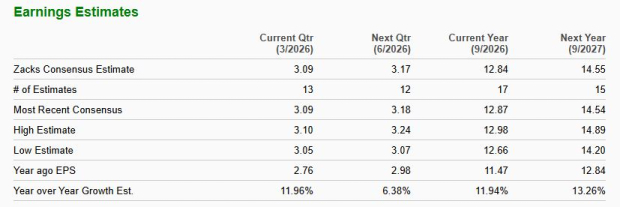
Analysts at Zacks project Visa’s fiscal 2026 earnings to rise by 11.9% compared to the previous year.
Source: Zacks Investment Research
Visa currently holds a Zacks Rank #2 (Buy).
Disclaimer: The content of this article solely reflects the author's opinion and does not represent the platform in any capacity. This article is not intended to serve as a reference for making investment decisions.
You may also like
SOL Faces Influx of Exchange Deposits and Security Incident, Market Prospects Remain Unclear

Smart investors increase holdings in Japan ETFs as global tensions challenge ongoing reform efforts

General Motors Sees 9.7% Decline in Q1 Sales Due to Tariff Surge and Severe Winter Weather

uniQure Approaches April 13 Court Deadline Amid Stricter FDA Position on Gene Therapy Study

Trending news
MoreCrypto prices
More





