
Can Mastercard Tap Into SMB Expenditures via Amazon's Platform?

Mastercard Expands SMB Reach Through Amazon Partnership
Mastercard is intensifying its commitment to small and medium-sized businesses (SMBs) by launching a new co-branded credit card initiative in collaboration with Amazon and U.S. Bank. The debut of the Prime Business Card and Amazon Business Card signals Mastercard’s deeper move into embedded finance, integrating payment solutions directly into the purchasing process. Rather than simply issuing cards, Mastercard aims to become an integral part of daily business transactions.
These new cards are tailored to address the unique requirements of SMBs, offering features such as cashback rewards, adaptable credit options, and tools for managing expenses. Prime members can earn up to 5% cashback, while non-members receive 3%. The standout advantage lies in seamlessly integrating payments within Amazon Business operations, enabling Mastercard to foster repeat business, gather valuable insights, and build lasting customer relationships.
This alliance also positions Mastercard to benefit from the ongoing shift toward digital payments among SMBs—a market with significant growth potential. As more companies move their procurement online, Amazon’s platform becomes increasingly central, allowing Mastercard to capitalize on this trend. U.S. Bank, as the card issuer, further strengthens the partnership by combining distribution, infrastructure, and credit services.
One challenge is whether increased transaction volumes will offset the costs associated with generous rewards programs. While such incentives can impact short-term profitability, Mastercard’s asset-light business model and reliance on network fees help mitigate these effects. Should adoption rates meet expectations, this initiative could serve as a sustainable growth driver, bolstering Mastercard’s standing in the evolving B2B payments sector.
Competitive Landscape
Among Mastercard’s main competitors in the payments industry are Visa and American Express.
- Visa maintains its leadership in the SMB payments market, leveraging its global reach, extensive acceptance network, and strong partnerships with issuers. Visa’s emphasis on digital payment solutions and value-added services continues to drive increased SMB engagement and transaction volumes.
- American Express benefits from its closed-loop network, which supports premium offerings for SMBs and provides robust data insights and access to high-spending clients. However, the loss of its co-branded relationship with Amazon may put pressure on transaction volumes, despite ongoing strength in affluent and travel-focused segments.
Mastercard’s Stock Performance and Valuation
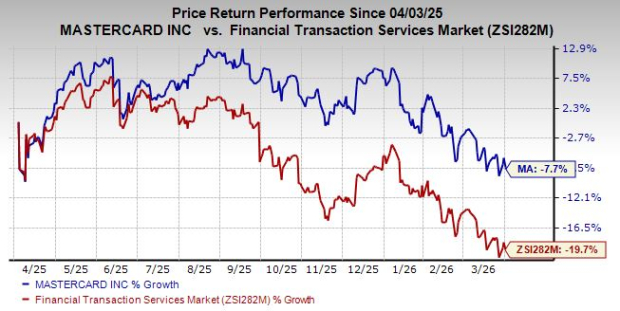
Over the last year, Mastercard’s share price has dropped by 7.7%, while the broader financial transaction services industry experienced a steeper decline of 19.7%.
Source: Zacks Investment Research
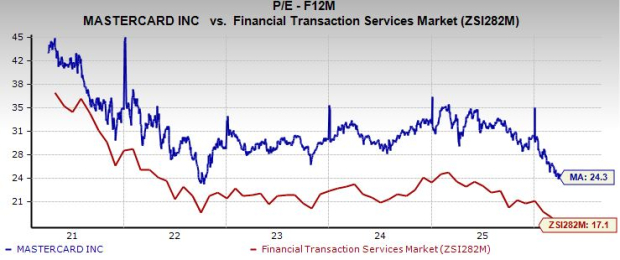
In terms of valuation, Mastercard currently trades at a forward price-to-earnings ratio of 24.30, which is higher than the industry average of 17.10. The company has been assigned a Value Score of D by Zacks.
Source: Zacks Investment Research
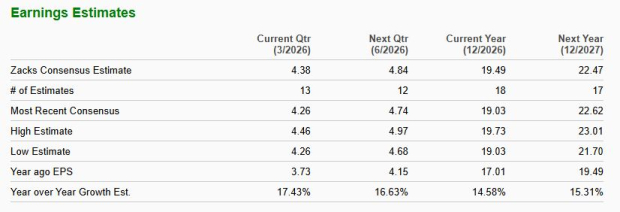
Analysts’ consensus estimates suggest that Mastercard’s earnings in 2026 could grow by 14.6% compared to the previous year.
Source: Zacks Investment Research
Currently, Mastercard holds a Zacks Rank #3 (Hold).
The Next Phase of AI Investment
The artificial intelligence sector has already produced significant wealth, but the most well-known companies may not offer the highest returns going forward. Lesser-known AI firms addressing major global challenges could present more lucrative opportunities in the near future.
Disclaimer: The content of this article solely reflects the author's opinion and does not represent the platform in any capacity. This article is not intended to serve as a reference for making investment decisions.
You may also like
SOL Faces Influx of Exchange Deposits and Security Incident, Market Prospects Remain Unclear

Smart investors increase holdings in Japan ETFs as global tensions challenge ongoing reform efforts

General Motors Sees 9.7% Decline in Q1 Sales Due to Tariff Surge and Severe Winter Weather

uniQure Approaches April 13 Court Deadline Amid Stricter FDA Position on Gene Therapy Study

Trending news
MoreCrypto prices
More





