
Trump’s Tariffs Fell Short of Reviving Manufacturing—Yet GE and Deere Benefited as Investors Turned Their Attention to AI and Corporate Profits

Reflecting on One Year Since "Liberation Day" Tariffs
On April 2, 2025, President Donald Trump announced a national emergency targeting foreign trade, naming the occasion "Liberation Day." The administration aimed to compel international partners to renegotiate trade terms by imposing substantial, country-specific tariffs, hoping to shrink the U.S. trade deficit. The immediate aftermath saw widespread panic in global markets, with investors rushing to sell U.S. stocks, bonds, and currency, resulting in sharp declines across these asset classes.
Although the policy was intended to maximize leverage in trade negotiations, its impact fell short of expectations. Only seventeen trade agreements were finalized in the following year, most of which were completed before the Supreme Court invalidated the emergency tariff powers in February. The ambitious promise of "ninety deals in ninety days" was not fulfilled, and the fundamental issue of the trade deficit remained largely unaddressed.
Market Resilience Amid Policy Turbulence
Despite the initial turmoil, financial markets demonstrated notable strength. Over the past year, the S&P 500 index climbed by 16%, surpassing its historical average growth rate of 10%. This upward trend persisted even as the tariff policy introduced volatility and uncertainty. The market’s recovery was fueled by robust corporate earnings, a resilient economy, and investors’ ability to adjust to the evolving trade environment. While the policy failed to achieve its goal of economic self-sufficiency, investors shifted focus to underlying economic fundamentals rather than short-term trade disruptions.
Evaluating Economic Consequences
The tangible effects of the policy included reduced trade activity, setbacks in manufacturing, and a muted economic shock. The most pronounced impact was a steep decline in trade with China: imports from China dropped by 30% and exports fell by more than 25% over the year. This separation is expected to persist, according to economists. Contrary to promises of a manufacturing resurgence, the data painted a different picture. Between April and December 2025, manufacturing jobs decreased by 77,000, and both construction spending and private investment saw declines. The HCSS report concluded that broad tariffs were ineffective and unreliable tools for reviving American manufacturing.

Exemptions further weakened the policy’s initial impact. Although the administration initially touted a 21.5% tariff rate, this was quickly reduced. By the Supreme Court’s decision, the actual average tariff rate had dropped to 13.6%, and 43% of U.S. imports in 2025 avoided tariffs altogether. This led to a surge in companies seeking exemptions and increased lobbying activity, resulting in higher costs for some businesses but failing to deliver the promised industrial revival.
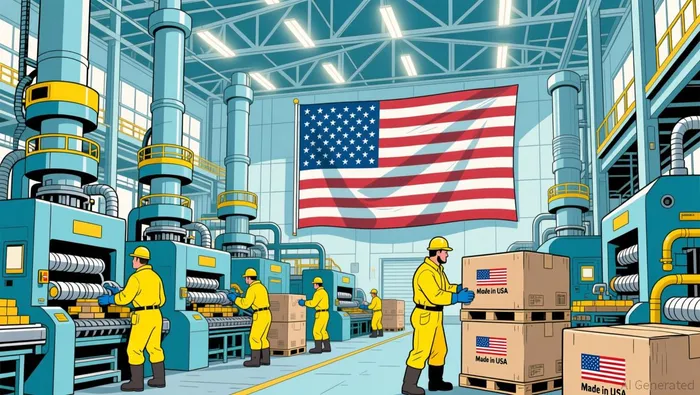
The effects were uneven across industries. Companies like GE and Deere managed to outperform the market, but faced significant tariff-related expenses. 3M estimated a reduction in 2025 earnings by $0.20 to $0.40 per share, with an annualized impact of $850 million. Deere anticipated tariff costs would double to $1.2 billion, and GE projected over $500 million in duties. These financial pressures affected margins and investment decisions, and while the policy altered trade patterns, it did not spark widespread industrial growth, leaving behind increased costs and uncertainty.
Winners, Losers, and Shifting Market Dynamics
The policy’s intended beneficiaries—domestic manufacturers—experienced mixed results. While GE Aerospace shares rose 44% and Deere & Company shares gained 21%, both outperformed the broader market. In contrast, 3M’s stock remained largely flat, lagging behind the S&P 500’s 17% increase. This divergence suggests that the tariffs did not lead to a widespread industrial boom, but rather benefited select companies able to navigate the new trade landscape despite increased costs.
Technology stocks emerged as the true winners. Sandisk, for example, saw its share price skyrocket by 1,200%, driven by the surge in demand for AI infrastructure. This highlights a shift in market focus toward innovation and growth sectors, rather than traditional manufacturing. The policy did not redirect investment toward industry, but it also did not prevent investors from rewarding companies leading technological advancements.
After the initial rally, the S&P 500 has declined 3.53% year-to-date, signaling that market attention has moved past the volatility caused by tariffs. Investors are now prioritizing earnings reports, economic indicators, and interest rate trends over unresolved trade issues. The index’s valuation is being tested in this more cautious, post-rally environment.
Looking Ahead: Key Catalysts and Risks
The market’s ability to adapt over the past year has been rooted in a focus on fundamentals beyond trade policy. Going forward, several critical factors will determine whether this stability persists or if renewed policy challenges emerge.
The Supreme Court’s decision to overturn the emergency tariff authority in February marked a significant legal setback. However, the administration remains intent on advancing its trade agenda through alternative strategies, creating ongoing uncertainty about the future of tariffs. Investors should be alert to the risk that tariffs may drive up consumer prices, squeezing corporate profits and household spending. Early signs are appearing, with Amazon’s CEO noting that tariffs are beginning to affect some product prices on the platform. If this trend accelerates, it could dampen consumer demand and economic growth.
- New Trade Agreements: Watch for announcements of fresh trade deals. The administration’s record has been lackluster, with only seventeen deals finalized in the past year, all before the Supreme Court ruling. Any new agreements could signal renewed negotiations and offer temporary relief to markets.
- Tariff Rate Changes: Monitor shifts in the effective tariff rate. The web of exemptions has already diluted the policy’s impact, with the average rate falling to 13.6% by the court’s decision. Significant changes in this rate would indicate the policy’s evolving influence.
Ultimately, the market’s future will be shaped by the interplay of these factors. While the legal foundation for the policy has weakened, its economic and political momentum may continue. Investors should remain vigilant for signs of systemic price pressures from tariffs and for diplomatic breakthroughs that could shift the landscape. The past year demonstrated the market’s ability to weather volatility; the next phase will reveal whether it can withstand a more persistent and costly environment.
Disclaimer: The content of this article solely reflects the author's opinion and does not represent the platform in any capacity. This article is not intended to serve as a reference for making investment decisions.
You may also like
SOL Faces Influx of Exchange Deposits and Security Incident, Market Prospects Remain Unclear

Smart investors increase holdings in Japan ETFs as global tensions challenge ongoing reform efforts

General Motors Sees 9.7% Decline in Q1 Sales Due to Tariff Surge and Severe Winter Weather

uniQure Approaches April 13 Court Deadline Amid Stricter FDA Position on Gene Therapy Study
Trending news
MoreCrypto prices
More





