
RTX Gains Tactical Edge as F-35 Strike Challenges "Swift War" Narrative, Shifting Focus to Prolonged Conflict and Defense Demand

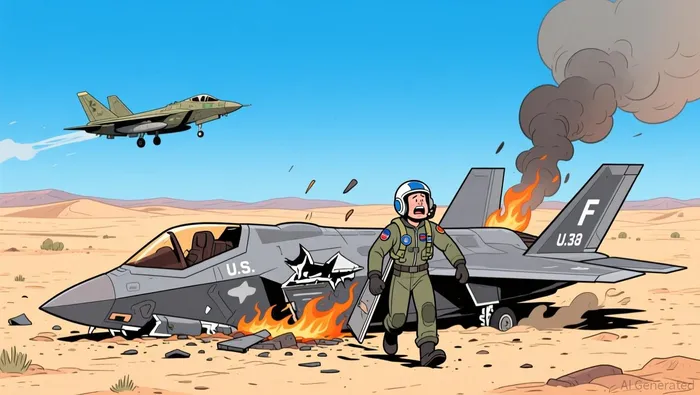
The catalyst is clear: a U.S. F-35 stealth fighter made an emergency landing last week after being struck by what is believed to be Iranian fire during a combat mission over Iran, according to two sources familiar with the matter. Captain Tim Hawkins of U.S. Central Command confirmed the jet landed safely and the pilot is in stable condition, but the incident is under investigation. If true, this would be the first time Iran has hit a U.S. aircraft in the war started in late February, marking a potential escalation in intensity.
Yet the event's veracity is immediately in question. Iranian state media has claimed a second F-35 was shot down over central Iran, releasing photos of an alleged crash site and footage of its air defenses engaging a U.S. aircraft. The U.S. military has not confirmed this second loss. This creates a tactical ambiguity that is itself a market driver. The initial strike on a single F-35 is a serious event, but the unconfirmed second claim introduces the specter of a far more significant blow to U.S. air operations in the region. For now, the official record stands on one confirmed incident, but the Iranian narrative of a second downed jet adds a layer of uncertainty that could fuel volatility.
Market Mechanics: Energy Volatility and Defense Stock Re-rating
The market's immediate reaction to the conflict's potential end was a classic risk-on rally. On Wednesday, oil prices fell about 3% as traders digested President Trump's comments suggesting a swift resolution, betting on a restoration of shipping through the Strait of Hormuz. This move was part of a broader global market surge, with U.S. stock futures advancing and the VIX falling to an over-week low.
Yet this relief rally is fragile and hinges on a single, unconfirmed narrative. The reported strike on a U.S. F-35, if substantiated, directly challenges the "swift end" thesis. It reignites fears of a protracted conflict and the associated supply disruption. The scale of that disruption is historic: the conflict has already caused the largest supply disruption in the history of the global oil market. The closure of the Strait of Hormuz, a key chokepoint, has stranded millions of barrels daily, forcing prices to surge past $120 per barrel earlier in the crisis. Any escalation that prolongs this blockade would likely reverse the recent oil price decline and reignite inflation fears.
For defense contractors, the event is a direct catalyst. The sector's fortunes are now tied to the conflict's duration. A major player like RTXRTX+0.77%, which recently landed a $3.8 billion contract for F-35 production, stands to benefit from sustained or increased defense spending. The confirmed F-35 strike, therefore, acts as a counter-narrative to the peace talk optimism. It shifts the market's focus from a potential quick de-escalation to the tangible, costly reality of a high-intensity, prolonged conflict. This creates a clear tactical setup: the energy sector faces a binary risk between a swift de-escalation and a prolonged, supply-constrained war, while defense stocks gain direct exposure to the latter scenario.
| Total Trade | 12 |
| Winning Trades | 8 |
| Losing Trades | 4 |
| Win Rate | 66.67% |
| Average Hold Days | 16.5 |
| Max Consecutive Losses | 2 |
| Profit Loss Ratio | 2.78 |
| Avg Win Return | 5.87% |
| Avg Loss Return | 1.73% |
| Max Single Return | 12.42% |
| Max Single Loss Return | 5.67% |


Catalysts and Risks: Veracity, Escalation, and Strategic Shifts
The immediate path forward hinges on a few critical events. The first is a direct response to the conflict's impact on global trade. The UN Security Council is set to vote on Saturday on a Bahraini proposal that would authorize countries to use "all defensive means necessary" to secure passage through the Strait of Hormuz. This vote is a key test of international resolve to keep shipping lanes open. If adopted, it could signal a broader coalition effort, but its passage is not guaranteed and would not resolve the underlying military standoff.
The primary near-term risk to the conflict narrative is the veracity of the F-35 strike itself. Iran has a history of making claims about shooting down U.S. aircraft that are later denied. Since the war began, the country has made at least six false claims about downing U.S. jets, all of which American officials have rejected. This track record means the initial strike on a single F-35 is serious, but the unconfirmed second claim from Iranian state media must be treated with extreme skepticism until independently verified. A false flag or misidentification would deflate the escalation narrative and likely calm energy markets.
Yet if the F-35 strike is confirmed, the strategic implications are profound. A loss of an advanced stealth fighter would force a strategic reassessment of U.S. air superiority in the region. It would signal that Iran's air defenses have evolved to a new threat level, potentially leading to a shift in tactics-more reliance on standoff weapons, increased electronic warfare, or a broader coalition role. This would almost certainly prolong the conflict, as the U.S. would need more time and resources to regain dominance. For markets, this creates a clear binary: a swift de-escalation with a confirmed second loss would pressure defense budgets and energy prices, while a prolonged, high-intensity conflict would sustain both. The coming days will separate the tactical catalyst from the strategic reality.
Disclaimer: The content of this article solely reflects the author's opinion and does not represent the platform in any capacity. This article is not intended to serve as a reference for making investment decisions.
You may also like
SOL Faces Influx of Exchange Deposits and Security Incident, Market Prospects Remain Unclear

Smart investors increase holdings in Japan ETFs as global tensions challenge ongoing reform efforts

General Motors Sees 9.7% Decline in Q1 Sales Due to Tariff Surge and Severe Winter Weather

uniQure Approaches April 13 Court Deadline Amid Stricter FDA Position on Gene Therapy Study
Trending news
MoreCrypto prices
More





