
Greg Abel’s Berkshire Repurchases Mark the Start of a Value-Focused Era—With $350 Billion Poised for Action

Greg Abel’s Strategic Approach as CEO
Greg Abel’s initial decisions as Berkshire Hathaway’s CEO have been marked by careful, value-driven intent. He worked closely with Warren Buffett, who enthusiastically supported Abel’s plans, describing them as quintessentially “Berkshire.” This endorsement from Buffett, known for his conservative stance on share buybacks, lends significant credibility to Abel’s actions.
One of Abel’s first tangible steps was to resume share repurchases after a 21-month pause. The timing was deliberate: buybacks began immediately following the mandatory 48-hour waiting period after Berkshire’s annual 10-K filing. This methodical process, combined with Buffett’s approval, highlights a thoughtful and disciplined approach to managing capital, rather than a reactive move.
Abel’s own investment in Berkshire is a strong signal of his commitment. He used the entire after-tax proceeds from his $25 million 2026 salary to purchase 21 Class A shares, valued at roughly $15.3 million. Abel has pledged to repeat this annual purchase for as long as he leads the company, directly linking his financial interests to Berkshire’s long-term growth. This move aligns his incentives with those of shareholders, emphasizing a focus on sustained value creation rather than short-term gains.
From a value investing standpoint, these actions are classic. The renewed buybacks indicate management believes Berkshire’s shares are undervalued relative to their intrinsic worth—a fundamental principle of rational repurchase strategies. Abel has stated that stock buybacks occur only when the company’s intrinsic value exceeds its market price. His personal investment further reinforces this philosophy, demonstrating his willingness to risk his own capital alongside shareholders.

Collectively, Abel’s moves address a crucial concern: will Berkshire maintain its disciplined capital allocation after Buffett? So far, Abel is signaling continuity, with a patient, value-focused approach and his own interests closely aligned with those of shareholders.
The $350 Billion Dilemma: Cash Reserves and Market Valuation
Berkshire’s enormous cash position is now the central issue for investors, especially in a market where valuations are elevated. As of early April, the company’s cash and short-term holdings had grown to over $350 billion. This figure is not static—Buffett recently noted that Berkshire purchased $17 billion in Treasury bills in a single week, highlighting their preference for safety in an unattractive market.
This cash stockpile stands in sharp contrast to broader market conditions. The S&P 500’s cyclically adjusted price-to-earnings (CAPE) ratio is at 38.8, a level historically associated with poor long-term stock returns. The market appears to be anticipating slower earnings growth, which has historically been unfavorable for equity investors. Berkshire’s own valuation is more restrained, with a trailing P/E ratio of 15.52, up from 11.68 a year ago but still well below the market average. The stock trades below its 52-week high, reflecting a more cautious outlook than the broader market.
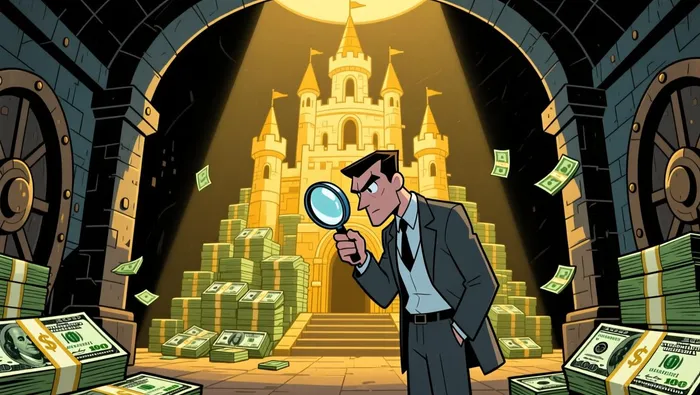
This situation is a classic value investing paradox: Berkshire, renowned for its ability to compound wealth, now sits on a massive cash reserve while the market’s prices for future growth seem excessive. The decision to hold cash signals that management sees few attractive opportunities for investment at reasonable returns. The real question is not about the cash itself, but about the cost of waiting. For patient investors, the cash acts as a safeguard; for others, it may feel like a missed opportunity. The outcome depends on whether market valuations eventually decline, allowing Berkshire to deploy its capital more effectively.
Evaluating Berkshire’s Competitive Advantages and Future Triggers
Berkshire’s enduring business model is built on two key strengths: a collection of high-quality, cash-generating businesses and a disciplined capital allocation process that has driven wealth creation for decades. Abel’s early actions indicate his intention to preserve this legacy. In his first letter to shareholders, he identified nine core stocks where Berkshire will limit trading activity, echoing Buffett’s philosophy that the best holding period is “forever.” Apple remains the largest equity position, and these core holdings make up more than 60% of the portfolio. This approach signals that Berkshire’s future will be shaped by concentrated investments in exceptional companies, not by chasing market trends.
The main catalyst for deploying the cash reserve would be a sustained market downturn that creates attractive acquisition opportunities. Buffett has emphasized that such moments are rare, noting that Berkshire often finds few compelling investments and that opportunities arise “very infrequently.” The current high valuations, with the S&P 500’s CAPE ratio at 38.8, have contributed to the accumulation of cash. Berkshire has been a net seller for 13 consecutive quarters, and the $350 billion cash position is the result of more sales than purchases. The strategy is not about predicting a crash, but about patiently waiting for a rare, compelling opportunity to invest at a favorable return.
The primary risk is that elevated market valuations could delay capital deployment for a prolonged period, challenging the patience of value-focused investors. While the cash reserve is a strategic asset, it also represents an opportunity cost. Abel inherits a company with a strong track record of compounding value, but his legacy will depend on his ability to invest wisely when the time is right. Some shareholders question the rationale for holding such a large sum, but Buffett has defended the approach, stating that the disciplined strategy will be “better under Abel’s management.” The future success of Berkshire depends on maintaining this patience—the company’s wide moat is only as powerful as its ability to wait for the right moment to invest in outstanding businesses at reasonable prices.
Disclaimer: The content of this article solely reflects the author's opinion and does not represent the platform in any capacity. This article is not intended to serve as a reference for making investment decisions.
You may also like
Veteran Investor: I Have This Strange Feeling That XRP Is About to Do Something Stupid Again
Ethereum nears $2,000 as technical and on-chain analysis highlight accumulation zones
The Timeless Resilience: An In-Depth Chronicle of the Japanese Yen — From 360 to the Era of Carry Trade
Grayscale’s Q1 2026 Report Shows AI Crypto Lost Less Than Every Other Sector While the Market Bled
Trending news
MoreCrypto prices
More





