
Conagra's Squeezed Margins Indicate Potential Shift Within Consumer Staples

Analyst Downgrades Signal Sector Reassessment for Conagra
Recent analyst downgrades for Conagra (CAG +1.29%) are prompting institutional investors to reconsider their exposure to the consumer staples sector. These actions reflect not just company-specific concerns, but a broader shift in how quality and risk are being evaluated within this traditionally defensive, yet increasingly challenged, group. The prevailing view is moving toward an underweight allocation, largely due to ongoing margin pressures that are undermining the sector’s historical pricing strength.
Several firms have reduced their price targets for Conagra, highlighting a more cautious outlook. For example, Evercore ISI lowered its target to $18 from $19, and RBC Capital cut its target to $17 from $20. Similar actions by Wells Fargo and JPMorgan have followed, resulting in an average analyst target of $16.53, only slightly above the current share price of $15.72. This narrowing gap between targets and market price suggests investors are rotating away from companies seen as vulnerable to rising costs and uncertain demand.
The rationale behind these downgrades is structural. Analysts cite accelerating input costs, continued consumer caution, and the risk of tariffs as factors that will weigh on margins for years. Conagra’s own outlook supports this, with the company anticipating elevated costs—including tariffs—through fiscal 2026 before any relief. This environment puts the sector’s core investment thesis to the test: the ability to pass on inflation and protect profits. In a market where volume growth is modest and consumers are trading down, companies with the strongest brands and pricing power will outperform. Conagra’s recent margin struggles, exacerbated by geopolitical tensions and shifting consumer preferences, make it less attractive compared to peers with better insulation from these pressures.

Investment Decisions: Quality, Margins, and Capital Allocation
For institutional investors, this wave of downgrades translates into a decision about where to allocate capital. In a sector where quality and pricing power are critical, Conagra’s high cost base and uncertain demand outlook position it as a potential laggard. The downgrades acknowledge that margin pressures are likely to persist, limiting valuation upside even if sales remain stable. This dynamic could drive a shift toward staples with clearer paths to margin stability and stronger cash flow generation.
Margin Pressure vs. Cash Flow: Evaluating the Trade-Off
Conagra faces a fundamental challenge: balancing declining profitability with robust cash generation. This trade-off is central to both total returns and the sustainability of its dividend, creating a dilemma for investors. The company is bracing for input cost inflation of around 7% in fiscal 2026, which is squeezing its adjusted operating margin and undermining the quality factor that institutional investors value.
Despite these pressures, management is focused on maintaining stable cash flow. Conagra offers a generous dividend yield of about 9% with an 80% payout ratio, supported by 51 consecutive years of payments. This signals a commitment to shareholder returns, even as earnings come under strain. The company is also using its cash flow to reduce debt, keeping leverage at 3.9 times debt to EBITDA—a key measure of financial health and flexibility.
For investors, this creates a portfolio construction challenge. While the high yield and manageable leverage offer some protection, they do not compensate for weak fundamentals. Persistent cost pressures are likely to limit earnings growth and dividend increases, making the stock more appealing for income and balance sheet stability than for operational improvement. In the context of sector rotation, this may justify a hold or cautious overweight for income-focused portfolios, but it does not address the underlying quality concerns that led to the downgrades. Cash flow is being managed prudently, but a clear path to margin recovery has yet to emerge.
Portfolio Impact: Dividend Support vs. Sector Rotation
Conagra’s strong dividend and cash flow provide a buffer, but they do not fully offset the company’s fundamental challenges. The commitment to a 9% dividend yield and 80% payout ratio, backed by a long history of payments, offers some reassurance. Combined with a leverage ratio of 3.9 times debt to EBITDA, this supports a hold for income-oriented investors. However, the recent reduction in annual profit guidance to $1.70 per share raises questions about the sustainability of these payouts. The lower earnings outlook, driven by high costs and weak demand, suggests the dividend cushion is being tested.
For portfolios focused on quality, the risk premium required for Conagra may be excessive. The investment case depends on pricing power and margin resilience, both of which are under pressure. With costs expected to remain high—including about 7% inflation in fiscal 2026—structural headwinds are difficult to overcome. In this context, a 9% yield must be supported by a credible path to margin recovery and earnings growth. With guidance at the low end and analysts highlighting rising input costs as a key risk, that path remains unclear. As a result, the stock’s valuation may not adequately reflect ongoing margin volatility.
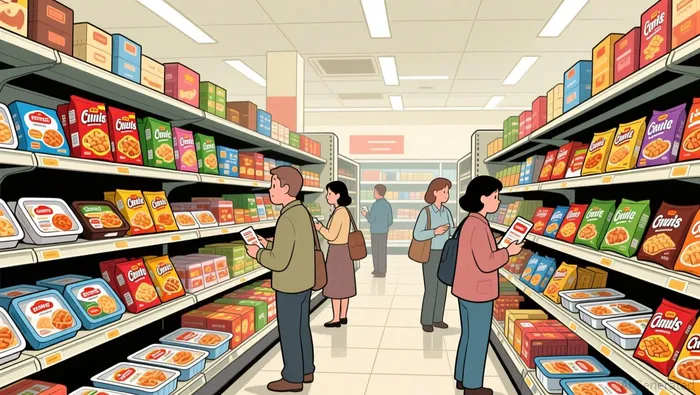
This environment supports the case for sector rotation. Institutional investors are likely to favor companies with stronger pricing power or more resilient product categories than Conagra currently offers. The company’s results are mixed: frozen meals are rebounding, snacks are holding up, but pantry staples like Slim Jim and Act II Popcorn are seeing weak demand. These category-specific challenges suggest that rotation may benefit peers with more balanced or defensive portfolios. While Conagra’s dividend provides some downside protection, the shift away from staples exposed to cost and demand risks is a logical move. The stock may appeal to yield-seeking investors willing to accept operational uncertainty, but it does not stand out as a quality pick for those seeking margin expansion.
Key Catalysts and Risks: What Could Change the Outlook?
For Conagra to move from an underweight to a more favorable position, investors need to see clear evidence that margin pressures are easing. The immediate focus is on the company’s adjusted operating margin for the full fiscal year, which management expects to be at the upper end of the 11.0% to 11.5% range. Missing this target, as some analysts anticipate for Q2, would confirm ongoing deterioration and likely lead to further downgrades. The key is not just meeting guidance, but demonstrating that Conagra can offset the projected 7% inflation through pricing and operational improvements.
The most promising catalyst would be sustained volume growth in the company’s stronger categories. Both frozen and snack segments have performed well for five consecutive quarters, with frozen recovering from supply issues and snacks maintaining momentum. Continued volume growth is essential, as it provides the revenue base needed to absorb cost pressures. If this trend persists into the second half of the fiscal year, it would indicate that Conagra is successfully capturing consumer demand, which is necessary for margin recovery.
The main risk is the inability to pass on higher costs. With input inflation elevated and consumers remaining cautious, any reluctance to raise prices could further erode gross margins. This would likely result in additional EPS guidance cuts, as the company has already reduced its annual outlook. Such a scenario would threaten the sustainability of the 9% dividend yield, potentially leading to a dividend review and a significant adjustment in the risk premium investors demand. Ultimately, a re-rating depends on Conagra proving it can restore pricing power and maintain resilient volume growth to protect its earnings base.
Quantitative Strategy Backtest: RSI Oversold Long-only
A long-only trading strategy for CAG, based on the Relative Strength Index (RSI), enters positions when RSI(14) falls below 30 and exits when RSI(14) exceeds 70, after 10 trading days, or upon reaching an 8% gain or a 4% loss. The backtest period covers April 4, 2024, to April 4, 2026.
- Strategy Return: -13.8%
- Annualized Return: -6.61%
- Maximum Drawdown: 23.58%
- Profit-Loss Ratio: 0.72
- Total Trades: 18
- Winning Trades: 8
- Losing Trades: 10
- Win Rate: 44.44%
- Average Hold Days: 8.17
- Max Consecutive Losses: 4
- Average Win Return: 2.74%
- Average Loss Return: 3.54%
- Max Single Return: 8.02%
- Max Single Loss Return: 5.69%
These results highlight the challenges of trading CAG during a period of margin pressure and sector rotation, with negative returns and a modest win rate reflecting the company’s operational headwinds.
Disclaimer: The content of this article solely reflects the author's opinion and does not represent the platform in any capacity. This article is not intended to serve as a reference for making investment decisions.
You may also like
Veteran Investor: I Have This Strange Feeling That XRP Is About to Do Something Stupid Again
Ethereum nears $2,000 as technical and on-chain analysis highlight accumulation zones
The Timeless Resilience: An In-Depth Chronicle of the Japanese Yen — From 360 to the Era of Carry Trade
Grayscale’s Q1 2026 Report Shows AI Crypto Lost Less Than Every Other Sector While the Market Bled
Trending news
MoreCrypto prices
More





