
Micron and TSMC Dominate AI Chip Market, Bottlenecks Strengthen Their Pricing Authority

Semiconductor Industry Faces a Critical Supply-Demand Imbalance
The global semiconductor sector is experiencing intense pressure from both soaring demand and production limitations. In January 2026, worldwide semiconductor sales reached $82.54 billion, marking a remarkable 46.1% increase compared to the previous year. This surge puts the industry on pace to achieve its first-ever trillion-dollar annual revenue. However, the sector's manufacturing capabilities are struggling to keep up, largely due to the rapid expansion of AI infrastructure, which is fundamentally altering the industry's supply dynamics.
This imbalance is both deep-rooted and dramatic. AI-focused chips now account for approximately half of the industry's total revenue, yet they make up less than 0.2% of all units shipped. As a result, the industry's growth is being propelled by a small, lucrative segment, leading to heightened demand for advanced components while other areas see more modest gains. This shift in production priorities is causing new bottlenecks, as manufacturers reallocate resources to meet AI-related needs, putting strain on the very components that enable AI advancements.
The most pronounced effects are seen in memory and advanced logic chips. In late 2025, leading memory manufacturers—Micron, Samsung, and SK Hynix—transitioned from producing older DDR4 memory to newer DDR5 and high-bandwidth memory (HBM). This move has already resulted in capacity shortages for memory and cutting-edge logic chips. The consequences are widespread: memory prices have doubled or tripled in a matter of weeks, prompting many companies to postpone or cancel orders, which in turn leads to reduced production of other semiconductor components. This creates a feedback loop, where a shortage in one key area can disrupt the entire supply chain, affecting everything from servers to smartphones.
Ultimately, the industry is witnessing explosive revenue growth that is increasingly constrained by physical production limits. The focus is shifting from simply meeting AI-driven demand to carefully managing the risk of a potential market correction, all while navigating a supply chain where the most advanced AI components are already oversubscribed.
Who Benefits: Companies with Scarce, High-Value Production Capacity
The clear beneficiaries in this environment are those companies that control the limited, high-value production capacity in greatest demand. Their ability to set premium prices and achieve rapid revenue growth stems directly from this supply-demand mismatch.
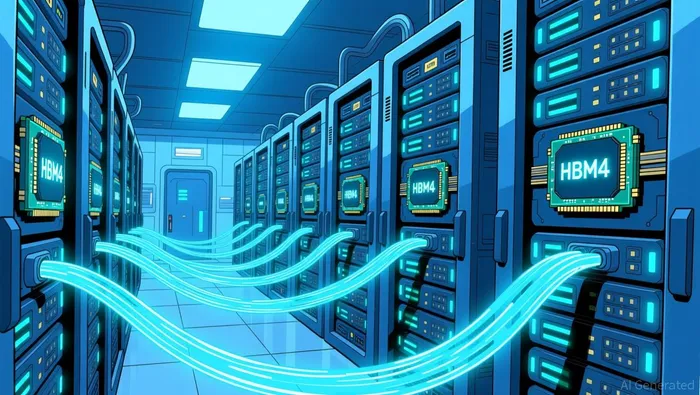
Micron Technology stands out as a prime example. In the second quarter of fiscal 2026, its NAND revenue soared 169% year-over-year to $5 billion, driven almost entirely by demand for AI data center SSDs. This represents more than just a strong sales quarter—it signals a fundamental change in the industry's economics. With HBM4 memory now being mass-produced for NVIDIA's next-generation platforms, Micron is capturing significant premiums for its most advanced AI memory products. Recent market volatility, partly due to concerns about memory-compression algorithms, temporarily depressed Micron's valuation, but the stock has since rebounded sharply.
At the manufacturing end, Taiwan Semiconductor Manufacturing Company (TSMC) is also capitalizing on this trend. The company has implemented price hikes of 3% to 10% for its advanced chip nodes in 2026, reflecting overwhelming demand for its most sophisticated products. TSMC's financials back up this pricing power, with TSMC reporting February 2026 revenue up 22.2% year-over-year and first-quarter revenue nearly 30% higher than the previous year.
Market Analysis: TSMC MACD Crossover Long-Only Strategy
- Entry Signal: MACD(12,26,9) crosses above the signal line and price closes above the 50-day SMA
- Exit Signal: MACD(12,26,9) crosses below the signal line, after 20 trading days, or if take-profit (+8%) or stop-loss (−4%) is triggered
- Asset: TSM
- Risk Controls: Take-Profit at 8%, Stop-Loss at 4%, Maximum holding period of 20 days
Backtest Results
- Total Return: -20.74%
- Annualized Return: -10.35%
- Maximum Drawdown: 29.78%
- Profit-Loss Ratio: 0.6
- Total Trades: 13
- Winning Trades: 5
- Losing Trades: 8
- Win Rate: 38.46%
- Average Hold Days: 5.15
- Max Consecutive Losses: 5
- Average Win Return: 3.34%
- Average Loss Return: 4.78%
- Max Single Trade Return: 8.12%
- Max Single Loss Return: 9.07%
This tightening of supply is rippling through the entire value chain. The pressure is no longer limited to chipmakers. Upstream, Resonac has raised prices for copper-clad laminates (CCL)—essential for circuit boards—by 30%. Downstream, memory OSAT (outsourced semiconductor assembly and test) providers have also implemented price increases of up to 30%. This chain reaction, from raw materials to assembly, demonstrates that the bottleneck is real and that the costs of limited capacity are being passed along every step of the way.
In summary, companies that control access to scarce, high-performance production assets—whether advanced memory for AI servers or state-of-the-art chip fabrication—are thriving in a market where demand far outpaces supply.
Who Loses: Firms in Transition or Facing Excess Supply
While some companies benefit from the current environment, others are struggling as the industry shifts focus. The main losers are those whose products are being deprioritized as resources are redirected toward newer, higher-margin technologies.
Producers of mature node chips and DDR4 memory are facing mounting challenges. As the major memory manufacturers have shifted away from DDR4 to DDR5 and HBM, they risk creating an oversupply of the older components they are phasing out. This is a classic case of supply chain misalignment: as the industry prioritizes next-generation AI memory, capacity for legacy products is being reduced, even as demand for those products stagnates. This sets up the possibility of a correction in these segments, as the gap between market needs and actual production widens.
This transition is fraught with uncertainty. Micron's recent stock performance highlights this volatility: the company saw a steep 14.55% decline in one week due to concerns over a memory-compression algorithm, followed by a 10.9% rebound the next week. This kind of market swing underscores how investor sentiment is often driven by short-term risks rather than the long-term fundamentals of the AI memory cycle, creating significant uncertainty for companies and their stakeholders.
The root of this divide is structural. High-value AI chips now generate about half of total industry revenue but account for less than 0.2% of units shipped. This leaves companies focused on standard logic, older memory types, or components for slower-growing sectors like automotive and consumer electronics at a disadvantage. Their business models, built on scale and consistent demand, are increasingly mismatched with a market where growth is concentrated in a small, high-performance niche. As investment and capacity flow toward this lucrative segment, the rest of the industry risks being left with surplus capacity and stagnant sales.
Key Catalysts and Risks for Q2
The current market environment is poised for either confirmation or disruption in the near term. The coming weeks will reveal whether the tight supply-demand balance for high-value capacity can be maintained or if underlying weaknesses will emerge.
The first major event to watch is TSMC's Q1 2026 earnings release on April 16, 2026. This report will provide critical insights into the advanced logic supply chain. TSMC's outlook on capacity utilization and demand for its recently price-increased nodes will serve as a bellwether for the entire sector. Since TSMC is the primary foundry for most AI chips, any indication of weakening demand or inventory buildup could quickly challenge the current narrative of synchronized price strength. On the other hand, continued strong utilization and pricing power would reinforce the view that supply remains tight.
The biggest risk, however, is a potential slowdown in AI infrastructure demand. The industry is in a precarious position: record growth is masking a structural divide, with half of total revenue coming from a segment that represents less than 0.2% of unit volume. This concentration leaves the market vulnerable—if the AI boom loses momentum, the synchronized price increases across memory, logic, and materials could quickly reverse. The market's focus on managing this risk is already evident, as stock performance often anticipates industry shifts.
Another factor to watch is the potential for further supply constraints in materials and advanced packaging. The recent wave of price hikes—from copper-clad laminates to memory OSAT—suggests that bottlenecks are moving upstream. If these constraints intensify, specialized suppliers with access to scarce inputs could benefit, but it would also raise production costs and complexity, potentially increasing the risk of a demand correction if higher prices or delays reach end customers.
In conclusion, the outlook for the second quarter hinges on the resilience of AI-driven demand. TSMC's upcoming report will be the first major test, but the real challenge will be whether the industry can navigate its capacity constraints without triggering a broader slowdown. For now, evidence suggests that supply is struggling to keep pace, but volatility remains a constant threat.
Disclaimer: The content of this article solely reflects the author's opinion and does not represent the platform in any capacity. This article is not intended to serve as a reference for making investment decisions.
You may also like
SOL Faces Influx of Exchange Deposits and Security Incident, Market Prospects Remain Unclear

Smart investors increase holdings in Japan ETFs as global tensions challenge ongoing reform efforts

General Motors Sees 9.7% Decline in Q1 Sales Due to Tariff Surge and Severe Winter Weather

uniQure Approaches April 13 Court Deadline Amid Stricter FDA Position on Gene Therapy Study

Trending news
MoreCrypto prices
More





