
Hold Albertsons as the Market Prices in the Worst, But Upside Awaits Execution

The market's view of AlbertsonsACI+2.59% is one of profound uncertainty, crystallized in a stock that has traded in a narrow band for half a year. The shares have been treading water, holding steady near $17.10 with minimal movement. This stagnation reflects a clear consensus: the company is in a defensive, cost-cutting phase, and investors are waiting to see if it can stabilize. The extreme divergence in analyst price targets-ranging from a sell at $14 to a buy at $29-captures this deep skepticism. Such a wide spread signals a market where the future is highly contested, and the prevailing sentiment is one of cautious waiting.
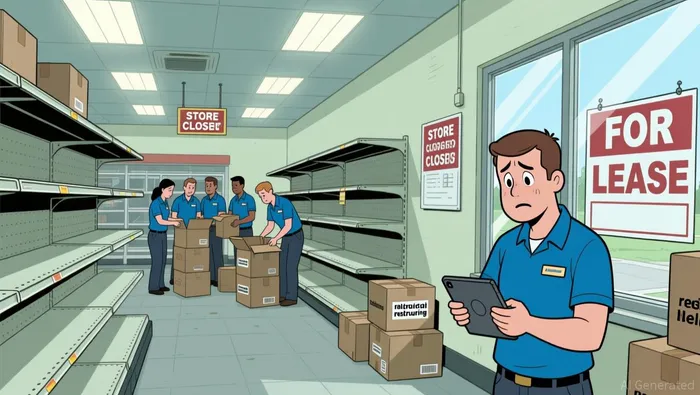
That waiting game is directly tied to the fallout from the company's failed strategic move. The collapse of the $24.6 billion merger with Kroger in 2024 removed a potential catalyst for scale and competitive strength. In its place, Albertsons has initiated a period of painful restructuring, including closing several stores and laying off 295 employees in early 2026. This follows about 20 closures in 2025, marking a deliberate shrinkage of its physical footprint. The message is clear: the company is pulling back to cut costs and stabilize, a necessary but inherently negative signal for growth investors.
The key question for a "hold" thesis is whether this defensive reality is already priced in. The evidence suggests it is. The stock's six-month stagnation at around $17 indicates that the market has digested the merger loss and the initial wave of closures. The recent price action, with a decline in 6 of the last 10 days and a 1-week prediction of -$1.67%, shows the stock is not rallying on optimism. Instead, it's trading on the expectation that the worst is behind it. The company's focus on digital sales and automation, which drove a 21% increase in digital sales in Q3 2025, is a positive operational shift, but it's being funded by store closures and job cuts.
Viewed another way, the extreme price target range highlights the asymmetry. The downside from current levels is limited, with the lowest sell rating implying only about a 20% drop. The upside, however, requires a complete reversal of the current narrative-a successful turnaround, a new growth strategy, or a favorable merger. Given the stock's lack of movement, it appears the market is pricing in the defensive scenario as the baseline. For a "hold" stance, the bet is that this baseline is already discounted, offering a low-risk entry point while the company navigates its restructuring. The risk is that the cost-cutting phase proves more painful than expected, but the stock's recent behavior suggests that pain is largely anticipated.
Operational Headwinds: Margin Pressure vs. Strategic Shifts
The core profitability story at Albertsons presents a classic tension between acknowledged structural pressures and the strategic bets management is making. The numbers show a company navigating a difficult transition, and the market appears to have already priced in the downside.
The most direct evidence of strain is the decline in gross margin. Over the last twelve months, the company's gross margin decreased by 50 basis points to 27.4%. The bear case attributes this to an unfavorable product mix shift toward lower-margin segments like pharmacy and digital. This is not a new problem; it's the logical consequence of a deliberate strategic pivot. The company's push into digital sales, which saw a 21% increase in Q3 2025, is a key growth lever. Yet, that same growth is contributing to the margin pressure, creating an expectations gap. Investors are being asked to accept that the path to future scale involves accepting near-term profitability erosion.
This pressure extends to the bottom line. The company's Net Operating Profit After Tax (NOPAT) fell by 3.53% year-over-year over the same period. This highlights the central challenge: translating sales growth into real profit. The 2.08% increase in net sales revenue for the 12 months ending August 2025 shows the business is still growing, but the profit decline indicates that cost management is struggling to keep pace with the mix shift. The broader picture is one of declining efficiency, with Return on Capital (ROC) declining from 7.78% to 7.35% and Economic Profit (EP) dropping 29.28%.
Viewed through the lens of a "hold" thesis, this is the acknowledged reality. The margin compression and profit decline are not new, unpriced risks; they are the expected cost of the strategic repositioning. The market's six-month stagnation in the stock price suggests this operational headwind is already discounted. The risk is not that these pressures are hidden, but that they persist longer or deepen than the market assumes. The company's focus on delivering $1.5 billion in savings from store closures and automation is an attempt to offset this, but the recent job cuts and closures signal a painful, ongoing process.


The bottom line is that the operational story is one of trade-offs. The strategic shift to digital and pharmacy is driving growth but pressuring margins. The market has accepted this trade-off as the baseline for now. For a "hold" stance, the bet is that this baseline is stable enough, and the stock's low valuation already reflects the ongoing profitability squeeze. The real risk is that the company fails to stabilize its core grocery business while funding its digital bet, but the current price action suggests that worst-case scenario is already in the price.
Valuation and the Risk/Reward Asymmetry
The current price of around $17.26 sits at the heart of the investment debate. It is a level where the market has clearly priced in a period of defensive, low-growth operations. The recent downgrade to Sell by Morgan Stanley, with a target of $14, underscores the persistent downside risk. That target implies a potential 20% decline from recent levels, a move that would punish the stock for any further deterioration in its core business.
The primary fear driving that downside is a widening performance gap with its former merger partner, KrogerKR+2.57%. Industry analysts note that Albertsons was about two to three years behind Kroger in modernizing its core operations when the deal fell apart. If Albertsons fails to close that gap, it risks being left behind in a competitive market, with its stagnant store count and weak margins becoming a permanent drag. This is the structural issue the market is pricing in: a company that must fight to hold its ground.
From a "hold" perspective, the asymmetry is defined by limited downside versus capped upside. The low valuation provides a margin of safety. With the stock already trading near the lower end of its wide analyst target range, the immediate risk of a severe de-rating appears constrained. The recent technical signals, including a decline in 6 of the last 10 days and a negative algorithmic forecast, reflect this cautious sentiment, but they also suggest the worst-case scenario is already discounted.
The upside, however, is far more conditional. It requires a successful turnaround-a clear acceleration in sales momentum, stabilization of margins, and a credible path to growth. The company's planned heavy reinvestment year for store remodels and price cuts is a necessary step, but it offers no guarantee of success. The long-term price forecasts, like the 2026 projection of $23.83, assume this turnaround materializes. Yet, given the stock's six-month stagnation, the market is not currently pricing in that optimistic scenario.
The bottom line is that the current setup favors patience over conviction. The "hold" thesis is a bet that the low price already reflects the defensive reality and the risks of a widening gap with Kroger. The risk/reward ratio tilts toward the downside if execution falters, but the stock's depressed valuation limits the potential loss. For now, the asymmetry favors waiting for clearer signs of operational stabilization before committing capital.
Catalysts and What to Watch
The thesis that the worst is priced in hinges on near-term execution and competitive dynamics. The coming quarters will test whether Albertsons can stabilize its core business or if the operational headwinds are intensifying. The key catalysts are clear: sequential changes in comparable sales growth and gross margin trends in the upcoming quarterly reports.
Management has signaled a heavy reinvestment year ahead, with plans to lower prices, remodel stores, and take other steps to stand out. This strategy is designed to juice growth, but it comes with a cost. The market is watching for any divergence in financial performance between Albertsons and its former merger partner, Kroger. Industry analysts note that Albertsons was about two to three years behind Kroger in modernizing its core operations. If the company fails to close that gap, it risks being left behind, and any widening performance gap would be a major red flag for the stock.
Specifically, investors should monitor the trajectory of comparable sales. The company posted a 2.4% increase in identical sales in its last quarter, driven by pharmacy and digital. The next few reports will show if this growth is sustainable or if it falters under the weight of store closures and price cuts. More critically, watch the gross margin. It declined to 27.4% last quarter, pressured by the shift toward lower-margin pharmacy and digital. Any further deterioration would confirm the bearish view that the strategic pivot is eroding profitability faster than cost savings can offset.
On the competitive front, the pressure is intensifying. As Albertsons navigates its standalone path, it faces rising competition from powerful rivals like Walmart and Costco. The company's ability to differentiate itself in a crowded, undifferentiated mid-market is now paramount. The recent analyst consensus of a Buy rating with a price target of $21.58 suggests some optimism, but that target assumes a successful turnaround. For now, the stock's stagnation suggests the market is waiting for concrete evidence that the company can execute its plan without further damaging its margins. The catalysts are not about new announcements, but about the numbers that will confirm or contradict the priced-in defensive scenario.
Disclaimer: The content of this article solely reflects the author's opinion and does not represent the platform in any capacity. This article is not intended to serve as a reference for making investment decisions.
You may also like
SOL Faces Influx of Exchange Deposits and Security Incident, Market Prospects Remain Unclear

Smart investors increase holdings in Japan ETFs as global tensions challenge ongoing reform efforts

General Motors Sees 9.7% Decline in Q1 Sales Due to Tariff Surge and Severe Winter Weather

uniQure Approaches April 13 Court Deadline Amid Stricter FDA Position on Gene Therapy Study
Trending news
MoreCrypto prices
More





