
Circle's Inability to Freeze: Implications for Liquidity and Reliability

Circle's Freezing Policy: Inconsistencies and Risks
Circle's approach to freezing wallets has shown itself to be unpredictable and sometimes disruptive. In a recent sealed civil case, the company halted activity on 16 business hot wallets that had no apparent connection to illegal activity, causing interruptions for exchanges and payment services. This sweeping action contrasts sharply with Circle's lack of intervention during the $285 million Drift Protocol hack, when stolen USDC moved freely across Circle's CCTP bridge for hours during normal U.S. business hours.
This inconsistency is striking. Circle froze legitimate business operations while failing to stop the flow of stolen assets. Such actions highlight the central counterparty risk inherent in USDC: the issuer's power to freeze funds is exercised without a clear, transparent standard. The lack of response during the Drift exploit, despite the attackers' confidence that Circle would not intervene, exposes a significant gap in the company's compliance framework.
For USDC holders, this pattern underscores the risk of centralization. As analysts have pointed out, the freeze demonstrates that USDC is subject to real centralization risk. Users are vulnerable to Circle's legal and operational decisions, which can be enforced broadly and unpredictably, undermining the asset's decentralized appeal.
Liquidity and Market Volume Effects
Circle's aggressive USDC minting acts as a direct injection of liquidity, not merely an increase in supply. The company issued over $3 billion in USDC in early March, specifically to support blockchains like Solana. This rapid expansion pushed USDC's total supply above $78 billion, aiming to boost transaction activity and reinforce Circle's market position.
USDC Volatility Expansion Long-Only Strategy
- Entry: When ATR(14) exceeds 1.2 times the 60-day ATR(14) SMA
- Exit: When ATR(14) drops below the 60-day ATR(14) SMA, after 30 days, or upon reaching a 10% profit or 5% loss
- Asset: USDCUSD
- Risk Controls: Take-profit at 10%, stop-loss at 5%, maximum holding period of 30 days
Backtest Results
- Strategy Return: 0%
- Annualized Return: 0%
- Maximum Drawdown: 0%
- Win Rate: 0%
- Total Trades: 0
- Winning Trades: 0
- Losing Trades: 0
- Average Hold Days: 0
- Max Consecutive Losses: 0
- Profit/Loss Ratio: 0
- Average Win Return: 0%
- Average Loss Return: 0%
- Max Single Return: 0%
- Max Single Loss Return: 0%
Yet, the most important signal for adoption is not the circulating supply, but transaction volume. According to Citi, stablecoin volume is the true measure of adoption. Circle's revenue depends on reserve income generated by this volume, making steady transaction flow vital. Operational missteps, such as the recent wallet freezes, threaten liquidity by eroding trust in Circle's reliability.
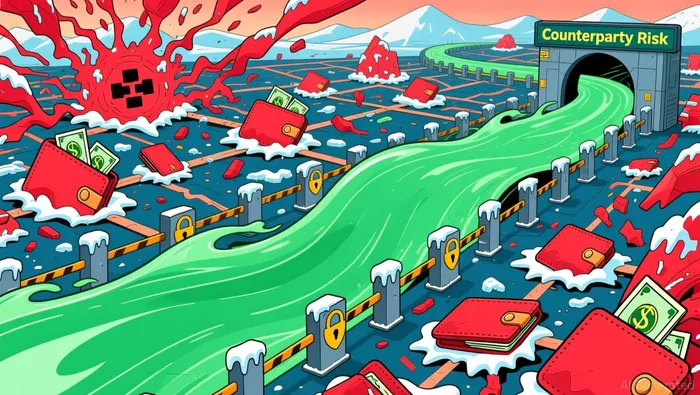
This introduces a fundamental risk: if confidence in Circle's governance falters, secondary-market liquidity supporting USDC could diminish. Such a loss of trust would disrupt transaction flows that Circle depends on, making the recent surge in minting both a source of liquidity and a reminder of centralization risk that could quickly reverse.
Key Catalysts and Areas to Monitor
The main issue to watch is whether Circle's rapid minting pace is sustainable. The company issued over $3 billion in USDC in the first week of March, and if this rate continues, monthly supply could exceed $12 billion. The crucial question is whether this expansion is matched by transaction volume. Citi stresses that volume, not supply, is the key indicator of adoption. If minting slows or supply outpaces volume, it would signal a loss of trust and liquidity, threatening the adoption Circle relies on for revenue.
Regulatory developments are another important factor. The proposed U.S. Clarity Act sparked immediate market anxiety, causing Circle's shares to drop around 20% amid concerns about yield restrictions. While analysts see the bill as a potential obstacle to scaling rather than a fundamental threat, it imposes new limits on Circle's operations and the incentives for holding USDC. The market's reaction highlights how sensitive Circle's stock is to regulatory changes affecting stablecoin mechanics.

The biggest risk is a shift in demand from institutions and exchanges. Circle's freeze of 16 business hot wallets underscores the centralization risk facing USDC holders. If operational inconsistencies become a concern, users may migrate to more stable or decentralized alternatives. The core vulnerability lies not in the technology, but in the issuer's control over liquidity and access. If this discretion is questioned, it could undo the liquidity growth Circle has worked to achieve.
Disclaimer: The content of this article solely reflects the author's opinion and does not represent the platform in any capacity. This article is not intended to serve as a reference for making investment decisions.
You may also like
Ethereum nears $2,000 as technical and on-chain analysis highlight accumulation zones
The Timeless Resilience: An In-Depth Chronicle of the Japanese Yen — From 360 to the Era of Carry Trade
Grayscale’s Q1 2026 Report Shows AI Crypto Lost Less Than Every Other Sector While the Market Bled
Lightwave Logic Approaches Key 2026 Tapeout Achievement Amid Launch of AI-Powered Photonics Supercycle

Trending news
MoreCrypto prices
More





