
U.S. Air Force Member Taken Hostage Introduces Additional Geopolitical Uncertainty for Oil and Stock Markets

Escalation in the Gulf: Market Turmoil and the Missing Airman
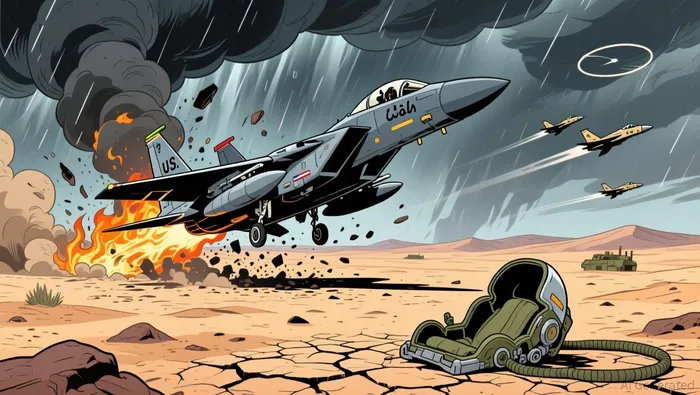
The recent downing of a U.S. F-15E Strike Eagle and the ensuing search for a missing crew member have dramatically heightened tensions, turning a military incident into a high-stakes hostage crisis. The confirmation that a U.S. airman survived and is now stranded in hostile territory has introduced a new level of uncertainty, prompting markets to react as if facing a pivotal, binary outcome. This development has injected an unpredictable risk premium, with investors wary of a drawn-out standoff or a potential miscalculation. As is often the case with sudden geopolitical shocks, oil prices have become volatile and equities have experienced sharp declines.
Oil markets were the first to react, with Iran's threats against shipping in the Strait of Hormuz—through which roughly a fifth of the world's oil supply passes—leading to a near standstill in tanker traffic. This disruption triggered a rapid surge in crude prices, which soared above $110 per barrel. The spike was abrupt, reminiscent of previous crises where control over this strategic chokepoint dictated global energy prices. Despite U.S. assertions of energy independence, traders quickly priced in a severe and immediate supply shock.
Stock markets also felt the impact, with the S&P 500 and Nasdaq Composite both dropping as the crisis unfolded and the missing airman story intensified. Investors sought safer assets and reassessed their risk exposure. Although a modest rebound followed on hopes of easing tensions, this recovery remains fragile. Persistent supply disruptions and the unresolved hostage situation continue to weigh on sentiment, leaving markets caught between the tangible effects of higher energy costs and the looming threat of broader conflict.
Lessons from History: Market Patterns and Modern Vulnerabilities
While the current market reaction follows a familiar script, it is shaped by contemporary realities. The dramatic jump in oil prices, surpassing $110 per barrel, echoes the oil shocks of the 1973 OPEC embargo, when the Strait of Hormuz played a decisive role in global pricing. Today, although the world is less reliant on Middle Eastern oil and markets are more liquid, the fundamental dynamic remains: a closed chokepoint leads to a global price surge. The tentative rally in growth stocks earlier this week, highlighted by the Nasdaq Composite’s 3.83% gain, mirrors past periods when optimism about peace fueled brief recoveries. As CNBC’s Jim Cramer observed, such days serve as a preview of how markets might respond if hostilities subside.
However, today’s economic backdrop is far less resilient than in the 1970s. Households now face higher mortgage rates and rising insurance premiums, leaving little buffer to absorb additional shocks. Small businesses, like those run by Nick Friedman of College Hunks Hauling Junk, are squeezed by soaring fuel costs—now accounting for 6 to 10 percent of revenue—yet are unable to raise prices without losing customers. This widespread financial strain means that geopolitical risks translate more quickly into reduced consumer spending and business investment.

In summary, the market is navigating between the immediate pain of a supply shock and the hope for a relief rally if tensions ease. With consumers already stretched, the broader economy faces greater downside risks than during previous oil crises.
Winners, Losers, and the Path Forward
The ongoing conflict has created a stark divide in financial markets. Energy and defense sectors are clear beneficiaries, as oil prices climb above $110 per barrel and demand for military equipment rises. Conversely, travel and logistics companies are under pressure, with firms like Amazon imposing a 3.5% fuel surcharge and JetBlue increasing baggage fees. These cost increases squeeze margins, particularly for small businesses that cannot easily pass on higher expenses to customers.
If the conflict ends swiftly, markets could see a rapid, three-phase rally: first, growth stocks—especially in the Nasdaq Composite—would likely surge on renewed optimism; second, expectations of lower inflation could drive down Treasury yields and borrowing costs; third, investment activity would rebound as risk appetite returns. As Jim Cramer noted, the recent rally was a rehearsal for this potential outcome.
However, a prolonged crisis could establish a “new normal” of elevated oil prices and persistent volatility. Even if fighting subsides, the risk of renewed disruption in the Strait of Hormuz remains, and the global economy is more exposed than before. The 50% increase in crude prices has already slowed growth, and a sustained premium would further erode consumer spending and business investment, shifting the impact from a single shock to a long-term drag on economic activity.
Key Triggers and What to Watch
Several critical factors will shape the market’s next moves. Foremost is the fate of the missing American airman. The discovery of the empty ejector seat confirmed the airman’s survival, and Iran’s offer of a reward for his capture has escalated the situation into a full-blown hostage crisis. Any progress in rescue efforts or changes in Iran’s stance will serve as important signals for investors. The U.S. military’s timeline for achieving its objectives is also crucial. President Trump’s recent threat to bomb Iran “back to the Stone Ages” within two to three weeks sets a deadline but lacks a clear exit plan. Any diplomatic breakthrough or concrete steps toward ending the conflict would be a major catalyst for market relief.
Oil prices remain the most immediate barometer of risk. With crude already trading above $110 per barrel, the $100–$110 range will be closely monitored. A sustained move above $110 would signal ongoing supply fears and likely weigh further on equities, while a decisive drop below $100 could indicate progress toward peace or successful efforts to reroute shipments, sparking a relief rally. Recent price swings—falling below $100 on hopes for a resolution, then rebounding after presidential remarks—underscore the market’s sensitivity to developments.
Finally, any shift in U.S. military objectives will be closely watched. The conflict has now stretched into its sixth week, with ongoing strikes across the region. The recent market rebound was a tentative preview of peace, but remains precarious. Clear signs of a move toward negotiation or a reduction in military action would boost risk appetite. Ultimately, markets are waiting for concrete progress on the hostage situation, a clear strategy from Washington, and resolution of the oil supply crisis. Until then, volatility is likely to persist.
Disclaimer: The content of this article solely reflects the author's opinion and does not represent the platform in any capacity. This article is not intended to serve as a reference for making investment decisions.
You may also like
uniQure Approaches April 13 Court Deadline Amid Stricter FDA Position on Gene Therapy Study
Kiyosaki Predicts a 2026 Market Downturn: Insights from a Flow Analyst on Leverage Indicators

Picard Medical’s Manipulative Scheme Unveiled as Savvy Investors Withdraw, Legal Storm Approaches
Kyndryl Faces Legal Turmoil: Has the Market Already Accounted for the Worst-Case Scenario?
Trending news
MoreCrypto prices
More





