
Kroger's Strategic Pivot Seizes Albertsons' Retreat as Grocery Rival Shrinks

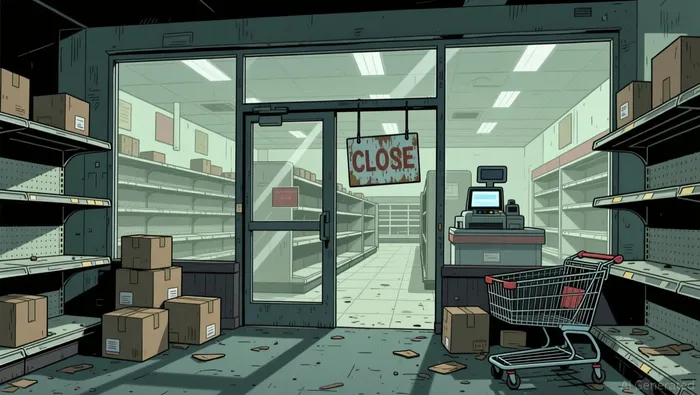
The core event that reshaped the grocery landscape was the collapse of the $24.6 billion merger between KrogerKR+2.57% and AlbertsonsACI+2.59%. After intense legal scrutiny, the deal was blocked by regulators in late 2024, a decision that removed a strategic lifeline for Albertsons. In the immediate aftermath, the company was forced into a defensive, efficiency-driven retreat. Its pivot was a physical one: a significant reduction of its store footprint to cut costs and stabilize operations.
This operational shift was swift and substantial. In 2025, Albertsons closed roughly 20 stores. The closures accelerated into early 2026, with more locations shuttered in the first quarter of this year. This wasn't a minor adjustment but a clear signal that the company was altering its competitive stance. Without the merger's projected scale and cost synergies, Albertsons had to find savings internally, and trimming its physical presence was the most direct lever.
Viewed through a historical lens, this response mirrors classic retail restructuring. When a major strategic plan fails, companies often retreat to core markets and optimize their existing assets. Albertsons' store closures represent that retreat-a move to preserve capital and improve margins in the short term. For Kroger, which had been preparing to face a combined competitor, this creates a new and altered dynamic. The immediate threat of a merged giant has receded, but so has the potential for a coordinated, resource-rich rival. Kroger now navigates a market where its largest competitor is not just smaller, but also more focused on operational efficiency, changing the competitive calculus.
Historical Parallels: Retail Restructuring as a Competitive Reset
The pattern Albertsons is following is not new. It mirrors the defensive retreats of legacy retailers after failed strategic moves, where the loss of a planned partner forces a painful, asset-light posture. In this light, the company's store closures are a classic restructuring play-a bid to preserve core assets and loyalty data while shedding underperforming locations to survive.
This structural playbook has been seen before. When Circuit City and Sears lost their potential merger lifelines, they too initiated large-scale closures to cut costs and stabilize. The goal was the same: to survive the immediate shock by optimizing the existing footprint. Albertsons is replicating that playbook now, closing roughly 20 stores in 2025 and accelerating into 2026 with new rounds in California, Texas, and Washington, D.C., impacting hundreds of employees. The mechanism is clear: shedding physical locations is the fastest way to reduce fixed costs and improve near-term margins when a major growth plan collapses.
| Total Trade | 36 |
| Winning Trades | 3 |
| Losing Trades | 5 |
| Win Rate | 8.33% |
| Average Hold Days | 0.92 |
| Max Consecutive Losses | 1 |
| Profit Loss Ratio | 0.34 |
| Avg Win Return | 1.13% |
| Avg Loss Return | 3.12% |
| Max Single Return | 2.23% |
| Max Single Loss Return | 6.65% |
The company's pivot to technology-reporting a 21% jump in Q3 2025 digital sales and leaning on AI and automation-adds another layer. This is a modern attempt to offset physical weakness with operational efficiency, but it comes at the cost of jobs and may not fully bridge the competitive gap. The bottom line is that Albertsons is in a reset phase, using historical restructuring patterns to navigate a new reality. Whether this will be a successful recalibration or the start of a prolonged retreat depends on its ability to leverage its remaining assets and data in a market that is increasingly hostile to standalone, mid-sized players.
Kroger's Strategic Pivot: From Merger to Market Share
The collapse of the Kroger-Albertsons merger forced a leadership reset and a fundamental shift in strategy. New CEO Greg Foran, appointed in February, is testing a durable new approach: redirecting the cost savings from a more efficient operation into sharper everyday prices and improved service. This is a direct response to a market where Albertsons is retreating, leaving Kroger to aggressively pursue share in a more fragmented landscape.
Foran's playbook is clear. He plans to aggressively reinvest savings from tighter sourcing and streamlined processes into sharper everyday prices and better service. His first quarterly results under his leadership showed the company is executing this pivot. While adjusted profit per share came in below expectations, the focus is on traffic and market share. As Foran stated, "When you combine competitive prices with strong fresh food offering in a well-run store, you drive traffic, you grow baskets and you gain share." This strategy aims to capture budget-conscious shoppers, a group increasingly sensitive as the broader consumer outlook remains fragile.


The investment is substantial and multi-pronged. Kroger is doubling down on its digital foundation, with adjusted eCommerce sales increasing 20% in Q4 2025. This growth is not accidental; it's part of a deliberate plan to establish an omnichannel experience that can compete with Amazon and Walmart. The company is also committing capital to physical store optimization, with a capital spending target set at $3.8 billion-$4 billion for 2026. This budget will fund store remodels and strategic projects, aiming to improve the in-store experience and operational efficiency simultaneously.
The durability of this strategy hinges on execution. Kroger is betting that organic growth through store remodels and digital integration can outpace a weakened Albertsons. The early numbers show promise, with Q4 identical sales excluding fuel up 2.4%. Yet the company's own 2026 outlook is cautious, forecasting identical sales growth in the 1% to 2% range, which is below analyst expectations. This tempered guidance reflects the competitive pressure and the high cost of the investment required to gain share.
Viewed historically, this is a classic defensive offensive. After a major strategic plan failed, Kroger is using its scale and operational leverage to attack a smaller, focused rival. The success of Foran's pivot will be measured not just by quarterly profit beats, but by its ability to convert cost savings into sustained market share gains in a market where Albertsons is now more vulnerable.
Competitive Implications and Forward Scenarios
The competitive landscape has been reset, but the new equilibrium is fragile. With the merger blocked, the intense, overlapping price wars between Kroger and Albertsons are a thing of the past. This creates a clear opportunity for Kroger. In markets where the two giants once competed head-to-head, Kroger now faces a smaller, more defensive Albertsons. This reduced competition may allow Kroger to raise prices without triggering a mass exodus of price-sensitive shoppers, a buffer that could help protect margins in a high-cost environment.
Kroger's larger scale and powerful private-label business provide a structural advantage. Its ~30% of unit sales from 'Our Brands' and extensive manufacturing network give it more leverage against margin pressure from Walmart and Aldi than a standalone Albertsons can muster. The company's strategy of reinvesting efficiency savings into sharper prices and service is a direct play on this strength, aiming to capture share in a market where its rival is retreating.
Yet the central risk is one of unintended consequence. Albertsons' aggressive store closures are a necessary cost-cutting measure, but they could accelerate the company's decline. A weakened Albertsons becomes a less formidable long-term strategic threat to Kroger. However, it also risks weakening the overall grocery market by reducing competition and potentially lowering investment in store quality and innovation. This dynamic echoes historical retail cycles where the death of a major competitor often leads to a period of consolidation and stagnation, not growth.
The key catalysts for Kroger will be execution and market share. The company must convert its investment in store remodels and digital integration into tangible traffic and basket growth. Its cautious 2026 outlook suggests management sees a tough path. The forward scenario hinges on whether Kroger can successfully execute its offensive pivot against a smaller, focused Albertsons, or if the broader market softness and high investment costs will cap its gains. The historical parallel is clear: a defensive retreat by one rival can create a window of opportunity, but it also sets the stage for a more concentrated, and potentially less dynamic, competitive field.
Disclaimer: The content of this article solely reflects the author's opinion and does not represent the platform in any capacity. This article is not intended to serve as a reference for making investment decisions.
You may also like
SOL Faces Influx of Exchange Deposits and Security Incident, Market Prospects Remain Unclear

Smart investors increase holdings in Japan ETFs as global tensions challenge ongoing reform efforts

General Motors Sees 9.7% Decline in Q1 Sales Due to Tariff Surge and Severe Winter Weather

uniQure Approaches April 13 Court Deadline Amid Stricter FDA Position on Gene Therapy Study
Trending news
MoreCrypto prices
More





