
Meta’s Independent Power Advantage: Shielding AI Goals from Unstable Grids and Regulatory Uncertainty

Meta's Massive Investment: Building the Backbone for AI Expansion
Meta’s $3 billion investment in Louisiana’s energy infrastructure goes far beyond a typical utility deal—it’s a strategic move to lay the groundwork for widespread AI adoption. By constructing new power systems outside the conventional grid, Meta is preparing for the next wave of technological growth, investing heavily in the essential infrastructure before demand surges.
The scale of this project is unprecedented. The Hyperion campus, unveiled in December 2024, represents a $10 billion commitment on a sprawling 2,250-acre site in rural Louisiana. Meta’s recent purchase of an additional 1,400 acres signals even greater ambitions for the future. To support this vast data center, Meta is financing the construction of 10 gas-powered plants with a combined output of 7.5 gigawatts—enough electricity for over 5 million homes and a 30% boost to Louisiana’s grid capacity. This is not just incremental growth; it’s a transformative expansion of the region’s energy landscape, all to fuel Meta’s AI vision.
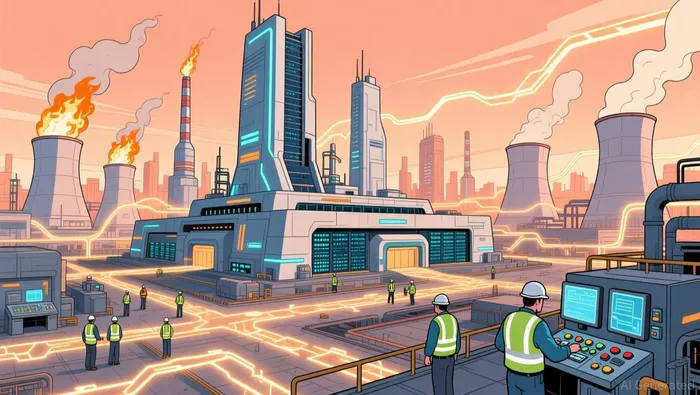
Meta’s partnership with Blue Owl Capital accelerates this ambitious plan. Through a joint venture where Blue Owl holds 80% and Meta retains 20%, Meta taps into external funding to reduce its upfront financial risk. The arrangement has already provided Meta with a $3 billion cash infusion for operations, while Blue Owl supplies the capital and expertise needed to execute at scale. This structure is tailored for the rapid pace of AI development, blending Meta’s operational know-how with Blue Owl’s financial muscle.
The logic behind this strategy is straightforward: AI computing demands enormous amounts of power, and data centers are becoming the factories of the digital era. By securing its own off-grid energy supply, Meta shields its AI projects from the unpredictability and constraints of the existing energy market. This approach is rooted in first principles—if the next technological leap requires unprecedented computing power, then the energy infrastructure must be built alongside it. Meta’s bold investment sets it apart from companies that merely react to current trends.
Power as a Strategic Advantage: Creating a Competitive Moat
In the battle for AI leadership, access to computing power is the new critical resource. Meta’s $3 billion investment directly addresses this bottleneck, establishing a dedicated energy supply that forms a lasting competitive barrier. By managing its own off-grid power, Meta ensures its AI training schedules remain unaffected by the volatility and delays of traditional utilities—a crucial edge in a race where speed to train the next-generation model is everything.

The threat posed by AI’s power demands is significant. The North American Electric Reliability Corp. is drafting new standards for AI computing centers, warning of “high likelihood, high impact” risks from extreme power surges during AI training. These gigawatt-scale loads could destabilize the grid, leading to widespread outages. With AI’s peak power needs potentially reaching 50 gigawatts by 2030, regulatory and physical constraints are a real concern. Meta’s Hyperion campus, with its 7.5-gigawatt energy portfolio, is designed to avoid these systemic risks, operating independently from the grid’s limitations and increasing regulatory scrutiny.
This approach also demonstrates exceptional capital efficiency. The joint venture with Blue Owl Capital allows Meta to leverage external funds, holding only a 20% stake while Blue Owl provides 80% of the capital. The $3 billion cash distribution supports Meta’s operations without straining its balance sheet. The partnership combines Meta’s expertise in data center management with Blue Owl’s capacity to deliver large-scale capital, enabling the agility needed for AI’s rapid evolution. It’s a modern take on foundational strategy: secure the essential resource (power) while minimizing financial exposure.
This echoes previous technology shifts where controlling infrastructure provided a lasting advantage. Just as early leaders benefited from owning fiber networks or cloud platforms, dedicated power is now the new foundational layer. As data centers push grids to their limits and costs rise, those with independent energy supplies will enjoy reliable, scalable computing. This isn’t just about keeping servers running—it’s about ensuring the infrastructure for the next phase of exponential growth.
Grid Reliability: The Hidden Challenge to AI Expansion
The very infrastructure Meta is building to safeguard its AI future faces a new challenge: the strain caused by the AI boom itself. The exponential growth Meta is betting on is colliding with the physical limitations of the current power grid, creating a paradox where Meta’s own expansion could be threatened by the grid’s inability to keep up.
This risk is no longer hypothetical. The North American Electric Reliability Corp., responsible for overseeing the continent’s grid, is urgently working to establish new standards for large AI computing hubs due to the extreme power fluctuations during AI training. When models are trained, demand can spike by hundreds of megawatts in moments, risking grid instability and cascading outages. The report emphasizes the need for immediate action, warning that gigawatt-scale loads could create complex challenges for grid planning and operations.
Local communities are already feeling the impact, with costs shifting to residents. In El Paso, Meta’s new data center will depend on a $500 million, 366-megawatt gas plant built by the local utility. After an initial period where Meta covers expenses, ratepayers will eventually shoulder the cost. This highlights how the burden of powering corporate AI ambitions can be transferred to households and businesses.
The strain isn’t limited to electricity—it extends to water, another vital resource. Data centers consume vast amounts of water, with even mid-sized facilities using as much as a small town. In Georgia, a Meta data center launched in 2018, and nearby residents have experienced dry wells. Newton County is projected to face a water shortage by 2030, illustrating the broader challenge as AI’s resource needs grow.
Meta’s off-grid power strategy is a direct response to these systemic risks. By developing its own 7.5-gigawatt energy portfolio, Meta is creating a parallel, insulated infrastructure for its operations. The company is betting that vulnerabilities in the traditional grid will worsen as AI’s peak power requirements could reach 50 gigawatts by 2030. This substantial investment is a safeguard against future regulatory or physical obstacles that might slow the adoption curve Meta is determined to drive.
Key Catalysts and Risks: Navigating the Next Stage of Growth
Meta’s $3 billion energy investment is now moving into the execution phase. The coming months will reveal whether this infrastructure can keep pace with the exponential growth it’s meant to support. Three critical factors will determine the outcome: regulatory clarity, construction progress, and compute utilization.
- Regulatory Developments: Watch for the final standards from the North American Electric Reliability Corp. (NERC) expected by year-end. These new rules could introduce significant costs or operational restrictions for Meta’s energy-intensive AI projects. Requirements such as grid interconnection fees, stricter emission controls, or limits on peak power could directly affect the economics of the Hyperion campus, shaping whether the regulatory environment becomes a barrier or a protective moat.
- Construction Progress: Track the physical development in Louisiana and El Paso. In Louisiana, Meta’s deal with Entergy involves building seven new power plants in addition to three already approved, pending approval from the Louisiana Public Service Commission. In El Paso, work has started on a $500 million, 366-megawatt gas plant that will eventually be paid for by ratepayers. Any significant delays could signal execution risks that might hinder Meta’s AI training cycles and slow the overall growth trajectory.
- Compute Utilization: Monitor Meta’s AI model training cycles and utilization rates. The ultimate measure of the $3 billion investment’s success is sustained, high utilization. The El Paso data center alone is designed to draw nearly 1 gigawatt of electricity. If these facilities operate at or near full capacity, it confirms the adoption curve is accelerating as planned. Underutilization, however, would raise questions about demand and suggest unexpected obstacles to exponential growth.
Ultimately, Meta is navigating the gap between its bold infrastructure investment and the practical realities of AI’s next phase. Regulatory decisions, construction milestones, and compute metrics will determine whether Meta’s off-grid power strategy becomes a true advantage or an expensive miscalculation.
Disclaimer: The content of this article solely reflects the author's opinion and does not represent the platform in any capacity. This article is not intended to serve as a reference for making investment decisions.
You may also like
SOL Faces Influx of Exchange Deposits and Security Incident, Market Prospects Remain Unclear

Smart investors increase holdings in Japan ETFs as global tensions challenge ongoing reform efforts

General Motors Sees 9.7% Decline in Q1 Sales Due to Tariff Surge and Severe Winter Weather

uniQure Approaches April 13 Court Deadline Amid Stricter FDA Position on Gene Therapy Study
Trending news
MoreCrypto prices
More





