
Is Warren Buffett’s Value Scale Approaching—Will AI Shares Pass the Profitability Challenge?

Market Volatility in Early 2026: A Familiar Pattern
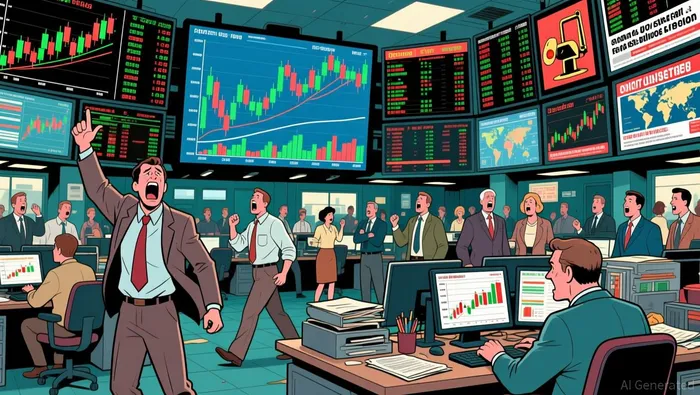
The sluggish start to 2026 for the stock market echoes previous years, with the S&P 500 declining 4.6% since the beginning of the year. This downturn is largely attributed to ongoing conflict in Iran, rising oil prices, and persistent uncertainty about economic stability. These factors have triggered short-term pessimism, as investors react swiftly to current events. For those focused on value investing, the central question is whether these developments are merely temporary disruptions or signs of lasting damage to the market's intrinsic worth.
Current data suggests these setbacks are likely short-lived. Although the conflict has caused a 74% jump in crude oil futures and raised concerns about sustained inflation, these are external shocks rather than fundamental declines in corporate earnings. Historical trends provide reassurance: since 2000, the S&P 500 has dropped at least 4% after the first quarter seven times, but only twice did it continue to fall over the next nine months. Notably, after a similar drop in early 2025, the market rebounded with a 22% gain by year-end. Such volatility is part and parcel of a market that has seen strong performance in recent years.
Warren Buffett's well-known analogy offers valuable perspective. In the short term, the market acts as a voting machine, influenced by headlines and sentiment. Over time, however, it becomes a weighing machine, where prices reflect the true value of businesses. The current challenges stem from geopolitical risks and inflation fears, not from a fundamental decline in the earnings power of leading American companies. For investors committed to long-term strategies, the task is to distinguish between fleeting news and the enduring value of future cash flows.
Assessing Opportunities Amid Market Declines
The recent downturn presents a classic challenge for value investors: identifying genuine bargains versus stocks that are cheap for valid reasons. The Iran conflict poses a significant obstacle, but its effects vary across industries. Companies heavily reliant on commodities or with energy-intensive operations face real risks to their profit margins due to structural inflation. Evidence shows crude oil futures have surged 74% this year, potentially increasing U.S. inflation by 0.2 percentage points. This creates tangible cost pressures that will test the resilience and pricing power of affected firms.
However, businesses with robust competitive advantages and strong brands are better positioned to weather these challenges. Such companies often have the ability to pass increased costs onto consumers, and their long-term value is rooted in sustained earnings rather than short-term commodity fluctuations. While the market's volatility may be factoring in worst-case scenarios across the board, disciplined investors must look beyond headlines to evaluate each company's true strengths.
Some sectors, particularly high-growth and capital-intensive areas like artificial intelligence, are more directly impacted. Large language models, for example, require significant energy, and rising fossil fuel prices complicate their economics. OpenAI's recent decision to scale back its video generation platform illustrates how these challenges are already affecting business models. This is not a widespread market risk, but a specific issue for certain industries.
Applying Buffett's weighing machine principle is crucial. While short-term market reactions are driven by geopolitical concerns and inflation, the long-term outlook depends on each company's ability to grow earnings. Value investors should prioritize businesses capable of maintaining their competitive edge through turbulent times. Avoid stocks whose low prices reflect lasting damage to their business models, and instead seek those where market fears are exaggerated compared to the company's underlying strength. A bargain is only worthwhile if the business remains fundamentally sound.
Strengthening Your Portfolio: Creating a Margin of Safety
Market downturns are a test of investor discipline. Rather than attempting to time the bottom, long-term investors should focus on reinforcing their portfolios to withstand the emotional challenges of a bear market. There are practical steps to build a margin of safety:
- Shift Toward Quality: Broad sell-offs offer opportunities to invest in companies with high returns on capital and lasting competitive advantages. This strategy involves buying strong businesses at discounted prices, even if further losses are possible before recovery. Favoring high-quality stocks and defensive sectors during uncertain times aligns with Buffett's principle that true value will eventually be recognized.
- Maintain Cash Reserves: Having sufficient cash on hand prevents forced selling during downturns. Experts recommend keeping three to six months' worth of living expenses in a secure, liquid account. For retirees, this buffer is especially important to cover immediate needs without tapping into volatile investments. This approach helps avoid locking in losses and ensures funds are available for both opportunities and necessities.
- Utilize Tax-Loss Harvesting: This technique allows investors to offset gains by selling stocks at a loss, reducing their tax burden while maintaining market exposure. The process should be systematic, not driven by emotion. After realizing a loss, reinvest in a similar asset to stay invested and benefit from long-term growth while capturing tax advantages.
A resilient portfolio is built on three pillars: quality investments, adequate cash reserves, and tax-efficient strategies. By rebalancing toward strong companies, maintaining liquidity, and leveraging tax-loss harvesting, investors can turn volatility into an opportunity for strengthening their positions. These are actionable steps that support staying invested through market cycles.
Key Indicators and Catalysts to Monitor
For value investors, the challenge is to identify signals that confirm whether the current downturn is a temporary mispricing or something more serious. The thesis rests on the idea that short-term market reactions are disconnected from long-term business fundamentals. Several critical indicators should be watched:
- Corporate Earnings Trends: The present decline is driven by external factors, not a collapse in profitability. A sustained pattern of negative guidance from major companies would indicate that geopolitical and inflationary pressures are undermining earnings, suggesting lasting damage. So far, the evidence points to market reactions based on risk, not fundamental changes.
- Oil Prices and Inflation: With crude oil futures up 74% year-to-date, inflation could rise further. A peak and subsequent decline in oil prices would ease economic concerns and support corporate margins, serving as a positive catalyst. Continued increases, however, would reinforce the threat of persistent inflation and complicate monetary policy.
- Return of Earnings Growth and Confidence: A sustained recovery depends on stabilizing geopolitical and inflationary pressures, along with companies demonstrating resilience. The market's rebound in 2025 was driven by renewed earnings growth and improved sentiment. Similar conditions could lead to a turnaround this year if external shocks prove temporary.
Through Buffett's perspective, current market turbulence is largely background noise. Ultimately, the weighing machine will assess each company's ability to generate cash flows over time. Disciplined investors should focus on whether the fundamental value of their holdings remains intact. The checklist is straightforward: monitor earnings guidance, track oil and inflation trends, and wait for signs of renewed growth. Until these signals shift, patient investors remain steadfast, trusting that quality and compounding will prevail in the long run.
Disclaimer: The content of this article solely reflects the author's opinion and does not represent the platform in any capacity. This article is not intended to serve as a reference for making investment decisions.
You may also like
Veteran Investor: I Have This Strange Feeling That XRP Is About to Do Something Stupid Again
Ethereum nears $2,000 as technical and on-chain analysis highlight accumulation zones
The Timeless Resilience: An In-Depth Chronicle of the Japanese Yen — From 360 to the Era of Carry Trade
Grayscale’s Q1 2026 Report Shows AI Crypto Lost Less Than Every Other Sector While the Market Bled
Trending news
MoreCrypto prices
More





