

Washington policymakers and financial regulators have increased their calls for swift Senate action on the CLARITY Act as lawmakers prepare to reconvene after the Easter recess. The CLARITY Act aims to provide a new legal framework for the broader digital asset market, building upon last year’s regulatory efforts focused on stablecoins.
White House officials and regulators push for Senate progress on CLARITY Act before April markup
By:Cointurk
Bitget offers one-stop trading for cryptocurrencies, stocks, and gold. Trade now!
A welcome pack worth 6200 USDT for new users! Sign up now!
Sustained push from White House advisors and regulatory leaders
David Sacks, a technology investor and former White House advisor who had previously overseen AI and cryptocurrency initiatives, emphasized the importance of expanding clear rules for cryptocurrencies beyond just stablecoins. Sacks is recognized for his entrepreneurial background and his more recent influence on tech and digital asset policy discussions in Washington.
Sacks outlined that while the GENIUS Act previously confirmed the United States’ role in setting global standards on stablecoins, he believes the CLARITY Act could establish similar regulatory certainty across a wider range of digital assets.
When discussing the timing and necessity of the legislation, Sacks wrote,
The time to act is now. The Senate should pass the CLARITY Act and send it to the President for signature. This law will provide the market structure needed for digital assets and keep the U.S. at the forefront of innovation.
Treasury Secretary Scott Bessent also made direct appeals to the Senate Banking Committee to accelerate their consideration of the bill. Bessent, who assumed office as Treasury Secretary in 2025 after a career in investment management, has been particularly vocal about bringing digital asset markets within a formal regulatory perimeter.
Further support surfaced from Commodity Futures Trading Commission Chair Michael Selig and Securities and Exchange Commission Chair Paul Atkins, both of whom underlined that their agencies are prepared to enforce the new rules if the legislation becomes law.
Selig pointed out that passing the bill would offer stability to digital asset regulations and reduce risks associated with potential future changes in administration. Meanwhile, Atkins linked the legislative process to ongoing projects at the SEC designed to implement emerging rules for digital asset service providers.
Senate timeline narrows ahead of potential committee action
Senator Cynthia Lummis, known for her active participation in crypto policy, indicated that the Banking Committee intends to hold a markup on the CLARITY Act in the latter part of April. This scheduling aligns with senators’ return to Washington and allows little time to resolve outstanding differences before the next committee session.
Banking Committee discussions previously stalled after disagreements emerged over stablecoin yield provisions in January and saw additional delays in March. These postponements left the bill stalled in committee, with further progress dependent on resolving policy disputes.
The legislative process gained momentum in the House of Representatives, where the CLARITY Act was approved last July. The measure has since moved between Senate committees, with the Agriculture Committee advancing its segment in January this year.
Senator Bernie Moreno warned that further delays could push the legislation beyond the upcoming midterm elections, potentially impacting its chances of passage this year. Lawmakers on both sides noted the window for committee approval is tightening as political and legislative calendars fill up.
0
0
Disclaimer: The content of this article solely reflects the author's opinion and does not represent the platform in any capacity. This article is not intended to serve as a reference for making investment decisions.
Understand the market, then trade.
Bitget offers one-stop trading for cryptocurrencies, stocks, and gold.
Trade now!
You may also like
Ripple flags multi-asset stablecoin shift in payments
Grafa•2026/04/26 04:51
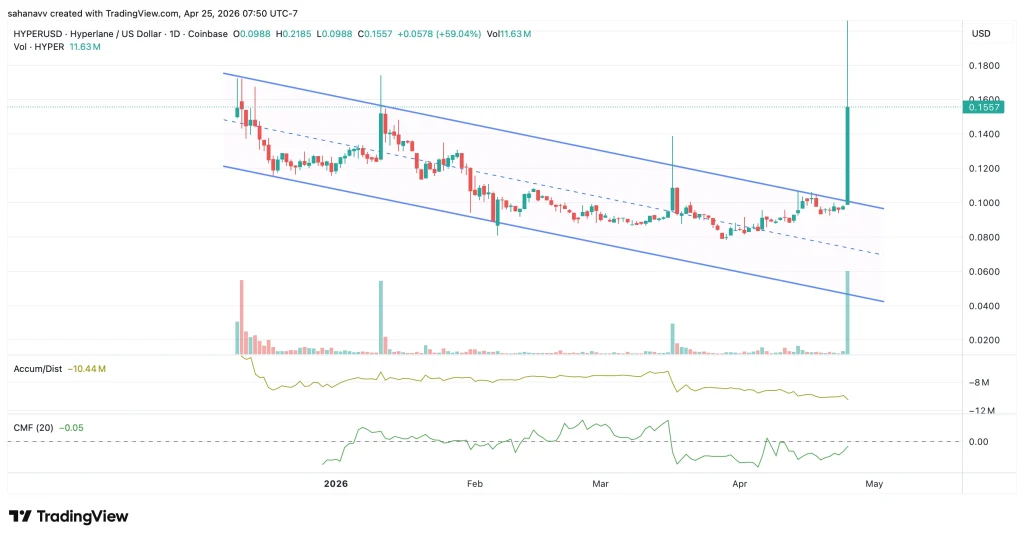
HYPER Price Jumps 60% After Breakout — Weak Money Flow Raises Doubt on $0.20 Move
Coinpedia•2026/04/26 04:30
The Ethereum Golden Triangle That Has Predicted Every Move Shows Where Price Is Headed
Newsbtc•2026/04/26 04:27

Litecoin fixes bug after 13-block chain reorg
Grafa•2026/04/26 04:18
Trending news
MoreCrypto prices
More
Bitcoin
BTC
$77,748.58
+0.28%

Ethereum
ETH
$2,318.19
+0.16%

Tether USDt
USDT
$1
+0.00%

XRP
XRP
$1.42
-0.73%

BNB
BNB
$630.34
-1.10%

USDC
USDC
$0.9997
-0.00%

Solana
SOL
$86.35
+0.13%

TRON
TRX
$0.3239
+0.01%

Dogecoin
DOGE
$0.09814
-0.37%

Hyperliquid
HYPE
$41.4
+0.82%
How to buy BTC
Bitget lists BTC – Buy or sell BTC quickly on Bitget!
Trade now
Become a trader now?A welcome pack worth 6200 USDT for new users!
Sign up now