
Institution: The Fed Has No Expectation of Rate Cuts, Gold Price Faces Pressure and Pullback; Physical Demand for Silver Supported, Investment Demand Continues to Decline

Huitong Net, May 5— The latest report from the precious metals analysis institute Heraeus shows that the Federal Reserve’s decision to maintain its current rate path is unlikely to significantly boost gold investment demand in the short term, while fluctuations in gold mine supply and changes in ETF holdings will become important factors affecting gold prices. The silver market presents a clear divergence: industrial demand, especially from Europe’s electric vehicle and infrastructure sectors, provides support, but investment demand continues to shrink.
According to the latest report from the precious metals analysis institute Heraeus, due to internal disagreement within the Federal Reserve, the likelihood of a rate cut stimulating gold demand this year is low. Silver demand, on the other hand, receives some support from growing electric vehicle sales and charging infrastructure construction in Europe, but investment interest in silver continues to decline.
The Federal Reserve Meeting Delivers a Clear Policy Signal
Heraeus analysts pointed out in their latest update that this Federal Reserve meeting offered certain clarity on the rate path.
Analysts stated: "The meeting did not adjust the benchmark interest rate, but during the subsequent press conference, Powell's views on the current monetary policy environment were evident. The most important point from the meeting was that the Federal Reserve did not respond strongly to the recent CPI rise caused by the closure of the Strait of Hormuz. Powell said the Fed fully anticipated that tariffs and the closure of the Strait of Hormuz would push up prices, but felt there was no need to respond by raising rates. The Fed’s statement noted that the PCE year-on-year increase was 3.5%, but most long-term inflation expectation indicators remain aligned with our 2% inflation target. Powell also said that the neutral rate—that is, the rate level that perfectly balances the dual mandate of the Fed—is between 3% and 4%, and suggested this is slightly lower than the current rate."
Analysts believe that the current view of the Federal Reserve is "the economy is performing well and there is no need to cut rates, while the pace of price increases is not enough to warrant raising rates." However, three members of the Federal Open Market Committee (FOMC) opposed the statement’s wording, hoping to use more hawkish language, while another member voted in favor of an immediate rate cut.
Analysts added: “Powell made no forecasts or speculations about the future and noted this could be his last FOMC meeting as Chairman. With the criminal investigation against him now dropped and Kevin Warsh confirmed by the Senate Banking Committee, this increases the odds that Warsh will be confirmed as the next Federal Reserve Chair before the June meeting.”
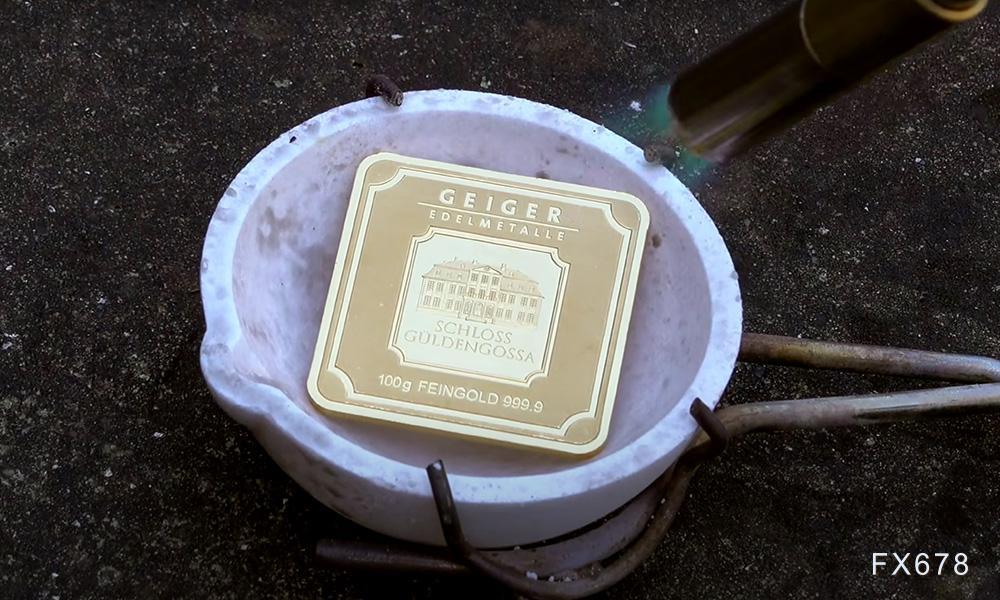
Gold Supply and ETF Holdings
On the supply side, Heraeus noted that Newmont, the world's largest gold producer, reported a decline in first-quarter production.
Analysts said: "Newmont reported first-quarter gold production of approximately 1.3 million ounces, down about 13% year-on-year and lower than the 1.5 million ounces in Q1 2025. The production decline was mainly due to multiple mine disruptions and last year’s divestitures of the Musselwhite and Cripple Creek & Victor mines. Nevertheless, the company’s financial performance was strong, with net profit rising to $3.3 billion and free cash flow hitting a record $3.1 billion, thanks to higher gold prices. Newmont announced that its annual production guidance remains at approximately 5.3 million ounces, and progress is in line with expectations.”
Gold ETF holdings have declined since the March high, but have remained largely stable year-to-date. “US gold ETF holdings are down 2.1% from the February 27 peak to 98.8 million ounces, essentially unchanged from the year’s starting level of 98.9 million ounces. Since the beginning of the year, gold ETF holdings and gold prices have moved closely together, reaching local highs in late January, late February, and mid-April, and a local low in late March, slightly after the March 26 gold price closing low.”
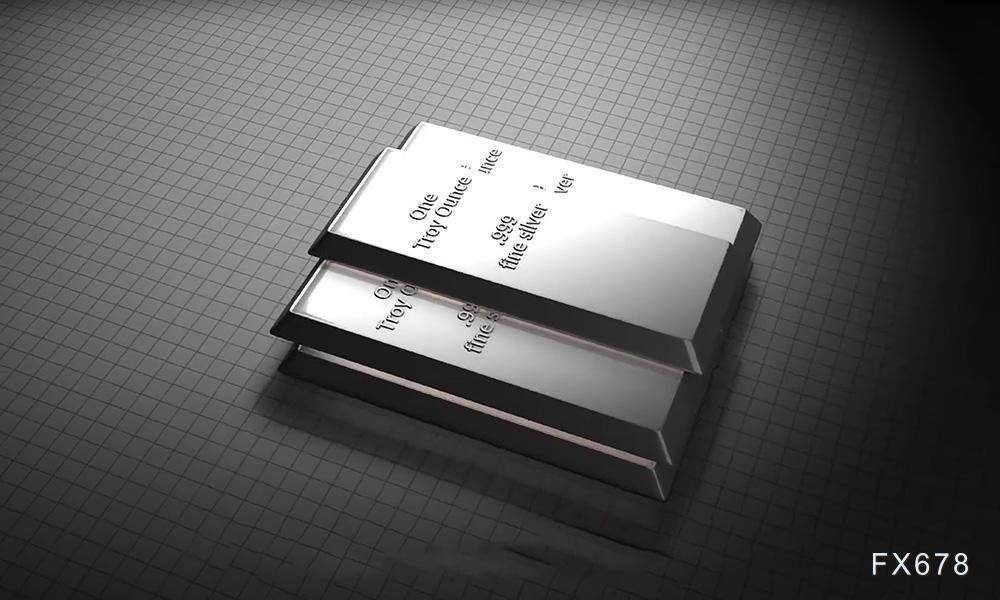
Significant Divergence in Silver Demand
Heraeus analysts noted that silver ETF holdings have shown a continuous downward trend throughout the year.
They wrote: "Silver ETF holdings have fallen 8.2% from the January 1 peak to 793.2 million ounces, compared to 863.6 million ounces at the start of the year. The decline in silver ETF holdings has continued this year, with only minor rebounds after brief price rallies. This downward trend has stabilized since silver prices hit their lowest closing of the year on March 26."
On the physical demand side, Europe’s electric vehicle development provides important support. Analysts stated: “In the first quarter of 2026, battery electric vehicles accounted for 19.4% (about 547,000 units) of new car registrations in the EU, an increase of 4.2 percentage points over Q1 2025. Hybrid and plug-in hybrid vehicles accounted for 38.6% and 9.5%, respectively, with hybrids being the most popular choice. The proportion of new registrations for internal combustion engine vehicles dropped to 30.3%, down from 38.2% a year earlier.”
Heraeus emphasized that electric vehicles and their charging infrastructure require substantial amounts of silver. “For example, electric vehicles use about 75% more silver than internal combustion engine vehicles. Each electric vehicle uses between 1 and 2 ounces of silver. In addition, fast DC charging stations may require as much as 50 ounces of silver, depending on power and the number of charging ports.”
Overall Outlook
The analysis from Heraeus indicates that the decision by the Federal Reserve to maintain the current interest rate path is unlikely to significantly boost gold investment demand in the short term, while fluctuations in gold mine supply and ETF holdings will remain key factors impacting gold prices. The silver market presents a clear divergence: industrial demand, especially in Europe’s electric vehicles and infrastructure sectors, provides support, but investment demand continues to shrink. The future trends of gold and silver still depend on Federal Reserve policy dynamics, developments in geopolitical situations, and the actual consumption of silver in the global real economy.
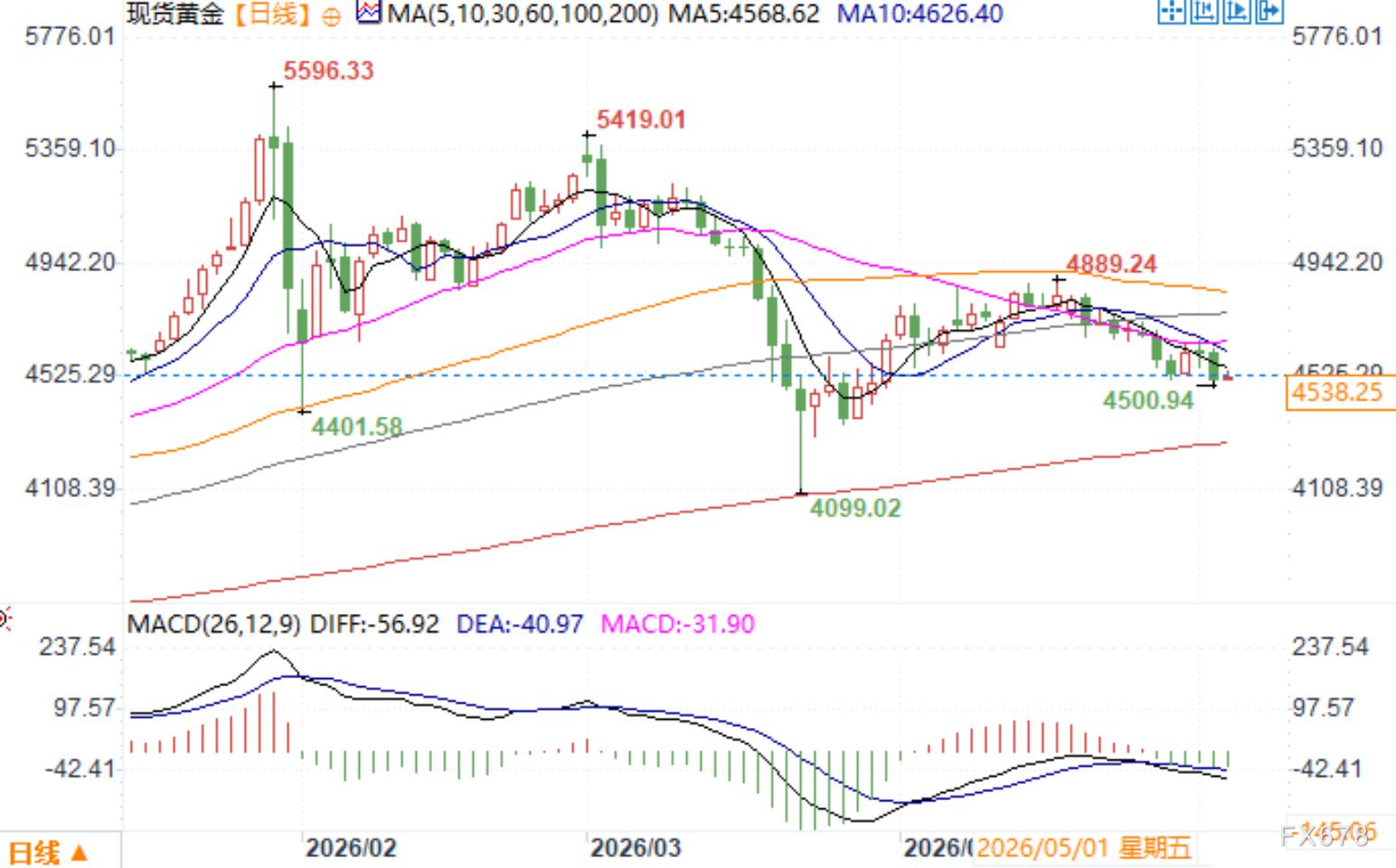
Spot gold daily chart Source: EasyMarkets
At 12:06 (UTC+8) on May 5, spot gold was quoted at $4,535.25 per ounce
Disclaimer: The content of this article solely reflects the author's opinion and does not represent the platform in any capacity. This article is not intended to serve as a reference for making investment decisions.
You may also like
Amazon builds another AWS: Logistics transforms from a cost item into a profit engine

Oil: Middle East tensions keep Brent elevated – Danske Bank
USD: Fed pricing supports DXY recovery – ING
Trending news
MoreCrypto prices
More





