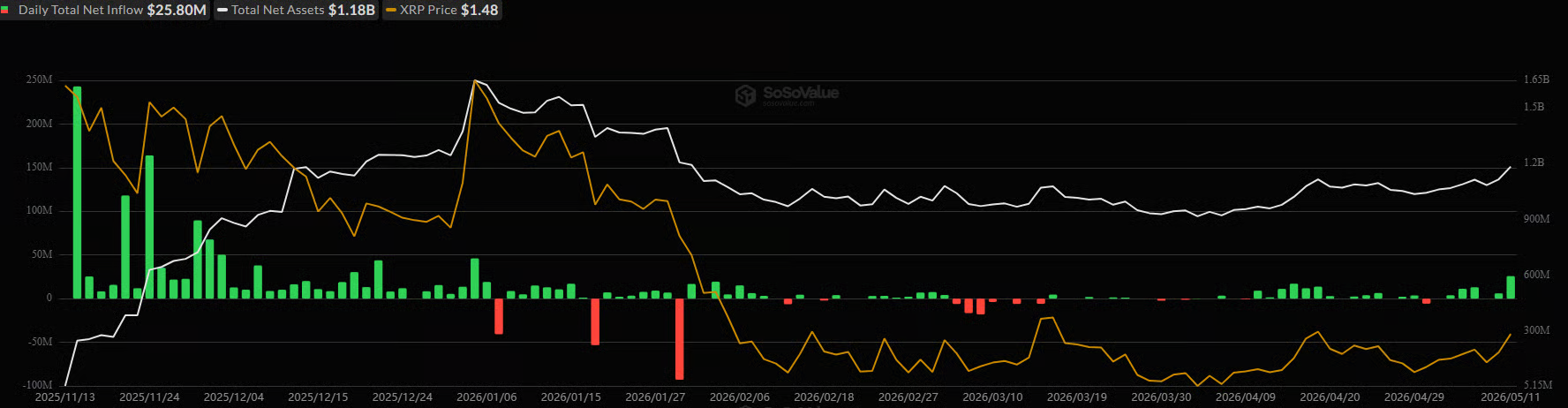
The host of a recent XRP-focused analysis video argues that a quiet but consequential shift is underway for Ripple’s ecosystem, tying together Brazil’s first spot XRP ETF approval, a Brazilian real–pegged stablecoin on the XRP Ledger, deepening Visa connectivity, and a new interoperability play via Axelar.
The throughline is clear: real-world assets and institutional rails are starting to converge on the XRP Ledger, with potentially large implications for liquidity and valuation over time.
Brazil Signs Off On Spot XRP ETF & BRL Stablecoin
The most concrete development comes from Brazil. Crypto Sensei highlights that the country’s securities regulator has approved the Hashtags Nasdaq XRP Index Fund, a spot XRP ETF set to list on the B3 exchange.
Sponsored
The filing was originally made on December 10, 2024, with approval arriving roughly “sixty nine seventy days” later. Trading has not yet begun, but the green light marks a formal entry of XRP into Brazil’s regulated ETF market, alongside existing Bitcoin, Ethereum and DeFi products from the same issuer.
In parallel, Brazilian firm Brasa Group plans to launch a BRL-pegged stablecoin, BBRL, natively on the XRP Ledger.
The host frames this as the first clear example of external institutions using Ripple’s stablecoin infrastructure to issue their own fiat tokens, and a preview of how commercial banks and potentially central banks might issue on-ledger liabilities.
The long-term claim: as more real-world value is tokenized and held on-chain, “that’s going to add” corresponding value to the ledger itself.
Visa Rail Link, Axelar Integration & The XRP “DeFi Gap”
The video revisits Visa’s 2009 acquisition of Earthport, a Ripple-enabled payment company that plugged XRP-based liquidity into Visa’s global network and, indirectly, into Swift.
Citing Visa’s stated interest in crypto for cross-border payments, Crypto Sensei argues that this legacy integration still matters because Visa reaches over 200 countries and tens of millions of merchants, giving XRP a potential settlement role inside an existing, high-volume infrastructure—provided U.S. regulators remove legal uncertainty for large banks.
On the crypto-native side, Axelar is presented as a key missing piece for XRP in DeFi.
The analyst notes that XRP has surpassed $200 billion in fully diluted valuation at times “yet has remained isolated from most DeFi opportunities.”
Axelar, a cross-chain interoperability protocol, has spent “years in technical diligence” with Ripple, according to the material shown, with Ripple CTO David Schwartz reportedly taking a detailed interest in the codebase.
The integration aims to let XRP holders move value cross-chain in roughly 20 seconds via abstracted swaps and Axelar’s messaging layer, opening access to stablecoins, DEXs and tokenized real-world assets across multiple chains.
One Axelar voice quoted in the video predicts that, within two years, the XRP Ledger could emerge as “the leading platform for real world asset tokenization,” moving “trillions in a single transaction” and hosting significant RWA issuance routed through Axelar partners.
Speculation on XRP price targets, including a theoretical $10,000 scenario modeled via money velocity and global payments volume, is treated as highly conditional.
The host stresses that such valuations would require XRP to carry a substantial share of global flows, with trillions in daily settlement and large-scale tokenization—outcomes that remain uncertain but are increasingly being architected for.
Delve into DailyCoin’s popular crypto news today:
People Also Ask:
According to the video, the ETF has been approved by the regulator but is not yet live for public trading on B3.
BBRL is a proposed Brazilian real–pegged stablecoin issued by Brasa Group on the XRP Ledger, aimed initially at institutional clients before expanding to broader markets.
Visa acquired Earthport, a Ripple-enabled payment provider that can use XRP for cross-border liquidity, giving Visa indirect access to XRP’s settlement capabilities.
It is designed to let XRP holders tap into DeFi and tokenized real-world assets across multiple chains through Axelar’s interoperability and messaging layer, potentially making XRP a more productive asset.