

Three big things are hitting global markets at the same time right now. US inflation came in higher than expected, the Iran ceasefire is falling apart, and markets are bracing for a critical meeting between President Trump and China’s Xi Jinping in Beijing.
The result is that the US dollar is getting stronger, Treasury yields are rising, and the chances of the Federal Reserve cutting interest rates this year have essentially dropped to zero.
The euro dropped to $1.1735. The British pound slipped to $1.3532. The dollar index, which measures the dollar against a basket of major currencies, held near 98.335, its strongest level in a week.
On Tuesday, the US government reported that prices rose 3.8% over the past year through April. That is higher than the 3.7% analysts expected and a big jump from the previous 3.3% reading. Gasoline prices alone surged 28.4%, largely because of the war with Iran driving oil prices higher. Core inflation, which strips out food and energy, accelerated 0.4% in a single month.
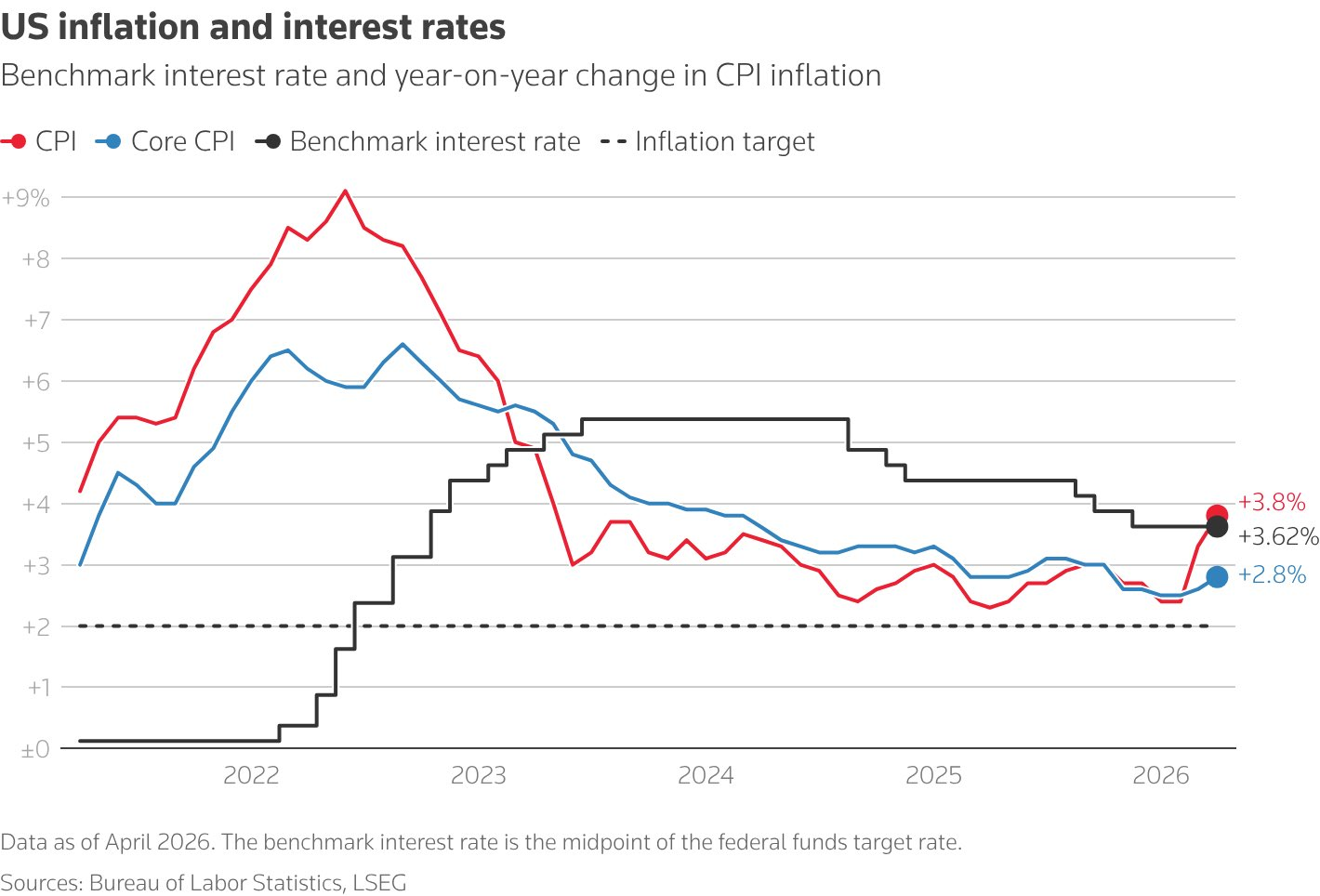 Source:
In simple terms, things are getting more expensive faster than expected, and the Federal Reserve cannot cut interest rates when inflation is this high.
Markets now see a 35% chance the Fed actually raises rates in December rather than cutting them.
When inflation runs hot and the Fed has to keep rates high, the dollar gets stronger. Higher US interest rates make dollar-denominated assets more attractive to global investors, pulling money into the dollar and pushing other currencies lower.
“The US dollar has been tracking risk sentiment very closely throughout the war,” said Ray Attrill, head of FX strategy at National Australia Bank.
Making everything worse, hopes for a Middle East peace deal faded sharply after Trump said the ceasefire with Iran was “on life support.” Tehran rejected the US peace proposal and presented its own list of demands. Trump called them “garbage.”
(adsbygoogle = window.adsbygoogle || []).push({});The other major risk event is the Trump-Xi summit in Beijing on May 14 and 15. Markets are nervous heading into it. Investors are pulling back from risk ahead of potential announcements on trade tariffs, technology restrictions, and broader tensions between the two largest economies in the world.
If the meeting goes well and signals de-escalation, the dollar could fall quickly, and the yen could recover. If tensions escalate further, the dollar strengthens more, and markets get choppy.
Related: Major U.S. Labor Unions Urge Senators to Oppose the Crypto Bill





