
Waller Leads the Federal Reserve: Core Changes in the Bond Market and Investment Strategies

FX678, May 19th—— Walsh's leadership at the Federal Reserve will reshape U.S. Treasury pricing logic; his measures such as reforming inflation indicators, abolishing forward guidance, and accelerating balance sheet reduction are expected to intensify bond market volatility, drive up term premiums, and steepen the yield curve. Investors should focus on short-duration bonds and strictly control long-duration interest rate risk.
Kevin Walsh's official appointment as the Federal Reserve Chair marks a profound adjustment to the monetary policy framework of the world's largest economy.
For bond investors, this change at the helm is not only about the future of the Fed’s policy independence, but will also, from the three dimensions of inflation measurement, policy communication, and crisis response, reshape the logic of bond pricing and thus affect the risk-return structure of asset allocation.
Policy Independence Debate: The Hidden Risks Behind Rate Pricing
This concern is not unfounded—should monetary policy ultimately tilt towards government spending plans, growth targets, and trade priorities, bond investors may demand higher risk premiums to compensate for added uncertainties.
This expectation is already transmitting to the market, potentially triggering a rise in term premiums for U.S. Treasuries, a steeper yield curve, and increased volatility in the dollar’s exchange rate; long-term bonds would most directly bear the brunt of valuation pressure.
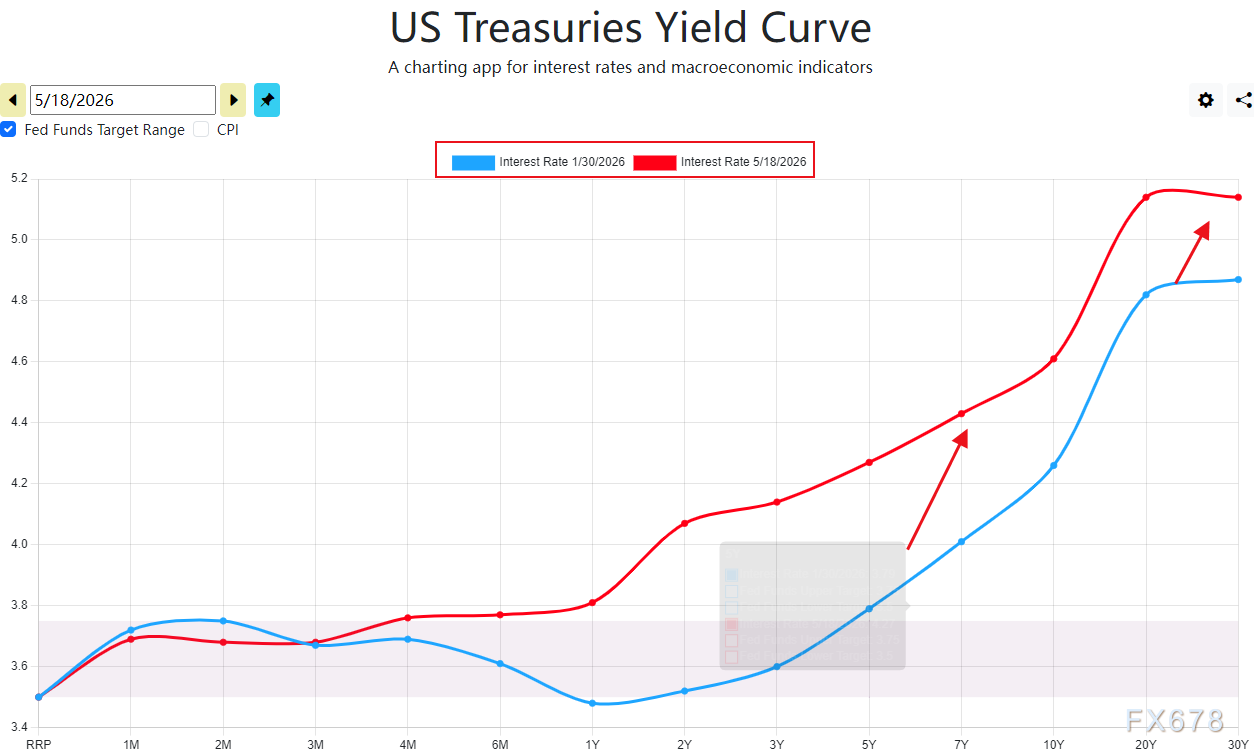
(The U.S. Treasury yield curve has steepened continuously since the beginning of the year; Source: Federal Reserve)
Switching Inflation Indicators: The Tug-of-War Between Rate Cut Expectations and Rate Hike Risks
Walsh’s reform of inflation measurement indicators is a core variable affecting the interest rate path.
He plans to abandon the Fed’s current Personal Consumption Expenditures (PCE) price index in favor of using the “trimmed mean inflation” or “median inflation” indicators.
Judged solely on their inherent properties, switching to these indicators would mean the Fed could likely keep interest rates at a lower level, providing theoretical support for rate cuts.
However, the market should not simply anticipate a wave of large-scale rate cuts.
Walsh has also advocated scrapping the “average inflation targeting” system in favor of a stricter inflation control framework—whenever inflation deviates from the upper limit of the 2% target, the Fed will be more prone to initiate a rate hike.
Communication Mechanism Reform: The “Amplifier” Effect of Market Volatility
Another core proposal by Walsh is to abolish the forward guidance mechanism, ending the Fed’s practice since the 2008 financial crisis of clearly signaling its rate path through tools such as the “dot plot.”
In his view, this type of “over-communication” limits policy flexibility and slows response when new economic data necessitates a policy adjustment.
This reform will markedly change the pricing logic in the bond market: uncertainty over the policy path between FOMC rate decisions will surge, and volatility in yields of fixed income products with maturities under two years will notably rise.
With less frequent and less clear Fed communication, each economic data release and FOMC meeting will become key information nodes, sharply raising the risk of sudden market movements.
Balance Sheet Reduction & Crisis Response: Reconstructing the Bond Market’s “Safety Net”
Walsh is explicitly critical of the Fed’s current $7 trillion Treasury holdings, advocating for an accelerated process of balance sheet reduction and displaying little enthusiasm for unconventional policy tools such as quantitative easing.
This means that the “central bank backstop” safety net that the bond market has relied on since 2008 could be substantially weakened; when the market faces severe turmoil, the willingness and strength of the Fed to provide liquidity support are likely to decline.
In the long run, the combination of balance sheet reduction and new liquidity requirements—having banks hold more Treasury securities and less reserves—will force private investors to take on more long-term, higher-risk fixed income instruments.
This trend will push the term premium in the U.S. bond market into a structurally rising channel; the 30-year Treasury yield has already surpassed 5.15%, with Barclays strategists warning it could further test 5.5%—a new high since 2004—with a steepening yield curve becoming the new market norm.
Summary and Macro Outlook
Investors need to proactively reduce interest rate risk exposure and focus on short-duration bonds. Duration, as a core measure of a bond’s price sensitivity to rate changes, carries increasing risk the longer it is—amid central bank independence debates and rising fiscal dominance risks, long-duration bonds will face the most direct negative impacts.
At the same time, a steeper yield curve will also impact other long-duration assets, including gold and tech stocks—recent corrections in these markets have also been influenced by Walsh’s appointment.
In summary, under Walsh’s leadership, the Fed is driving a comprehensive overhaul of the monetary policy framework; the bond market faces multiple paradigm shifts including uncertain rate paths, heightened volatility, and rising term premiums.
Investors need to build their positions around short duration, strong defensiveness, and robust structure, seizing structural opportunities in the market while keeping risk under control.
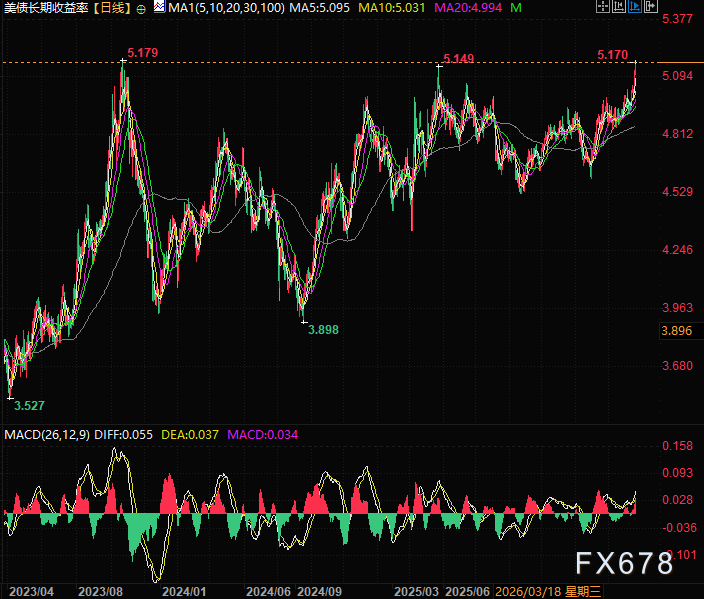
(Daily chart of 30-year U.S. Treasury yield, Source: FXEASY)
Disclaimer: The content of this article solely reflects the author's opinion and does not represent the platform in any capacity. This article is not intended to serve as a reference for making investment decisions.
You may also like
Bold or Reckless? Strategy Buys 24,869 Bitcoin Only to See MSTR Stock Drop 6%
SWELL fluctuates 45.6% within 24 hours: sharp rebound from a low of $0.001341 to the current $0.001944
BILL fluctuates by 42.9% within 24 hours: Sharp price volatility with no clear public catalyst observed
Trending news
MoreCrypto prices
More





