
Super IPO "vampires", midterm election curse, soaring yields... US stocks face numerous crises this summer

U.S. stocks are ushering in the unofficial "start of summer" with a record-breaking posture, but this summer is far more complicated than the superficially calm appearance suggests.
A queue of mega-IPOs siphoning market liquidity, high oil prices eroding consumer confidence, the historical pattern of midterm election years weighing on stocks, and structurally elevated bond yields—four risks are simultaneously looming, prompting Wall Street professionals to issue warnings about the market’s direction over the coming months.
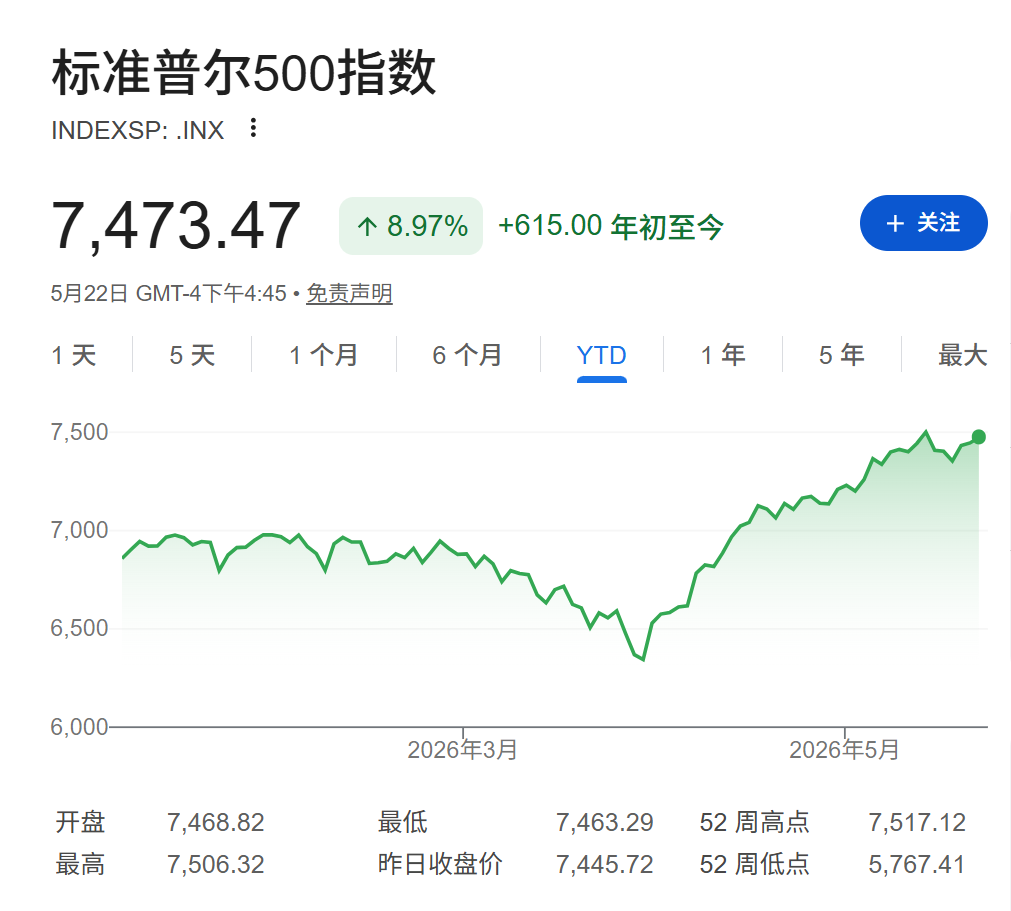
The S&P 500 closed last Friday just 0.4% below its record high set on May 14, marking its eighth consecutive week of gains—the longest streak since 2023, with a cumulative rise of 9.2% so far this year. Despite ongoing U.S.-Iran tensions blocking the Strait of Hormuz and soaring oil prices fueling inflation pressures, the remarkable performance of the technology sector has dominated market sentiment. The S&P 500 Information Technology sector has surged 18.1% this year, vastly outperforming the overall index, with tech giants such as Nvidia, Alphabet, Amazon, and Apple serving as the main growth drivers.
However, the strength in technology stocks is masking a series of cracks. The University of Michigan's Consumer Sentiment Index fell this month to a historic low of 44.8; the S&P 500 Consumer Discretionary sector is up only 2.3% year to date, significantly lagging the broader index; and even though signs of easing U.S.-Iran tensions triggered a sharp drop in crude oil futures Sunday, multiple strategists point out that the driving forces behind rising long-term Treasury yields have now far surpassed geopolitics—structural rate pressures are unlikely to be reversed by a diplomatic statement alone.
There is an emerging consensus: the current U.S. stock market boom is built on a trio of factors—earnings exuberance, crowded technology positions, and abundant liquidity—but all three pillars will face simultaneous tests this summer. Investors are bracing for an unusually risky season.
Super IPO Wave: The Invisible "Siphon" of Liquidity
One of the most closely watched market risks this year comes from the imminent batch of mega-IPOs.
SpaceX officially filed its prospectus with the SEC on May 20. The IPO aims to raise at least $80 billion, with a potential valuation exceeding $1.5 trillion. The listing is expected to be completed in the second week of June, making it the first of three major technology companies to go public. OpenAI may list as early as September, while Anthropic could follow in October.
"The upcoming batch of mega-IPOs could draw capital away from the rest of the financial markets," Bob Elliott, co-founder and CEO of asset manager Unlimited, told MarketWatch in an interview:
"We haven’t seen supply of this magnitude for a long time, and this puts additional downward pressure on the overall equity market."
Charles Schwab’s Chief Trading & Derivatives Strategist Joe Mazzola pointed out that some investors may choose to sell their biggest gainers to free up capital to participate in these new IPOs. Spectra Markets President Brent Donnelly wrote in a May 21 report that this is "a potential bearish factor, but not yet a reason to reduce positions or go short," emphasizing that "taken alone, it’s not tradable."
Deutsche Bank Securities strategist Parag Thatte provided quantitative boundaries: under a demand-supply framework, placing the largest single IPO independently into the model might cause the market to drop about 1%; if IPOs are highly concentrated in timing or new listings crowd out other index constituents, real pressure may be somewhat higher. However, he also notes that historically, issuance waves are more a "symptom" of bull markets than the end—since they generally happen when demand is strong. Three months after an issuance wave begins, the median S&P 500 return is about 8%.
Notably, Elliott also warned that this IPO wave coincides with some major tech companies scaling back buybacks—tech giants are shifting capital from share repurchases and dividends to AI capital expenditures, meaning a key pillar of demand is weakening at the same time. In terms of positioning, megacap tech stock allocations are at the 93rd percentile, making it the most crowded part of the market. Should IPOs trigger asset rebalancing, this is where cracks are most likely to first appear.
Oil and Consumption: The Undercurrents Beneath the Boom
High oil prices are the most direct factor impacting ordinary consumers in this round of summer risks.
West Texas Intermediate crude is priced at $92 a barrel, and U.S. average gasoline prices have reached $4.552 per gallon, a sharp rise from $3.196 a year ago. International Energy Agency chief Fatih Birol recently warned that U.S. crude inventories are falling at a "very fast" pace, a trend also confirmed by Mizuho Securities commodities specialist Robert Yawger in a May 18 report, though he said inventories won’t be depleted in the short term.
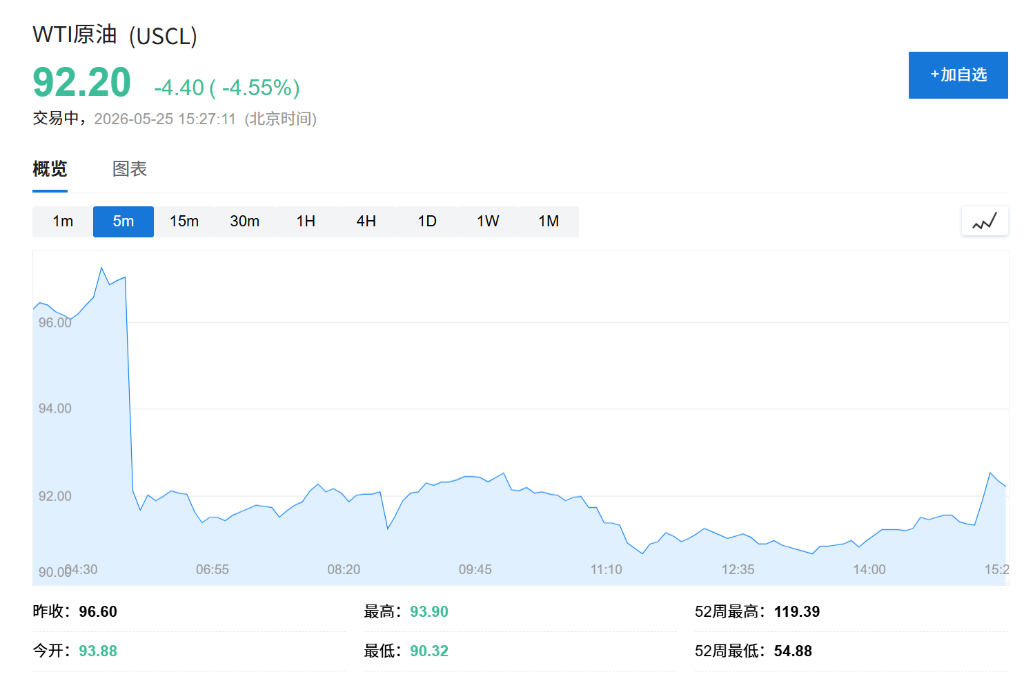
Consumer confidence has already taken a significant hit. Interactive Brokers Senior Economist José Torres told MarketWatch that the University of Michigan Consumer Sentiment Index plummeted to a record low of 44.8, with rising gasoline prices forming a key headwind, particularly for middle- and lower-income households. "This summer, we’ll face higher inflation," Torres said.
On Sunday, U.S. officials indicated that the U.S. and Iran are close to a deal to reopen the Strait, driving crude futures sharply lower and U.S. Treasury futures slightly higher. But Trump stated he’s not in a rush to sign an agreement, so the ultimate direction remains uncertain. Charles Schwab’s Head of Macro Research and Strategy Kevin Gordon believes the stock market "is reflecting some doubts about consumer performance and whether the economy can withstand a prolonged blockade, but these worries are masked by strong tech performance."
The S&P 500 Consumer Discretionary sector is up just 2.3% so far this year—a sharp contrast to the tech sector’s 18.1% gain—exposing underlying weaknesses in consumer spending.
The Midterm Election Curse: Summer Is Historically a Weak Period
Another warning for technical strategists comes from historical patterns.
According to Dow Jones market data analysis, in midterm election years, the S&P 500’s average return from the end of April to the end of September is -2.8%. In historical samples, the index dropped over 25% in 1930 in that interval, 29.6% in 1974, and 24.3% in 2002. Even excluding these three extremes, the rest of the samples only barely break even, with a median performance of 0.006%.
Hirsch Holdings CEO and Stock Trader’s Almanac editor Jeffrey Hirsch explained in a phone interview that in midterm election years, "political fights at some point overshadow the focus on corporate earnings and the economy," as the battle for congressional control stokes uncertainty and the ruling party typically loses seats. This political uncertainty, combined with summer’s seasonal weakness, creates systemic pressure for the stock market during this period. Infrastructure Capital Advisors CEO Jay Hatfield added, “Greed during earnings season, fear after”—once quarterly results wind down, investors switch attention to macro risks, political dynamics, and geopolitics.
Nevertheless, Hatfield also noted that one possible outcome of this midterm is a divided Congress—the Democratic Party is widely seen as having a clearer path to retake the House, while the Senate is currently controlled by Republicans with an effective 53–47 majority. "A split government is usually bullish for the stock market," he said, because it makes it hard for either side to implement major tax hikes or dramatic policy shifts, keeping corporate tax rates relatively stable.
Worth noting: the current S&P 500 trend is deviating significantly from the typical midterm election year weakness—the index is up 3.7% since May. Meanwhile, the Cboe Volatility Index (VIX) remains at 16.7%, an unusually high level given the market rally. Nomura strategist Charlie McElligott pointed out that this could signal underlying concerns masked by the surface calm.
Structural Yield Dilemma: U.S.-Iran Truce Won’t Rescue the Bond Market
The pressures on the bond market run far deeper than the "war inflation" narrative suggests.
Research by ING, Goldman Sachs, Barclays, and others converges on one conclusion: The recent jump in long-term U.S. Treasury yields is mainly driven by the "real yield" (excluding inflation), with inflation expectations playing a relatively minor role. The U.S. 10-year Treasury yield approached 4.70% last week; even as it edged down on Monday on U.S.-Iran deal hopes, strategists generally agree that structural pressures for higher rates are here to stay.
Barclays’ U.S. inflation strategy chief Jonathan Hill pointed out, "Attributing the recent global duration selloff to inflation worries doesn’t match market pricing." The true drivers, he says, are rising debt levels, a potentially higher neutral rate, and AI-driven capital demand. He also notes that the 10-year breakeven inflation rate remains about 50 basis points below the 2022 Fed tightening peak; the 5-year, 5-year-forward breakeven rate is around 2.2%, roughly flat since last December—underscoring that inflation expectations are not the main trigger.
Fiscal pressures also can’t be ignored. Phillip Lee, head of real rate sales at Goldman Sachs, noted that "persistent fiscal deficits, increased Treasury issuance, and worries about debt sustainability now increasingly explain why investors require higher compensation for holding long-term bonds"—and he made it clear that "rates will continue to rise." Additionally, the boom in artificial intelligence investment is being factored in: tech companies are consuming massive semiconductor resources, building data centers at scale, and issuing large volumes of their own debt—intensifying near-term inflation pressure, while the productivity dividends promised by AI will take time to materialize.
J.P. Morgan Wealth Management Chief Investment Strategist Phil Camporeale remains optimistic on U.S. stocks, arguing tech sector valuations are below early-2026 levels and that investors haven’t yet reached a state of "over-exuberance." He expects the Fed is more likely to hold rates steady, with yield and inflation pressure possibly peaking in Q2.
Yet Muriel Siebert & Co. CIO Mark Malek is more cautious: "The bond market isn’t reacting to any single headline, but is repricing a structural challenge that can’t be solved with press releases or diplomatic pauses."
Disclaimer: The content of this article solely reflects the author's opinion and does not represent the platform in any capacity. This article is not intended to serve as a reference for making investment decisions.
You may also like
SpaceX’s Space Empire: The New $2 Trillion Dominator or the Peak of a Bubble?
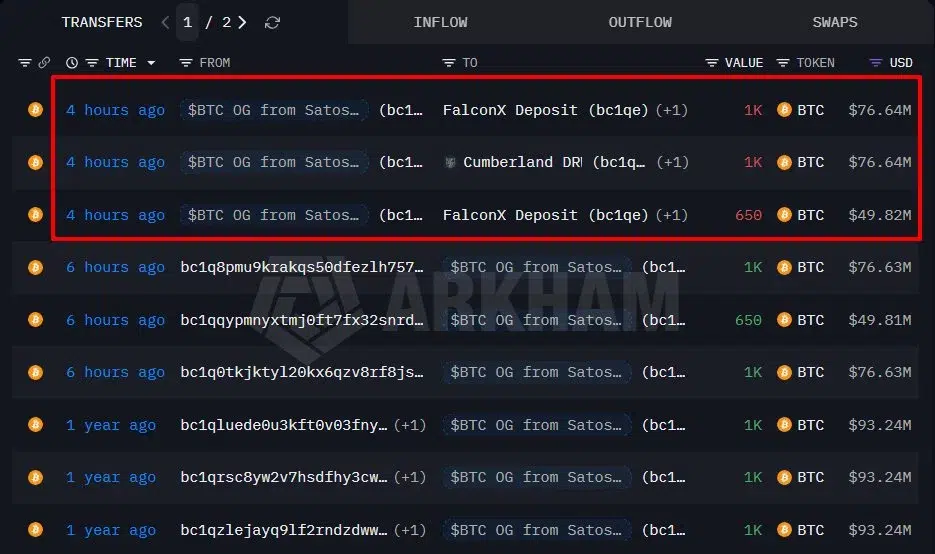
Dormant Bitcoin whale transfers 2,650 BTC to major crypto trading firms
Ethereum Falls Under $2,200 as Tom Lee Sees Strong Buying Opportunity

Trending news
MoreCrypto prices
More





