
News
Stay up to date on the latest crypto trends with our expert, in-depth coverage.


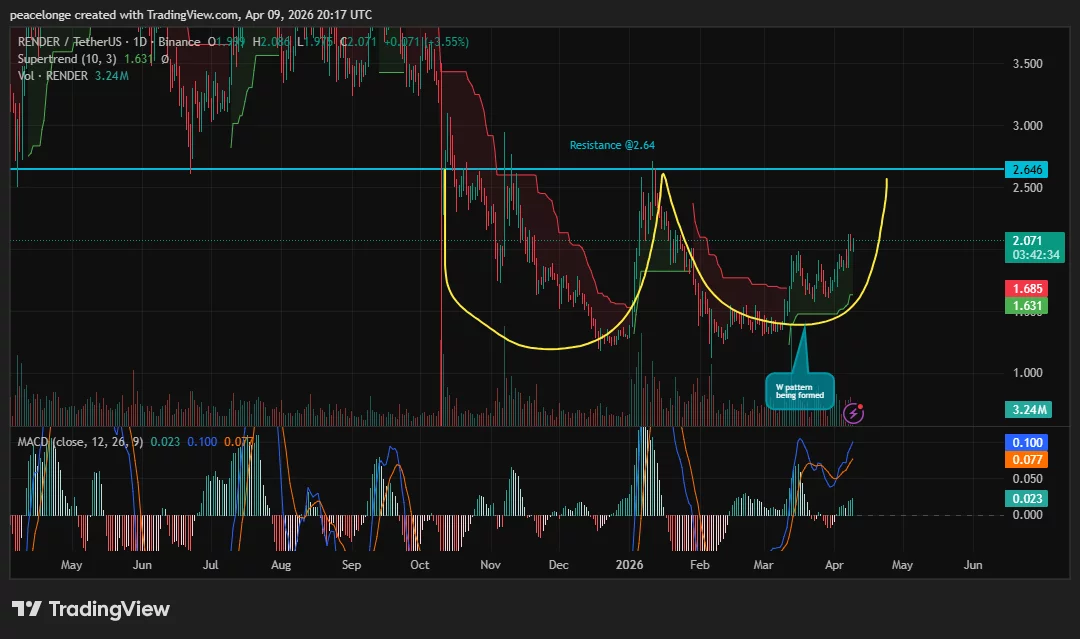
Can Render price rally to $2.64 as a W pattern takes shape on the daily chart?
Crypto.News·2026/04/10 00:27

Udemy’s Fundamentals Shine, But Technicals Signal Trouble
101 finance·2026/04/10 00:24

Botala Energy's November 2025 Fundraising: Will Dilution Lead to Project Viability or Spark a Revaluation?
101 finance·2026/04/10 00:24

Iran's Fragile Truce Exposes Oil Market's Unmet Conditions and Timing Risk by April 22
101 finance·2026/04/10 00:24

American Bitcoin’s Contrarian Split: Strong Fundamentals vs. Bearish Charts
101 finance·2026/04/10 00:24

Hormuz and Bitcoin Link Means “Game Over” for XRP? This Is What Analysts Say
BeInCrypto·2026/04/10 00:21
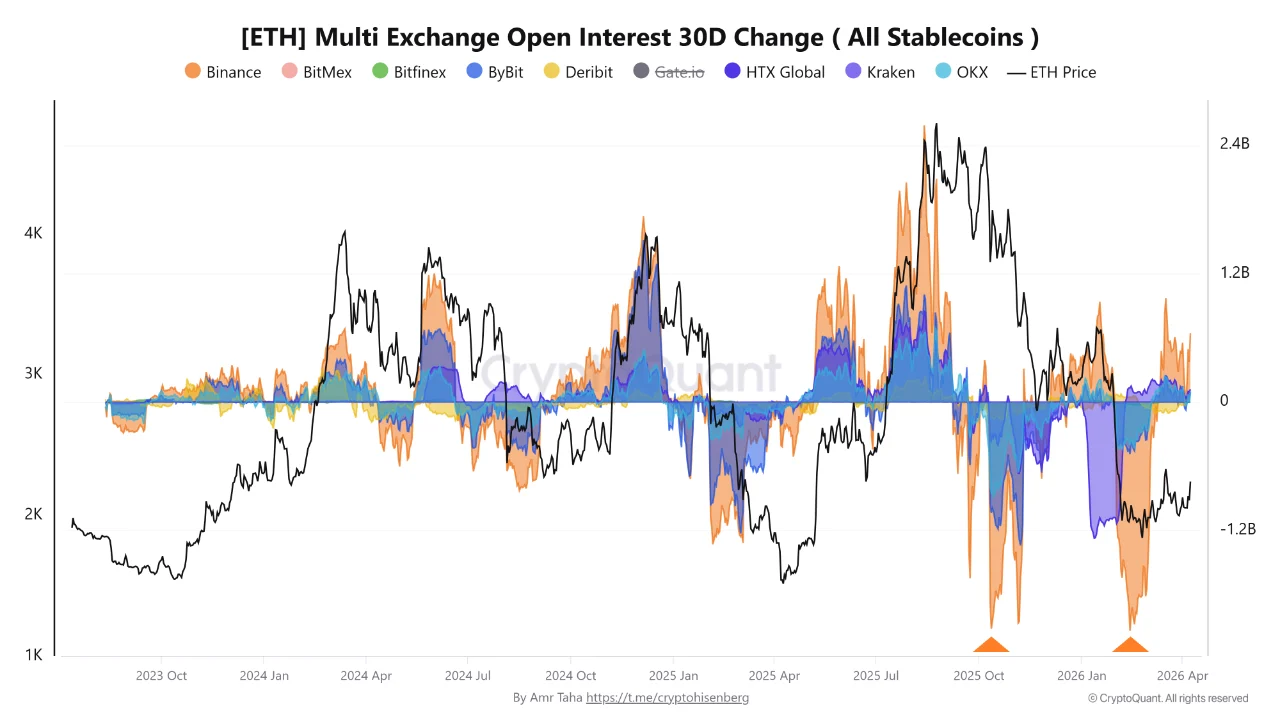
Ethereum's $2.1B Leverage Flush Was Not a Breakdown Signal: Here Is What It Actually Was
Newsbtc·2026/04/10 00:21

Institutional Buyers Pile In as Strive's Chart Cracks Under Sector Pressure
101 finance·2026/04/10 00:18

Vista Energy: Strong Buy Rating vs. Bearish Technical Signals
101 finance·2026/04/10 00:15
Flash
02:14
BlackRock: Impact of Iran War on Markets Manageable, Upgrades US Stocks Rating to 'Overweight' On April 14, BlackRock stated that the impact of the Iran war on the markets is manageable, and coupled with strong corporate profit prospects, it has upgraded its rating on US stocks from 'Neutral' to 'Overweight'. BlackRock noted that it had previously reduced investment exposure due to geopolitical risks, but has now observed two key signals prompting a reassessment of risk: the expected recovery of shipping traffic in the Strait of Hormuz and the macroeconomic impacts remaining within manageable limits. These factors have alleviated concerns about the long-term impact of the war on global economic growth. Strategists indicated that, in the context of strong corporate profits and limited damage to the global economy, they have increased allocations to the US and emerging markets, while continuing to monitor profit margins in first-quarter earnings reports; they also maintain a preference for investment opportunities with structural growth themes, such as those related to the defense industry.
02:07
Saudi Arabia Urges U.S. to Drop Houthi Blockade, Iran Threatens HormuzBlockBeats News, April 14th, according to the WSJ report, Arab officials revealed that Saudi Arabia is pressuring the United States to abandon the blockade of the Hormuz Strait and return to the negotiation table. Saudi Arabia's core concern is that Iran may retaliate by using the Houthi militia to block the Bab el Mandeb Strait, a key chokepoint in the Red Sea that Saudi Arabia relies on to maintain its oil exports as its lifeline after the blockade of the Hormuz Strait.
Previously, Saudi Arabia had redirected most of its crude oil exports from the Ras Tanura facility in the Persian Gulf to the Yanbu port on the Red Sea coast, with a current daily export volume of approximately 7 million barrels, essentially restoring pre-war levels. However, if the Bab el Mandeb Strait is also blocked, these supplies would face a direct threat.
Iran's Supreme Leader's foreign policy adviser Velayati publicly stated on April 5th that Iran views the Bab el Mandeb Strait "just as it does the Hormuz Strait," warning that global energy and trade flows "can be cut off with a single signal." Iran's semi-official Tasnim news agency also made it clear that the U.S. blockade could lead to Iran closing the Red Sea passage.
Meanwhile, the Houthi militia, controlling large stretches of coastline near the Bab el Mandeb Strait, is Iran's ready-made tool to execute this threat. Baran, a Yemen expert at the Washington think tank "New America," said, "If Iran does want to block the Bab el Mandeb Strait, the Houthis are an obvious partner, and they have already proven capable of doing so." Arab officials warn that if Iran further escalates pressure, the Houthi militia may become more aggressively involved in the conflict, even going as far as imposing fees on passing ships. According to the U.S. Energy Information Administration, before the Gaza War, 9.3 million barrels of crude oil passed through the Bab el Mandeb Strait daily, a number that has halved since the Houthi militia's intervention.
02:05
Institution: High oil prices will persistAccording to BlockBeats, on April 14, ANZ Bank strategists Daniel Hynes and Soni Kumari stated in a report that high oil prices are expected to persist. They estimate that due to the Iran war, about 10 million barrels of oil per day have disappeared from the market, which is a change from their January benchmark data. The recovery of supply is expected to be slow, partial, and uneven until the middle of 2026. They added that easing this tension would require either a significant shock in global demand or a rapid and coordinated response on the supply side. Currently, even without the worst-case escalation of conflict, the tightness in market supply alone is sufficient to keep crude oil prices at historically high levels. As the conflict continues, high oil prices will become more entrenched. ANZ Bank has raised its crude oil forecast, expecting Brent crude prices to remain above $90 per barrel for the rest of this year.